
Astronomy has a way of defying labels. Just when researchers think they’ve drawn a clean line between two cosmic categories, nature tosses in something unexpected.
Take stars and planets. A star is a massive glowing ball of plasma powered by nuclear fusion. While a planet is a much smaller, cooler, quieter companion, formed from the scraps of a star’s birth.
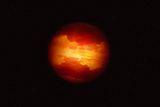
But between these clean categories is a class of objects that refuses to pick a lane. These oddities, known as brown dwarfs, challenge our understanding of what it really means to be a star, a planet, or something in between.
How Stars and Planets Are Born
Stars start their lives when massive clouds of interstellar gas and dust bump into each other or get disturbed by outside cosmic events, such as nearby supernovae. If parts of these clouds get dense enough, they begin to collapse under their own gravity, heating up and forming a couple to a couple thousand protostars, according to the Center for Astrophysics.
When a protostar accumulates enough mass (1,000 to 10 million times the mass of the sun), it becomes hot and dense enough to ignite nuclear fusion in its core. This intense gravity-driven fusion of hydrogen into helium sends enormous amounts of energy outward, precisely balancing the star’s inward gravitational collapse and causing it to brilliantly shine for millions to billions to trillions of years, according to NASA.
Planets, by contrast, typically form in the leftover material spinning around a newborn star, called a protoplanetary disk. Within these protoplanetary disks, clumps of dust and ice collide and stick together, gradually building themselves up, according to the Center for Astrophysics. As they continue to build, they can form into small rocky worlds, enormous gas giants, and almost everything in between.
So, when it comes to stars versus planets, how they form, nuclear fusion, and their overall mass are key differences. But there are also objects that don’t quite fit in either box, slightly blurring the seemingly straightforward line between stars and planets.
Read More: A Failed Star can Form Brown Dwarf Stars, Which Host Their Own Planetary Systems
The In-Betweeners: What Is a Brown Dwarf?
Brown dwarfs are often described as “failed stars.” But that’s only part of the story. According to NASA, they form like stars through the gravitational collapse of giant molecular clouds, but brown dwarfs never gain quite enough mass to sustain hydrogen fusion. Still, they’re far more massive than regular planets, weighing in roughly between 13 and 75 times the mass of Jupiter, according to a study in Astronomy and Astrophysics.
When brown dwarfs are young, they are still extremely hot from their formation and emit a lot of infrared light. And they can even fuse a heavy form of hydrogen called deuterium in their cores, which can internally heat the brown dwarf for up to hundreds of millions of years. But once the deuterium fuel runs out, a brown dwarf is destined to eternally cool down, according to a study in the Astrophysical Journal.
Despite briefly undergoing a form of fusion, brown dwarfs also have varied and complex atmospheres, which make them more visually similar to massive planets than to tiny stars, according to NASA.
“I typically say, brown dwarfs form in the same way stars like our sun form, but are very low mass and look more like Jupiter,” says professor Kelle Cruz, an astrophysicist at Hunter College and research associate at the American Museum of Natural History who specializes in studying brown dwarfs. “Planets, on the other hand, form as a byproduct of star formation.”
Why Brown Dwarfs Matter
Being slight oddities, brown dwarfs occupy a strange but useful niche in astronomy. Unlike exoplanets, which are often difficult to study because they orbit bright stars, most brown dwarfs float freely through space, thanks to being untethered to any star system. And that makes them much easier to observe in detail, according to a study in PNAS.
“Currently, brown dwarfs are being used to tell us more about planets,” Cruz says. “It’s a way to study planetary mass objects without having to deal with the glare of a nearby host star.”
The atmospheres of brown dwarfs can be surprisingly similar to those of gas giant planets, too, complete with multi-layered clouds and powerful wind-driven storms. That makes them great windows into the atmospheric processes that shape our own solar system’s giant planets, as well as the super-Jupiter exoplanets discovered outside our stellar neighborhood, according to a report from the University of California, Santa Cruz.
Read More: ‘Poster Child’ Brown Dwarf Is Actually Twins Orbiting Each Other
Can a Planet Ever Become a Star?
You may have wondered whether Jupiter could ever bulk up enough to ignite fusion and transform into a star. While the answer is technically yes, that is also true for any object that suddenly accumulates some 80 times the mass of Jupiter. And that’s not going to naturally happen in a stable, or even chaotic, star system. (Jupiter is already about 2.5 times the mass of all other planets in the solar system combined, according to NASA.)
Small red dwarf stars don’t evolve into planets, either. As they reach old age, they briefly become hotter and brighter before exhausting their nuclear fuel and fading into white dwarfs, not planets. The transition from one category to another just doesn’t happen, and brown dwarfs don’t seem to fit in either bucket, which makes them that much more interesting, according to the Center for Astrophysics.
The Future of Brown Dwarf Research
Fortunately, two major missions in particular are poised to advance brown dwarf research.
“I am very excited for the LSST survey,” Cruz says, referring to the Vera C. Rubin Observatory’s Legacy Survey of Space and Time, “which will enable us to discover more brown dwarfs based on their motions. Their ‘kinematics’ could give us insight into their formation mechanisms.”
Cruz is also looking forward to new observations from a recently launched space-based mission. “SPHEREx, a European mission, will provide us with near infrared spectra for a lot of brown dwarfs, as well,” she says.
These precision measurements will help researchers both model atmospheres and put constraints on the compositions of “planet-like” brown dwarfs.
Rethinking Cosmic Categories
Brown dwarfs are a reminder that space isn’t made of tidy boxes. It’s a continuum. And as we continue to explore the cosmos, we’re bound to uncover even more objects that challenge how we think about classifying the universe around us.
But by studying the objects that seemingly fall through the categorical cracks, we’re continually refining our understanding of taken-for-granted conclusions, such as where planets end, and stars begin.
Read More: Lonely Pair of Mystifying Space Objects Found Traversing the Void
Article Sources
Our writers at Discovermagazine.com use peer-reviewed studies and high-quality sources for our articles, and our editors review for scientific accuracy and editorial standards. Review the sources used below for this article:
www.discovermagazine.com (Article Sourced Website)
#Brown #Dwarfs #Explain #Main #Differences #Stars #Planets