
Bitcoin is often described as “digital gold” or the future of money. While it has delivered life-changing returns for some early adopters, it’s crucial to remember that Bitcoin remains a highly speculative and volatile asset—not a guaranteed path to profit.
This article isn’t about discouraging Bitcoin investment. Instead, it aims to help you avoid common pitfalls by recognizing the moments when buying Bitcoin might do more harm than good. The goal is not fear, but awareness: knowing when not to act is just as important as knowing when to jump in.
You’re Not Ready for High Volatility
Bitcoin’s price can swing dramatically—sometimes by 20%, 30%, or even more—in a matter of days or even hours. This isn’t a bug; it’s a feature of a young, relatively unregulated, and sentiment-driven market.
If you feel anxious checking your portfolio daily, or if a 30% drop would make you panic-sell at a loss, then you’re not emotionally or financially prepared for Bitcoin exposure. Volatility doesn’t just test your strategy—it tests your psychology.
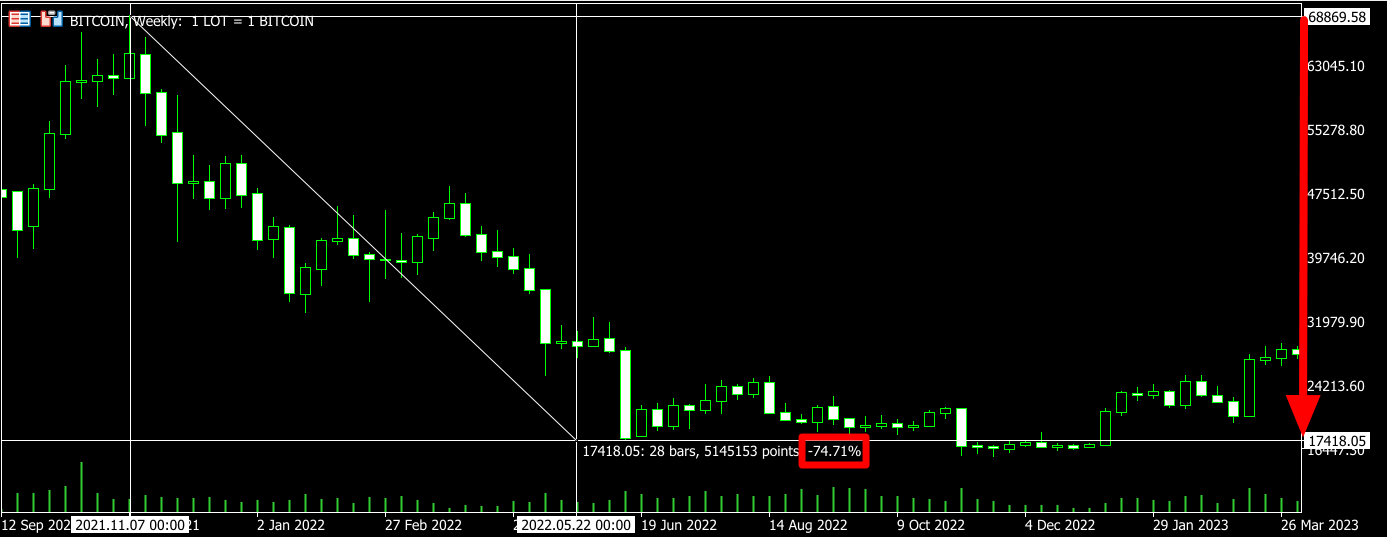
Historically, Bitcoin has experienced multiple drawdowns of 70–80% from its peaks (e.g., 2018 and 2022). These periods are often referred to as “crypto winters”—extended phases of declining prices, low trading volumes, and widespread pessimism across the entire digital asset ecosystem. During crypto winters, projects shut down, leveraged traders get liquidated, and retail interest fades. What feels like a “temporary dip” can last 12 to 24 months or more.
Investors who bought at the top and lacked resilience often sold low, locking in permanent losses—while those who stayed calm eventually recovered and, in many cases, profited when the next cycle began.
Ask yourself honestly:
- Can I sleep well if my investment drops by half overnight?
- Am I prepared to hold through a multi-year crypto winter without selling?
- Am I investing for the long term, or am I hoping for a quick win?
If the answer to any of these questions causes doubt, it may be wise to wait—or reconsider entirely.
You’re Investing Money You Can’t Afford to Lose
One of the golden rules of investing—especially in high-risk assets like Bitcoin—is simple: only invest what you can afford to lose completely.
Bitcoin is not savings. It’s not an emergency fund. It should never be money earmarked for rent, tuition, medical bills, or debt repayment. If losing your investment would disrupt your basic financial stability or force you into debt, that money does not belong in crypto.
Unlike traditional assets backed by cash flows or physical value (like stocks or real estate), Bitcoin’s price relies entirely on market sentiment and adoption. There’s no safety net. Regulators don’t insure it. Banks don’t protect it. If you lose access to your wallet—or the market crashes—there’s often no recourse.
Ask yourself: “Would my life be seriously impacted if this amount disappeared tomorrow?” If the answer is “yes,” keep that money in safer, more predictable instruments.
You’re Buying Because of FOMO (Fear of Missing Out)
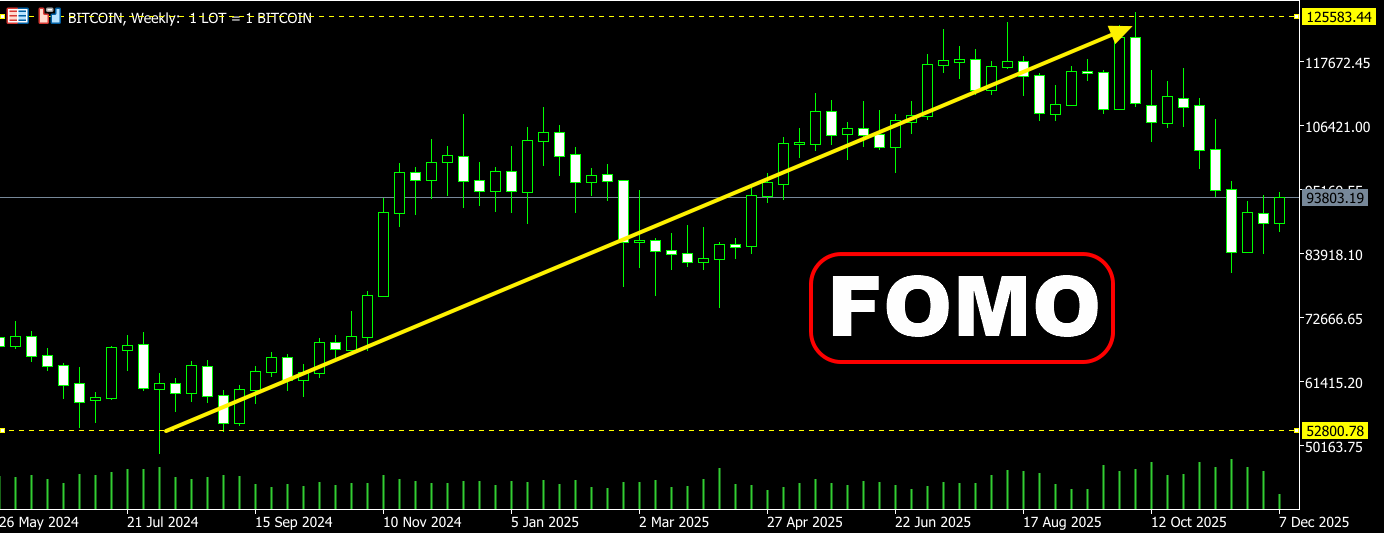
FOMO is one of the most dangerous emotions in trading and investing. It’s the impulse to buy not because of analysis or strategy, but because everyone else seems to be making money—and you’re afraid you’ll be left behind.
My solutions on MQL5 Market: Evgeny Belyaev’s products for traders
FOMO typically strikes at the worst possible time: near market tops, when headlines scream “Bitcoin hits new all-time high!” and social media is flooded with screenshots of instant profits. Historically, these moments often mark the beginning of a sharp correction.
Buying under FOMO means you’re entering late, paying peak prices, and setting yourself up for a painful drawdown. Worse, FOMO-driven investors often lack a clear exit plan—they buy high, panic when prices fall, and sell low.
A disciplined investor waits for setups, uses risk management, and ignores short-term noise. If your reason for buying Bitcoin starts with “Everyone’s talking about it…” or “I don’t want to miss the rally…”, pause. Write down your actual investment thesis. If it’s missing, walk away.
You Don’t Understand the Technology or the Risks
Buying Bitcoin without understanding how it works is like buying a car without knowing how to drive—or where the brakes are. You might get lucky, but you’re also far more likely to crash.
Understanding Bitcoin doesn’t require a computer science degree, but you should know the basics:
- How private keys work (and why you must never share them),
- The difference between hot and cold wallets,
- How transactions are verified on the blockchain,
- Where and how to buy securely (avoiding scams and fake platforms),
- What “not your keys, not your coins” really means.
Without this knowledge, you’re vulnerable to phishing, irreversible mistakes, exchange collapses, or simply losing access forever. Even if the price soars, it won’t matter if your Bitcoin is gone due to a preventable error.
If you can’t explain in simple terms what you’re investing in—and how you’ll protect it—it’s too early to buy.
The Market Is in a Manic Rally Phase (Late Bull Market)
Markets don’t move in straight lines. Bull runs often end not with a whisper, but with a frenzy: euphoric headlines, celebrity endorsements, and retail investors pouring in with borrowed money.
When Bitcoin’s price surges 100%+ in weeks while on-chain metrics show extreme overvaluation (e.g., high MVRV Z-Score, NUPL in “euphoria” zone), it’s often a sign the rally is overheating. Historically, these late-stage bull markets are followed by deep corrections—sometimes lasting years.
Buying at this stage isn’t investing; it’s gambling on greater fools. Smart money often starts taking profits, while newcomers chase momentum. The risk-reward ratio becomes heavily skewed to the downside.
Watch for warning signs:
- News outlets calling Bitcoin “the new safe haven,”
- Social media flooded with “get rich quick” schemes,
- Record-high Google Trends or funding rates on derivatives exchanges.
If everything feels “too good to be true,” it probably is. Patience often pays more than FOMO.
You Don’t Have a Clear Investment Strategy
Buying Bitcoin without a plan is like sailing without a compass. You might catch a favorable wind—but you’re just as likely to drift into a storm with no way out.
A solid investment strategy answers key questions in advance:
- Why am I buying Bitcoin? (Hedge against inflation? Portfolio diversification? Long-term belief in decentralization?)
- How much am I allocating—and why that amount?
- For how long will I hold it?
- What will I do if the price drops 50%? 80%?
- When or under what conditions will I sell (profit-taking, rebalancing, etc.)?
Without these answers, every market move becomes a source of stress. You’ll react emotionally instead of rationally, turning an investment into a gamble.
If your only “strategy” is “buy and hope,” you’re not investing—you’re speculating. And speculation without discipline rarely ends well.
Macro or Regulatory Conditions Are Unfavorable
Bitcoin doesn’t exist in a vacuum. It reacts—often sharply—to global economic shifts and government actions. Ignoring this context is a costly mistake.
For example:
- Rising interest rates (like those from the U.S. Federal Reserve) typically strengthen the dollar and reduce appetite for risky assets—including Bitcoin.
- Regulatory crackdowns (e.g., bans on mining, exchange restrictions, or anti-crypto legislation in major economies) can trigger massive sell-offs.
- Geopolitical stress sometimes boosts safe-haven demand—but often hurts risk assets first, especially if liquidity dries up.
Before buying, check the bigger picture:
- Is the macro environment risk-on or risk-off?
- Are major countries moving toward clearer crypto regulations—or outright hostility?
- Are traditional markets (stocks, bonds) under pressure that could spill over into crypto?
Timing matters. Even the best asset can be a bad buy at the wrong time.
Conclusion
Bitcoin can be a powerful addition to a diversified portfolio—but only under the right conditions and with the right mindset. Knowing when not to buy is a sign of financial maturity, not weakness.
The best investors aren’t those who chase every rally. They’re the ones who stay calm, protect their capital, and act only when the odds are truly in their favor.
If any of the scenarios above describe your current situation, it’s not a failure—it’s an opportunity to pause, reflect, and build a stronger foundation. Because in the long run, the goal isn’t just to own Bitcoin… it’s to own it wisely.
You just learned when not to trade.
Now learn how to trade — with transparent, tested, intelligent tools.
👉 Join our channel
www.mql5.com (Article Sourced Website)
#Buy #Bitcoin