
(This article is part of the View From India newsletter curated by The Hindu’s foreign affairs experts. To get the newsletter in your inbox every Monday, subscribe here.)
For India and the world, 2025 was a year marked by conflict. In May, India launched air strikes on militant infrastructure inside Pakistan, in retaliation for the Pahalgam terrorist attack, triggering a four-day aerial confrontation between the two South Asian neighbours. On May 10, the two sides agreed to a ceasefire, which U.S. President Donald Trump claimed he had helped mediate.
By striking Pakistan in response to a terrorist strike, India was attempting to establish a new normal. Until 2016, India’s strategy for dealing with terror attacks linked to Pakistan largely relied on three measures: diplomatic efforts to isolate Pakistan internationally, economic penalties related to terror financing, and pressure on Islamabad to crack down on terror networks. This approach yielded limited success. In 2016, following the Uri attack in Jammu and Kashmir, India retaliated with a cross-border ‘surgical strike’. In 2025, India significantly widened the scope of retaliation by carrying out strikes deep inside Pakistani territory. But Pakistan seemed prepared and hit back. While the policy of imposing costs on Pakistan for its support of anti-India militant groups seeks to deter future attacks, it is also fraught with risk, as it raises the danger of escalation between two nuclear-armed states.
Israel’s war on Gaza continued throughout the year until a U.S.-brokered ceasefire came into force in October. But by that time, Israeli strikes had destroyed much of Gaza, triggering famine in parts of the enclave. Israeli troops killed at least 70,000 Palestinians, wounded many more and displaced almost the entire population of Gaza. A UN enquiry commission concluded that Israel was conducting genocide in Gaza. U.S. President Donald Trump finally forced Israel and Hamas into accepting a ceasefire, a few weeks after Israel bombed Qatar’s capital Doha in an apparent bid to kill Hamas’s political leadership. The ceasefire remains fragile. According to the Trump plan, Israel has to pull back from Gaza and Hamas should disarm. Israeli troops continue to control more than 50% of Gaza’s territory; and Hamas is in charge of the rest. Hamas has stated that it would lay down arms only to a Palestinian authority in Gaza, but Mr. Trump’s plan is to establish an international administration in the enclave. As the year draws to a close, there are more questions than answers about the Gaza peace plan.
The year also saw a direct conflict between Israel and Iran. In June, Israel started bombing Iran aimed at destroying its nuclear facilities. Iran responded with ballistic missiles targeting Israel. The U.S. joined the war, bombing three Iranian nuclear facilities. After 12 days of fighting Mr. Trump mediated a ceasefire between Israel and Iran. He also declared that the American strikes had totally obliterated the Iranian nuclear programme, while Israel claimed a historic victory. But U.S. intelligence estimates suggested that the Israel-American strikes best set back the Iranian nuclear programme by a few months. I wrote this op-ed on July 10, arguing that Israel failed to meet its objectives during the 12-day war. This also meant that the conflict is far from over.
The war in Ukraine, which began in February 2022, continued through the year with the efforts to bring a ceasefire reaching nowhere. Russia made incremental territorial gains in Ukraine during the year, and stepped up its drone and missile attacks on Ukrainian infrastructure. Ukraine has also expanded its drone warfare, but has suffered back-to-back setbacks in the battlefield. Towards the end of the year, the push for peace gathered momentum with Mr. Trump’s 28-point peace plan. Ukraine responded to the Trump plan with its own 20-point proposal which is now under discussion. Even though there are heightened diplomatic efforts, peace is likely to remain elusive in Ukraine and the fighting is likely to continue in the new year. Why? Read this explainer.
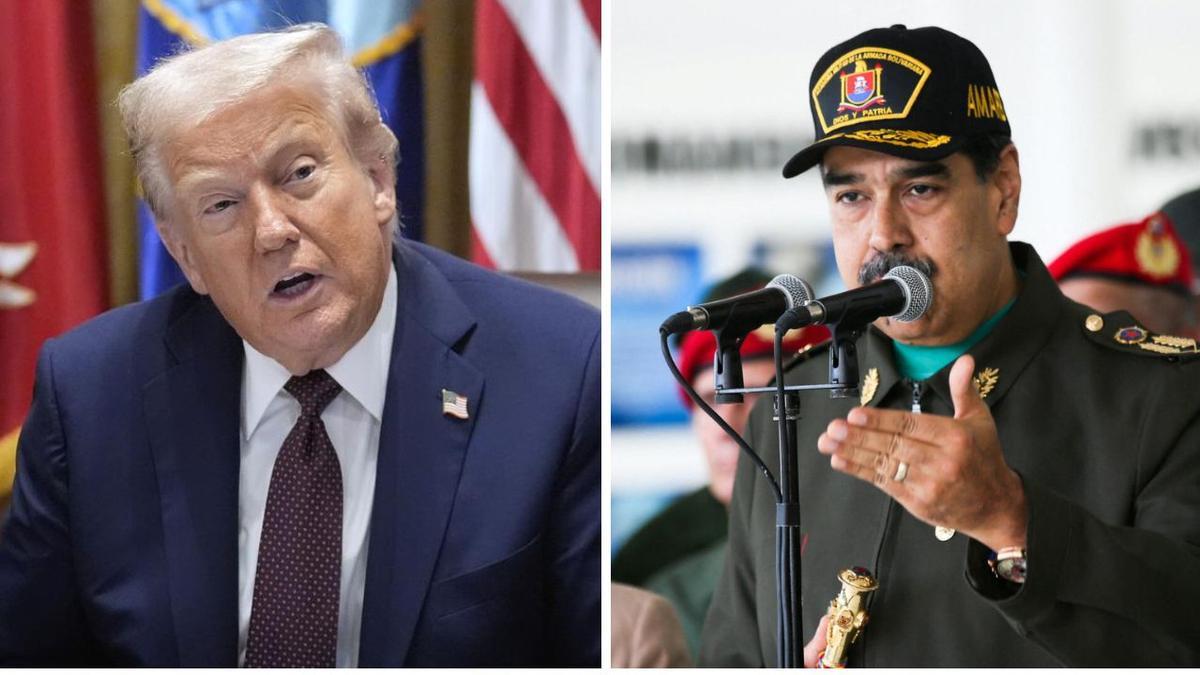
The world has also witnessed several other conflicts. In Sudan, the civil war between the military government and the paramilitary Rapid Support Forces (RSF) continue to rage, killing and wounding tens of thousands of people. The Sudanese military is backed by Egypt, while the RSF is getting support from the UAE. In the Democratic Republic of Congo, M23 rebels, backed by Rwanda, continue to expand their influence in the east despite a U.S.-brokered ceasefire between the Congo and Rwanda. The conflict is so complex that its roots go back to the Rwandan genocide. In Myanmar, the junta is holding sham elections to gain legitimacy at a time when the country is reeling under a bloody civil war. There were two major flare-ups between Thailand and Cambodia this year over their undemarcated border — a conflict which has colonial roots in the Franco-Siamese (Thai) treaties of 1904 and 1907. And finally, the U.S. is carrying out strikes off Venezuela targeting civilian boats which it claims are carrying drugs. The U.S. has also mobilised thousands of troops in the Caribbean and sent fighter jets and vessels to the region in a campaign to force Venezuelan President Nicolas Maduro from power. At The Hindu, we cover all these conflicts through reports, editorials, analyses, explainers, comments and videos and podcasts.
With international organisations unable to check the spiralling crises and major powers preoccupied with expanding or reinforcing their zones of influence, the disorder in the international system is likely to deepen in 2026. This suggests that many existing conflicts will persist, even as new ones are likely to erupt.
The Top Five
1. A year of dissipating promises for Indian foreign policy
New Delhi confronts challenges that concern economic and energy security, global strategic stability, and regional security, writes Suhasini Haidar.
2. Tarique Rahman: The ‘prince’ who came in from the cold
The acting chairman of the Bangladesh Nationalist Party, who returned to the country from a self-imposed exile in London, sends a message of inclusion as the nation, rocked by protests and mob violence, is preparing for its first post-Hasina elections, writes Kallol Bhattacherjee.
3.Pakistan is back in West Asia’s good graces
Field Marshal Asim Munir has been pivotal to this, taking advantage of the prevailing geopolitical situation, writes Kabir Taneja.
4. Mindless bombing: On the U.S. and Nigeria bombings
Trump’s military strikes and religious rhetoric will worsen situation in Nigeria, writes The Hindu in this editorial.
5. Why is Myanmar voting amid conflict? | Explained
Why is the Tatmadaw pushing ahead with elections despite instability? Which major parties are absent from the contest, and why? How does the electoral system favour the military’s dominance? What has been the international response to the elections? writes Sanjay Pulipaka.
Published – December 30, 2025 08:43 pm IST
www.thehindu.com (Article Sourced Website)
#View #India #newsletter #year #conflicts