
Click here to listen to the Audio verison of this story!
It’s a tale as old as the pumpjack itself. Picture this: a well in West Texas, deep in the Permian Basin, that’s been pumping for years. Paint peeling, the sun taking its relentless toll. At first it flowed hot and heavy, but over time, production slid like a good hand who went bad with rotgut and gambling debt. You drive by the pumpjack, half-expect it to sweat for another barrel, and instead it’s coughing, sputtering, losing pressure. For many operators, that well is “done.” Move on, drill a new lateral, spend big, repeat. This scenario absolutely dots the Permian Basin landscape with lowered production and reduced returns.
But what if, hear me out, you gave that same well a second chance? What if a little surgical “wake-up call” could coax it back to life, squeeze more oil from rock that was never fully tapped in the first place? That, my friend, is the quiet comeback tour called the refracture, or “refrac.”
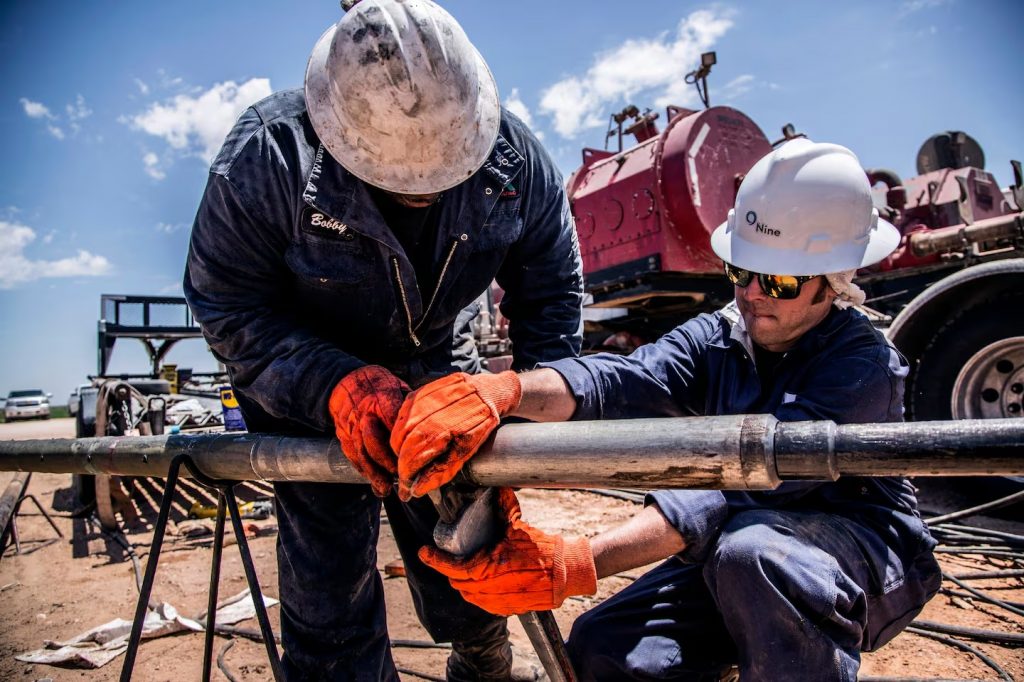
Nine Energy Service stays active in the niche that is refrac liner systems and services.
What the Heck Is a “Refrac”?
In the simplest terms: refracturing is going back into an existing well that has already been frac’ed once, pumping new fractures (or re-stimulating old ones), re-opening the rock, sometimes bypassing old, inefficient fracture zones to reach virgin pockets. If the original frac left a lot of “bypassed pay” in the formation, maybe due to wide spacing between fracture clusters, sub-par proppant volumes, or older, less effective frac design, a refrac can give operators another shot at untapped hydrocarbons. In fact, a research paper by F.O. Shammam shows that selected wells in the Permian saw 32 percent production gains. While perhaps not as much as other areas—such as the Eagle Ford shale, with a 174 percent increase of production post refracturing, followed by the Bakken at 160 percent—the quantity of wells in the Permian, as well as the economics of the refrac, still make it a viable strategy.
Why Refracs Have Got Their Groove Back
Refracs aren’t your grandfather’s remedial jobs. Advancements in completion design, proppant technology, and fracture-isolation techniques have transformed refracturing into a viable production-boosting strategy. Modern methods (like mechanically isolated refracs) allow new fractures to target untouched rock and avoid re-stimulating depleted zones.
Diagnostics have also leveled up: real-time reservoir modeling, micro-seismic imaging, fracture-mapping, and other tools help engineers pick wells with high upside potential. This reduces wasted effort, and instead of just “shooting the well again and hoping,” operators can make data-driven decisions on which wells to refracture.
Then there’s the money and the math. Refrac campaigns usually cost a fraction of drilling a brand-new well. In many cases, capital expenditure is significantly lower while still leveraging existing infrastructure (pipelines, roads, permits) which delivers solid economics if oil prices cooperate. On one hand it is a no-brainer. When everything is already in hand and available, the only thing missing is reevaluating older wells for feasibility. On the other hand, people don’t mind giving up yield and production—said no one ever.

What the Numbers Show: When Refracs Work
There’s case-study evidence across major U.S. shale plays that refracs can deliver serious upside. For example:
* A recent analysis of 39 refractured wells across major plays (2012–2019 completions) found that post-refrac production gains ranged significantly, from a 32 percent uplift in certain Permian wells to as high as 174 percent in some Eagle Ford wells.
* Another big-picture evaluation estimates that re-stimulating just a share of wide-cluster, sub-optimally completed wells across U.S. shale plays could restore a chunk of lost production, potentially unlocking incremental flows on a large scale.
* In real-world field performance, some refracs have reportedly boosted oil recovery factors (Estimated Ultimate Recovery, or EUR) by multiples compared to original completions, sometimes reaching or even exceeding what a “modern” initial frac might have delivered.
For operators in mature basins where Tier-1 drilling acreage is thinning and drilling/completion costs and execution risk are rising, refracs suddenly stack up as an attractive tool to stretch existing assets. From infrastructure to capable workforce and service companies and everything in-between, the Permian is perfectly positioned to leverage this new recalibration of old techniques.
Why the Permian (and Basins Like It) Should Care
If there’s anywhere on Earth where refracs make sense, it’s right here in the beating heart of the Permian. Drive from Midland to Carlsbad and you’ll pass more legacy horizontals than you could shake a wireline truck at. These include Wolfcamp A and B wells from the early 2010s, the first Spraberry land rush vintages, and Bone Spring laterals that were “good enough for the time” but would be laughed out of a completions meeting in 2025.
Back then, operators were spacing clusters like they were afraid of hitting the neighbors. Proppant volumes were modest and sub-optimal by today’s standards. Frac intensity was lighter. Diagnostics were limited. In other words: there is a treasure chest of under-stimulated rock sitting beneath the most prolific basin in North America.
And acreage pressures are real. Prime Wolfcamp inventory isn’t exactly growing on mesquites these days. Operators are turning every knob they can, from simul-frac to zipper-frac to mega-pads, just to keep production flat.
So, the idea of going back into a 2014-vintage Wolfcamp well with a modern mechanically isolated refrac? That’s not “desperation.” That’s good stewardship of Tier-1 rock. Plus, in the Permian Basin culture, where folks take pride in squeezing every molecule from what’s already been paid for, a refrac isn’t a fallback plan. It’s a smart plan.
This means there’s a sizable home-field (all puns intended) advantage we have with the inventory of wells that might have “under-drained” reservoirs or left behind bypassed pay zones. The advances in technology make higher efficiency rates possible. Match this with the sheer quantity of mature wells and there is a formula for potential success.
As new drilling becomes more expensive, thanks to inflation in labor, proppant, services, and logistics, a refrac offers a lower-cost, faster-turnaround alternative. Operators don’t need fresh permits, new pads, or major infrastructure investment. They simply re-use the existing well and tie-in. As Matt Johnson, CEO of energy consultancy Primary Vision Network, told Reuters, “Considering inflation, supply chain issues, and rising wages, now is a great time for operators to start looking at wells for refrac opportunities.”
Indeed, for independents and smaller operators, especially in the Permian, a refrac strategy can mean capital efficiency, increased cash flow, and fewer upfront bets. For landowners, local communities, and regulators, it can mean less surface disturbance, fewer new pads, and less incremental environmental footprint compared to a drilling-heavy approach. While it isn’t attractive to see out your bedroom window, a refrac offers a cost-relative potential higher chance of success.
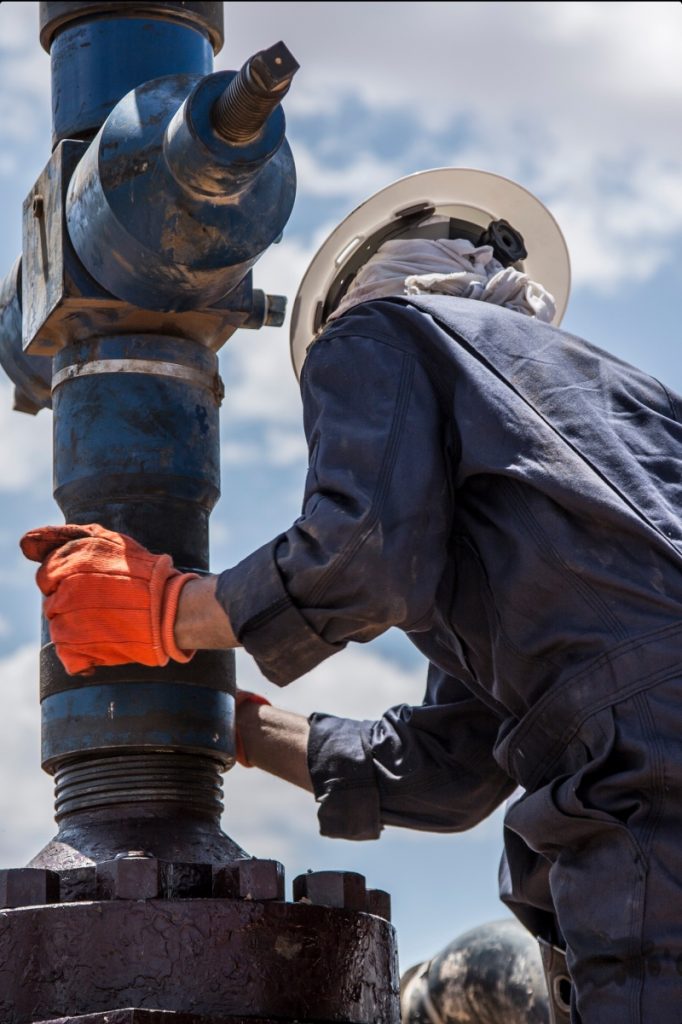
Nine Energy Service has turned refrac into a major service offering.
Refrac Is Part Science, Part Roulette.
Don’t get it twisted: refracturing isn’t a sure thing, far from it. Success hinges on good candidate selection. If the original completion was robust, if the reservoir is severely depleted, or if geology doesn’t cooperate, a refrac may show little or no improvement. Just because your well isn’t producing, it doesn’t automatically mean it’s ready for a refrac.
A few drawbacks to watch for:
* Not all wells are good refrac candidates. Poor perforation spacing, depleted pressure, well-integrity issues, or incompatible completion history can doom a refrac.
* Economics will always remain sensitive: if oil prices drop, or frac-service and proppant costs spike, the math can turn against refracs. Sometimes refracs are marginally economic, or only just pass the bar.
* It’s not always sexy. A refrac doesn’t carry the flashy appeal of a new multi-mile lateral drilled into virgin shale. It’s more about squeezing more life (and value) from the asset already owned.
The Broader Picture
If operators in the Permian begin to think of refracs as part of their long-term field-management toolkit and not just a stopgap, it could reshape how we view mature fields: not as “played out,” but “ripe for reboot.” Imagine if a modest refrac program ran across hundreds or thousands of candidates: incremental barrels, extended well lives, and a lower-cost production boost without the surface-disturbance footprint of fresh drilling.
For companies, that means better capital discipline. For workers and service firms, it means ongoing demand for refrac crews, completions services, and proppant supply. For landowners and communities, more efficient use of existing infrastructure. And for the environment (relatively speaking), fewer new pads, less land disturbance, more use of what’s already there. In other words: stability. With stability comes capital and growth.
But, and this matters, only if the wells are chosen wisely, executed expertly, and evaluated honestly. Refrac must be treated like a surgical tool, not a magic bullet. With the robust infrastructure already in place to capitalize on the need and volume of wells that may meet criteria, the Permian is poised once again to take the lead.
Refrac: Maybe Not Sexy. But Smart.
Refracturing isn’t a headline-grabbing rig swap or a flashy new lateral cut. And it sure doesn’t come with the razzle-dazzle of “drill baby drill” printed on a red ball cap. But maybe that’s what’s so appealing about it. It’s disciplined. It’s efficient. It doesn’t require flashy capex. It demands technical know-how, not bravado. For the right wells and producers, this provides economic stability, perhaps enough to see another boom.
However, for the Permian Basin and for oil-patch folks like us who’ve seen cycles of boom and bust, refrac might be the kind of pragmatic strategy that pays off when the new-acreage boom eventually slows. If you ask me? For those old-timer wells out there, maybe it’s time for a second act. Light the stage candles cause the Great American Refrac Tour is coming to a lease near you!

Christian Lombardini
Christian Lombardini, a former field operator and manager, is now a communications and content consultant for oil & gas companies and creators. You can find Christian and his The Oilfield Leader Podcast on LinkedIn.
Sources:
https://scholarsmine.mst.edu/geosci_geo_peteng_facwork/2441/
https://www.ogj.com/drilling-production/article/14303755/refracturing-increases-recovery-in-mature-unconventional-assets
https://biosqueeze.com/reservoir-remix-a-new-era-of-refracs/
https://energiesmedia.com/article/enhancing-productivity-in-horizontal-wells-through-refracturing/
https://oilprice.com/Energy/Energy-General/Can-Refracs-Boost-US-Shale-Output.html
https://www.hartenergy.com/exclusives/eps-face-opportunities-challenges-refracking-27011
https://www.hartenergy.com/exclusives/does-refracking-add-value-or-bore-wishing-wells-26901
The post Refrac Attack appeared first on Permian Basin Oil and Gas Magazine.
pboilandgasmagazine.com (Article Sourced Website)
#Refrac #Attack