
Polycystic ovary syndrome (PCOS) is one of the most common conditions affecting women between the ages of 15 and 55. PCOS impacts a woman’s hormones, which can affect the menstrual cycle in a big way. That’s why many PCOS symptoms have to do with the reproductive system, like irregular or missing periods, heavy menstrual bleeding, infertility, recurring miscarriages, ovarian cysts, and even pain during ovulation.
When people think of pain around the uterus, their minds usually jump to endometriosis. However, PCOS abdominal pain, especially around ovulation, is really common. So, in this post, I wanted to explain why Cysters experience ovulation pain. Then, I’ll break down how you can naturally ease pain by addressing the root issue of the discomfort.
Yes, there is something you can do about the pain! And that doesn’t involve hormonal birth control, nerve blockers, injections, surgical interventions like hysterectomy or oophorectomy, or even a ton of anti-inflammatories (like ibuprofen or aspirin). There’s hope, Cysters!
Here’s what you should know about ovulation pain and PCOS:

What Is PCOS Ovulation Pain?
Ovulation pain is when your pelvic area or lower abdomen hurts around ovulation. Anyone can feel some discomfort during ovulation. However, for women with PCOS, the pain can be more intense, long-lasting, and unpredictable.
Is Ovulation Pain a Sign of PCOS?
Ovulation pain on its own doesn’t mean you have PCOS. It could be endometriosis, pelvic inflammatory disease (PID), pelvic floor tension, uterine fibroids, irritable bowel syndrome (IBS), or a variety of other health conditions. That said, if ovulation pain shows up alongside other known PCOS symptoms, it may be part of a larger hormonal pattern worth talking to a doctor about.
Here’s more on how to know if you have PCOS.
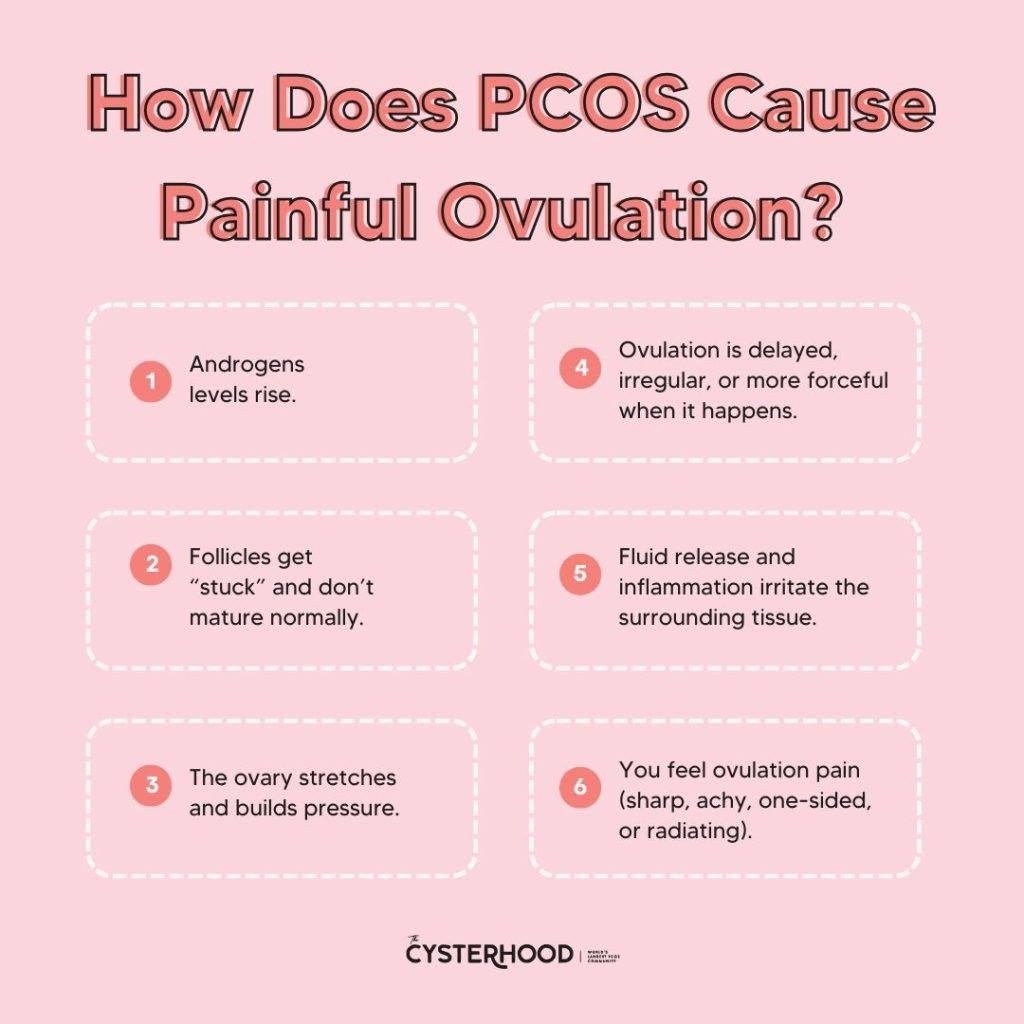
How Does PCOS Cause Painful Ovulation?
1: Androgen levels rise.
One of the main drivers of PCOS symptoms is elevated androgen levels. These are male sex hormones like testosterone that, in excess, mess with normal communication between the brain and ovaries. When signaling is disrupted, the ovaries never get the message that only one follicle is meant to fully mature.
2: Follicles get “stuck” and don’t mature normally.
As a result, instead of one dominant follicle developing properly, lots of follicles start growing. Eventually, errors in the process cause most of them to stop developing long before maturation. So, when it comes time for releasing the egg into the fallopian tube, there’s an obvious problem in the ovaries. This is what gives ovaries their signature “polycystic” appearance.
3: The ovary stretches and builds pressure.
As immature follicles linger, the ovary can become enlarged. This stretching increases pressure within the ovary and its outer capsule. There are plenty of nerve endings in this area, which can make ovulation with PCOS painful or uncomfortable.
4: Ovulation is delayed, irregular, or more forceful when it happens.
Because of ongoing communication issues between the brain and ovaries—and stalled follicle growth—ovulation often doesn’t happen on schedule. Instead, the body waits until it finally perceives a follicle as mature enough. When ovulation does occur, it’s often later than expected and can feel more intense. This is because irregular egg development may cause the follicle wall to rupture unevenly or more forcefully, increasing pain.
5: Fluid release and inflammation irritate the surrounding tissue.
During ovulation, follicular fluid is released into the pelvic cavity. This is normal. However, if inflammation is already present (which is common with PCOS), that fluid can irritate nearby tissues. The pelvic lining, bowel, or uterine ligaments may become painful simply because they’re more sensitive.
Inflammation is a chronic root issue in PCOS. High androgen levels worsen it, along with other hormonal imbalances. Essentially, ongoing hormone dysregulation signals to the body that something is wrong, triggering an overactive immune response. This can contribute to widespread symptoms—including pain. Here’s more on the signs of inflammation with PCOS.
6: You feel ovulation pain (sharp, achy, one-sided, or radiating).
All of this pressure, irritation, and inflammation can show up as sharp pain, a dull ache, one-sided pelvic discomfort, or pain radiating into the lower back, hips, or thighs. For some Cysters, ovulation pain lasts a few hours. For others, it can linger for days.
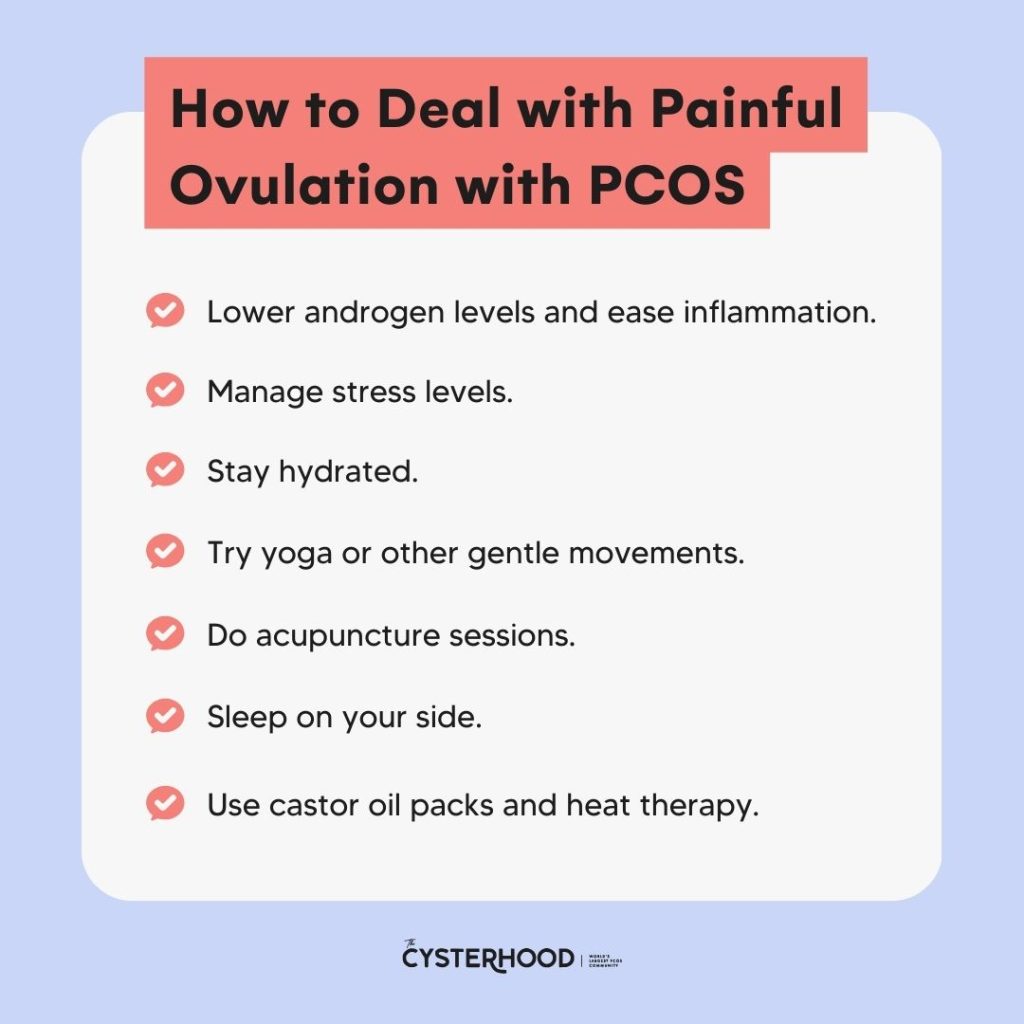
How to Deal with Painful Ovulation with PCOS
Lower androgen levels and ease inflammation.
Since high androgen levels and inflammation are the root issues behind painful ovulation (along with plenty of other PCOS symptoms), that’s where you need to start. Take steps to lower androgens and ease inflammation naturally by:
For PCOS-friendly recipes, workouts, and resources, download The Cysterhood app.
Manage stress levels.
I say all the time that stress isn’t just a feeling. Instead, it’s actually a chemical process in the body that signals us to take action. When we feel overwhelmed, cortisol levels rise, triggering a domino effect of hormonal imbalances and inflammation.
To better manage stress, focus on practices that actively lower cortisol. Try slow, intentional breathing, getting morning sunlight, limiting caffeine, stretching, journaling, setting clear boundaries, and making rest non-negotiable. Anything you can do to relieve your mental load and bring cortisol levels down.
Stay hydrated.
Drinking plenty of water is one of the simplest ways to ease ovulation discomfort. Proper hydration helps the body clear excess hormones (including androgens) and supports healthy circulation. It also helps regulate inflammation, which may soothe irritation around the ovaries and surrounding pelvic tissue.
When you’re well hydrated, your muscles are less likely to tense up and amplify pain. So drink up—even if that means using a fun cup or adding a sugar-free flavor to make it easier to stay consistent.
Try yoga or other gentle movements.
Gentle movement from exercises like slow-weighted workouts, yoga, Pilates, swimming, and walking can help reduce ovulation pain in lots of ways. It improves circulation and relaxes tense muscles (like the effects of proper hydration!). However, it also helps regulate the nervous system. The result? Less stress and inflammation—and less severe PCOS pelvic pain.
Do acupuncture sessions.
Though not super mainstream, there’s plenty of research showing that acupuncture can be very effective for pain relief. It helps improve circulation, calm inflammatory signaling, and release tension in tight pelvic muscles. But one of its biggest benefits? Studies suggest acupuncture may help normalize communication between the brain and ovaries, supporting healthier ovulation overall.
Sleep on your side.
Since a lot of ovulation pain with PCOS comes from pressure, try sleeping on your side instead of on your back or stomach. This can help align your pelvic area, improve circulation, and relieve pressure. If you struggle to lie on your side, try using a body pillow! It’s actually really comfortable and supportive. Plus, breaking the habit of sleeping on your front or back is worth the reduced pain.
Use castor oil packs and heat therapy.
Castor oil packs are a simple, at-home topical option for pain relief. Warm castor oil is applied to the body with a cloth to help increase circulation and relax muscles in the pelvic area. (Probably noticing a theme here, right?) Here’s how to make castor oil packs for PCOS.
For additional natural, DIY relief, turn to other forms of heat therapy. While these aren’t permanent solutions, they can help ease discomfort in the moment—whether that’s a heating pad, warm bath, or heated blanket.
PCOS can cause ovulation pain, but you can treat it naturally.
Ovulation pain with PCOS isn’t random, and it isn’t something you have to brush off. It’s often the result of elevated androgens, irregular follicle development, and underlying inflammation. When you focus on correcting those root issues—rather than just masking symptoms—you can have pain-free cycles again!
For more on how to naturally heal PCOS, browse the PCOS Weight Loss blog and listen weekly to A Cyster and Her Mister podcast.
pcosweightloss.org (Article Sourced Website)
#PCOS #Ovulation #Pain #Fix