
Shelley Phelps,Wales Westminster correspondentand
Alexandra Banfi,BBC Wales

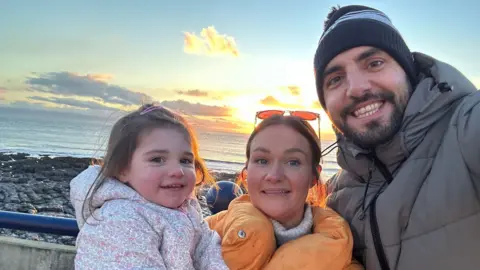 Ellie James
A woman whose husband died from a brain tumour aged 34 says she cannot “go back to life” as normal until she helps change the treatment options for patients.
Ellie James, 36, has been campaigning for all hospitals to freeze brain tumour tissue removed during surgery for use in vaccines or research, with the issue set to be debated by MPs in parliament on Wednesday.
James said husband Owain had wanted his experience to “change things for the better for others”, as his access to an immunotherapy vaccine was limited after only a small amount of useable tissue was kept for future treatment.
The UK government said it was investing £13.7m to help develop new brain tumour treatments.
The mum-of-one, who lives in Caerphilly, saw her campaign for the NHS in Wales to adopt “Owain’s Law” rejected last year after the issue was debated in the Welsh Parliament – where its health secretary told MSs that bringing it in could have “unintended consequences”.
But James’s MP, Chris Evans, will lead a Commons debate on the topic on Wednesday, as she hopes the changes could be implemented across the UK.
“It means everything,” she said. “It takes all my energy to do it, but I just cannot go back to ‘life’ without getting this changed.”
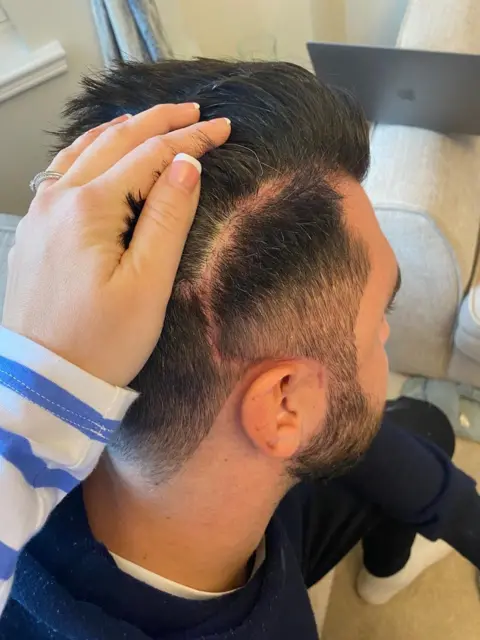 Ellie James
Her husband was 34 when he was told he had a malignant stage four tumour in his brain.
Half of the tumour was removed, and doctors said the best they could do for him would be to control the rest of the tumour temporarily.
He and his wife decided to try an immunotherapy vaccine which was not offered on the NHS, which was based on his tumour tissue.
But of the 7cm removed of tumour tissue, only 1cm was frozen and could be used.
Following this treatment, the remaining tumour fully regressed. But another tumour was found nine months later, and he died in June 2024.
James said she believed because of her husband’s positive response to the vaccine made with that tissue, had more been frozen “we could have had more vaccine, then I believe he would still be here today”.
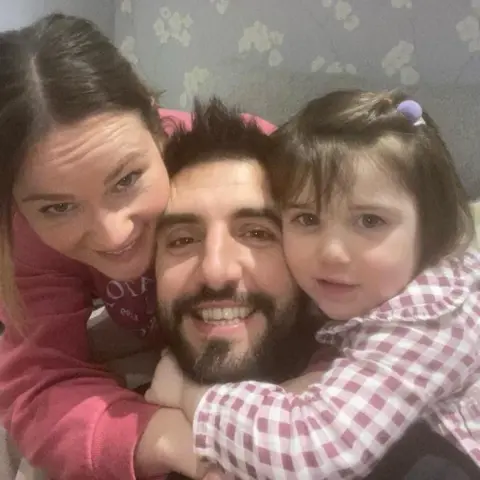 Ellie James
She said her husband “would be just absolutely elated” if the law was changed to ensure patients give written consent before surgery, that tissue remains the legal property of the patient, and all tissue removed is automatically frozen.
“(He’d be) hugely proud and pleased that through his experience he can change things for the better for others affected by this,” she added.
“Had we been properly informed we would have chosen to freeze the tissue, but that choice was taken out of our hands.”
The health minister for England Ashley Dalton extended her sympathies to Owain’s family.
“The capacity for fresh freezing often depends on the availability of neurosurgery services in the local area,” she explained.
She added any changes would need to be carefully considered by the government but committed to further exploring the current arrangements for freezing tissues and the options for change.
She added she would liaise with devolved governments on the issue.
Another person with a terminal brain tumour told the BBC that he believed Owain’s Law would have been “helpful” in his attempt to extend his life expectancy.
Matt Collins, from Cardiff, was diagnosed with glioblastoma – the most aggressive form of brain tumour – in October 2023 after suffering a stroke and losing the use of his left arm.
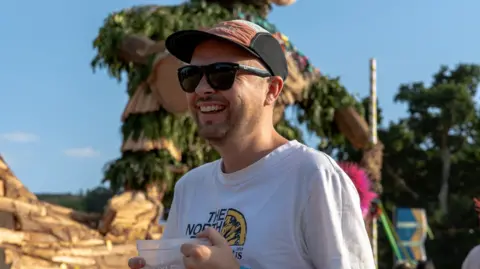 Matt Collins
He underwent a six-hour operation to remove the golf ball-sized tumour, but in July he learned that it had started to grow again.
The 38-year-old said fundraising helped him raise £100,000 for a treatment not available on the NHS – DcVax-L, a personalised vaccine made using cells from the patient’s own tumour.
But it relies on the correct storage of a patient’s tumour and, due to the way his brain tissue was stored after surgery, he was only able to receive four doses of the treatment rather than the 10 that were initially planned.
“It wouldn’t have cured my cancer, but it could have given me a couple more months,” said Collins, who said he has been given between 12-18 months to live.
“It’s so important to have the tissue stored properly, and that people are aware of the options they have. I was never told there was a vaccine available.”
The charity Brain Tumour Research said it wanted to see an increase in frozen tissue storage capacity across the UK.
Dr Karen Noble, its director of research, policy and innovation, said: “Personalised treatments for brain tumours rely on gathering detailed genetic information about the tumour following surgery.
“The way tissue is stored post-surgery has a critical impact, because there is a real risk that powerful information is lost, closing down pathways to clinical trials and innovative treatments.”
‘Expert judgment’
The Welsh government said the case had not been made for new legislation.
A spokesperson added: “Clinical teams already use their expert judgment to balance diagnostic needs with the potential for research and novel therapies, and overriding that clinical discretion with legislation could compromise timely diagnosis or create conflict where tissue volume is limited.”
They added it would work with relevant bodies “to ensure NHS Wales practices in tissue archiving and access to genomic testing remain in the best interests of our patients”.
The UK’s Department of Health and Social Care (DHSC) said: “Innovative research is vital in our fight against brain cancer so patients are offered the most cutting-edge treatments.
“To deliver this, we are investing £13.7 million in the National Institute for Health and Care Research’s [NIHR] UK-wide Brain Tumour Research Consortium to support groundbreaking research and develop new brain tumour treatments.”
www.bbc.com (Article Sourced Website)
#Owains #Law #Wife #takes #campaign #brain #tumour #tissue #parliament