
“Everybody is obsessed with entertainment. As creatives, we must also educate and provoke thought,” says Nikkhil Advani, whose Freedom At Midnight Season 2 has opened to a tremendous response. “I’m surprised by the emotional outpouring. People told me they usually binge-watch, but with Freedom At Midnight, they paused to read the sources.”
After Rocket Boys, Advani was clear that they needed more content that acts as a catalyst, prompting viewers to check sources and learn about history. Reflecting on the source, Advani recalls that many of his generation grew up loving Collins and Lapierre’s Freedom At Midnight.

“It helps us understand the days before Partition and its aftermath, whose effects and hostility continue today,” Nikkhil says. Without taking sides, he wanted to put audiences “in negotiation rooms, in trains and communal riots, and beside Gandhi’s fast,” letting them judge leaders who lacked full answers. “Amidst chaos, they tried their best to maintain sanity.”
Edited excerpts:
How did you balance historical facts and the dramatic flow of episodes?
You need a top writing room that reads the material as deeply as you do, with writers who question and consult multiple sources for perspective. The aim was to capture the essence of the series; history that you may not know, history that you should know. Everything — drama, plot, character, and world-building — was rooted in the logline: the sacrifice of many and the ambition of one. We strictly cut anything that didn’t serve this purpose. Also, we followed the book’s tone, which shifts midway from a chamber piece to a thriller.
Were you conscious of the times we are living in?
We are not here to provoke. I believe in Voltaire’s idea: ‘I disapprove of what you say, but I will defend to the death your right to say it.’ Dissension is democracy’s cornerstone. My only requirement for performers and writers was that every character must retain dignity, even in dissent and disagreement.
The portrayal of the complex Nehru-Patel relationship has been appreciated. How did you approach this space where neither is completely ideal nor totally pragmatic?
The relationship between Nehru and Patel was built on deep mutual respect. In the first season, when Gandhi gave the prime ministership to Nehru (despite significant support for Patel within Congress in 1946), we expected people to sit up and say, finally, someone showed what actually happened. We were willing to talk about the uncomfortable. Later, I spoke with someone close to Maniben (Patel), who said you guys got it wrong. It was not that Nehru didn’t get any votes. Nehru received one vote, and that was Sardar Patel’s.
My point is, Gandhi came to Bombay in 1915, and for the next 32 years, till they sent the British back in 1947, these three men spent almost every waking hour together. They knew each other’s strengths and weaknesses. It is reflected in the scene after Gandhi’s assassination when Nehru says to Patel, ‘When your father passes away, you need the help of the big brother.’ He meant it.
ALSO READ: ‘Freedom At Midnight’ series review: A pacy, layered account of Partition politics
The series doesn’t paint Jinnah in one colour and retains his inaugural Karachi Assembly speech, where he envisions a Pakistan where Hindus can freely go to their temples…
Jinnah had a long journey from being a champion of Hindu-Muslim unity and opposing the use of religion in politics to taking on the persona of Quaid-e-Azam after he returned from self-imposed exile in London to lead the Muslim League and support the British during World War II at the advice of Viceroy Linlithgow. Otherwise, he was a South Bombay elitist lawyer and political strategist.
Despite embracing this stubborn, rabid religious persona, he did not agree with everything that it represented. Five weeks before the inauguration, when (younger sister) Fatima tells him it is time to leave the Malabar Hills house, he asks, ‘Do we need to pack everything?’ She has to remind him that Quaid could not rule Pakistan from Bombay. Egoist that he was, he says, ‘Who wants to stay here?’—but the hesitation in his expression betrayed his true feelings. As the book noted, he had fired a gun, but could not retract the bullet.
However, historians have questioned the depiction of Jinnah’s relationship with Pakistan’s first premier, Liaquat Ali Khan, who is shown as an imbecile.
Yes, historians are angry with me because Liaquat was a brilliant man. The brilliance of Liaquat has been sacrificed so I could show Jinnah’s obstinacy. He became a means for me to get what I wanted from Jinnah’s character. It led to too much dramatic licence. I apologise to the next of kin of Liaquat Ali Khan. But full credit to Rajesh Kumar, who played him with all sincerity.
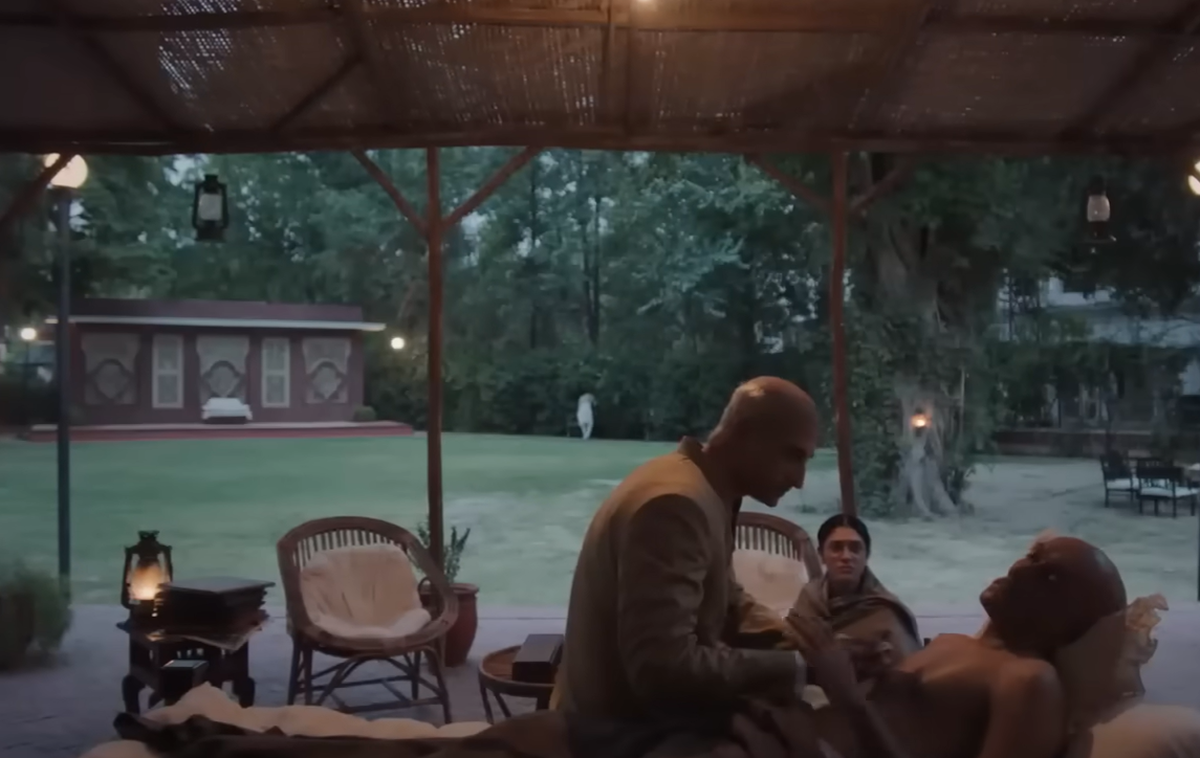
A still from ‘Freedom at Midnight’.
| Photo Credit:
SonyLIV/YouTube
Tell us about the Kashmir episode, which puts the events and the roles of political leaders into context.
This was the episode that we were most careful about. We wanted to provoke people to read more about the complex problem. Nehru needs to be questioned for failing to show objectivity regarding his homeland. His romantic notion that Kashmir will remain with us and that no one will be able to do anything to it is voiced in the episode.
What kind of creative choices did you make while showcasing violence during Partition?
Personally, I’d avoid showing violence, but I couldn’t ignore death trains, exodus violence, or Lahore’s devastation. The book covers violence against women extensively, making it essential to show that. Apart from Gandhi, no one foresaw the consequences. He said when you cut off a tree’s roots, its leaves, and branches, don’t know where they will fall. We are uprooting people; they will lose their sense of right and wrong. Within this, he offered India’s premiership to Jinnah.
Why haven’t you named the conspirators behind Mahatma Gandhi’s assassination and have limited yourself to the story of Madanlal Pahwa? Is it some kind of self-censorship?
Everybody knows about them. It was not self-censorship. It was a creative decision I made to maintain the narrative flow. Pahwa is mentioned in the book, and through him, I could tell the story of the Exodus. When Pahwa was captured by the police after the failed attempt (on January 20), he gave them only the name of (Vishnu) Karkare. Godse was a nameless fellow till he shot Gandhi. That’s why he got away with it.
Did it not occur to you to confront them, and doesn’t it reflect hesitation on your part?
No, I didn’t wish to confront anybody. I didn’t feel that it was important. There is nothing like ‘safe’ or ‘unsafe’. I wanted the audience to take the same journey that I undertook while reading the book.
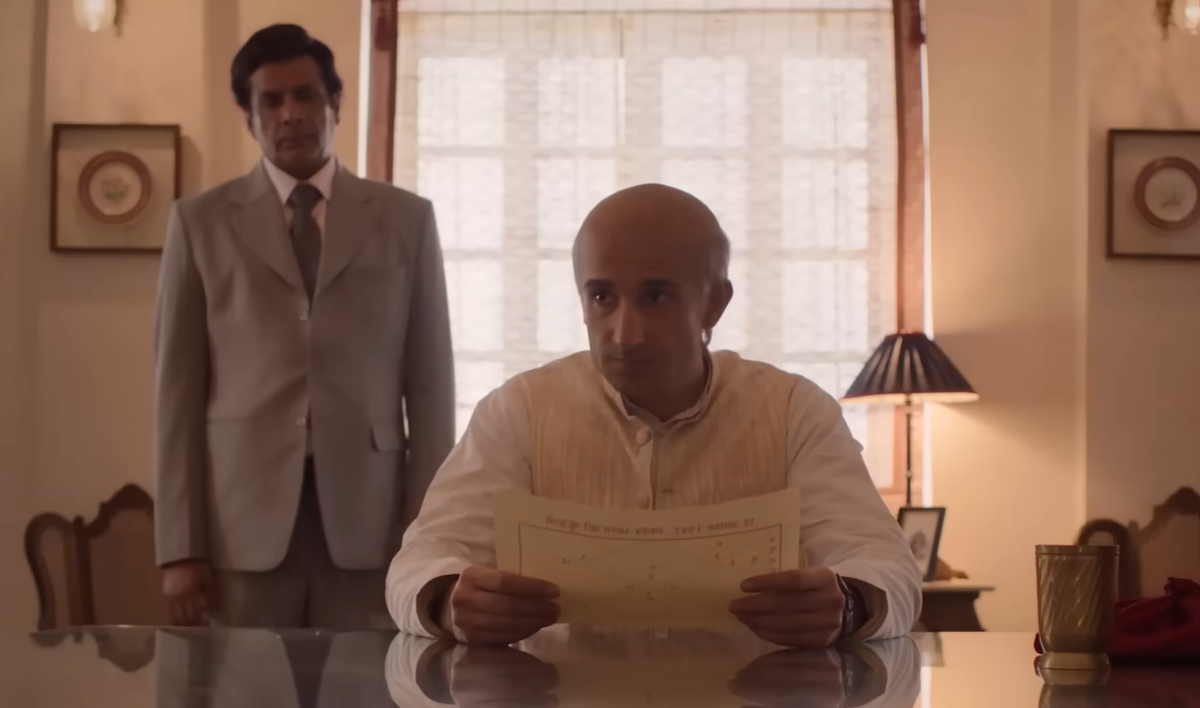
A still from ‘Freedom at Midnight’ Season 2.
| Photo Credit:
SONYLIV/YOUTUBE
The buzz is that now you are moving to the revolutionaries who contributed to the Freedom Movement.
Yes, we have shot the series based on Sanjiv Sanyal’s book, and the first season will feature revolutionaries Sachindra Nath Sanyal, Rash Behari Bose and Bagha Jatin. The events are rooted in history, but I had a little more fun with characters. It is treated more like an action extravaganza about young boys who were not bound by an ideology but by the belief to throw the British out.
These days, you seem wedded to the long form. When would you return to theatres?
I wouldn’t lie, I am a bit wary of the theatrical space. What should one make? I might be ready to make a love story again. I am 50 and want to see what love looks like in the 50s. Are there any second chances in love?
Are you keen on going back to Shah Rukh?
No, not at all. He is in a different stratosphere these days.
What is your sense of the content that is being made?
I miss the cinema of Gulzar and Mani Ratnam. I miss films like Aandhi, Silsila, and Lamhe. I miss simple storytelling. After Dhurandhar, it will be very interesting to see Ranveer Singh in a Kabhi Kabhie!
Freedom At Midnight Season 2 is currently streaming on SonyLIV.
www.thehindu.com (Article Sourced Website)
#Nikkhil #Advani #interview #Dissension #democracys #cornerstone