
From surreal geological formations to vast wildernesses shaped over millennia, Earth’s greatest natural wonders have the power to stop us in our tracks and make “must see” feel like an understatement.
To spark ideas for your next adventure, here are some of the places that remind us how extraordinary our planet really is — proof that even in our modern age, wonder is everywhere.
1. Victoria Falls (Zambia/Zimbabwe)
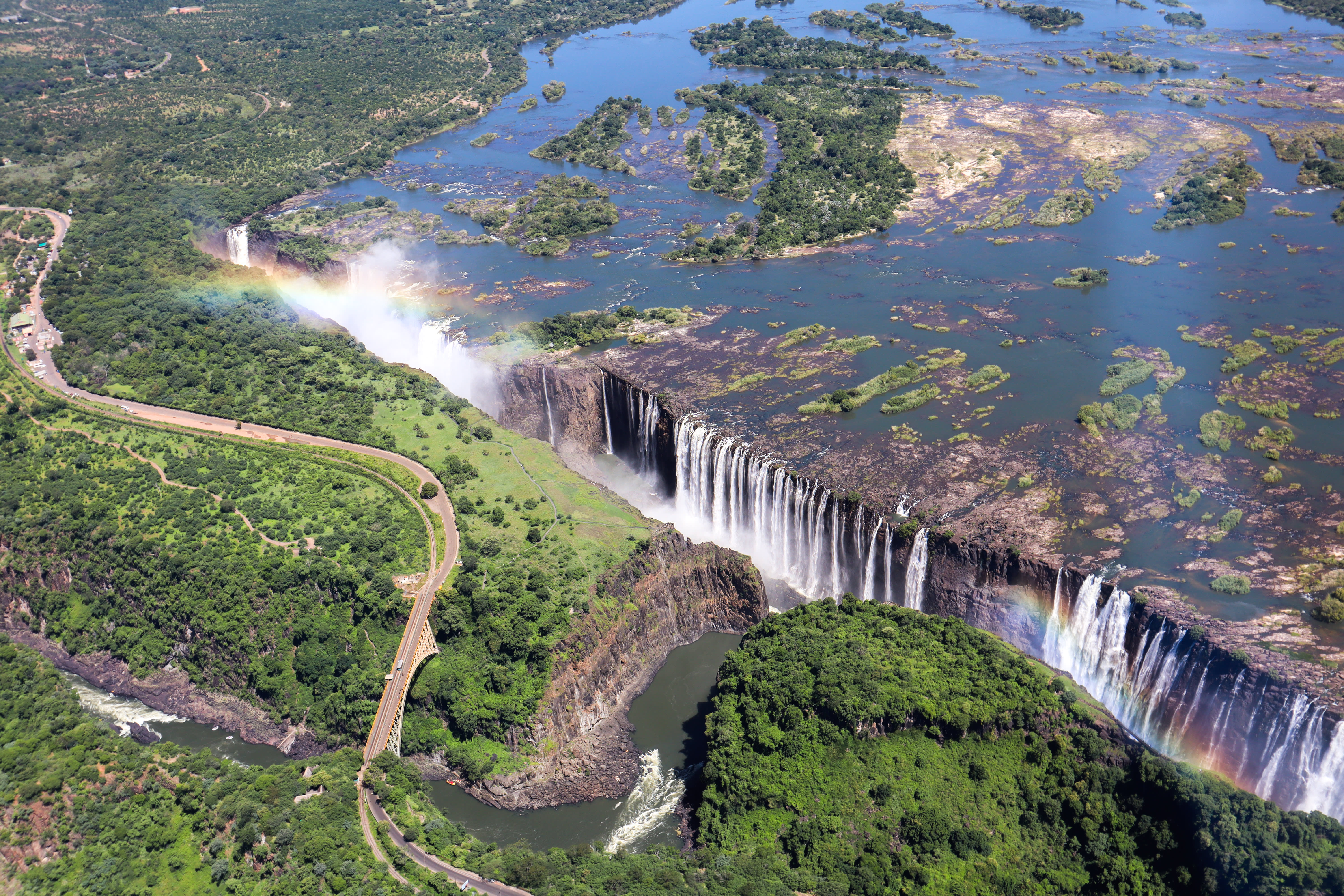
Q: What is Victoria Falls, and where is it located?
Victoria Falls is a massive, mile-wide waterfall located in Southern Africa, straddling the border between Zambia and Zimbabwe. It has been recognized by the UNESCO World Heritage Centre as an exceptional example of geological processes and natural beauty. The Falls are renowned for plunging into a deep gorge — over 100 gallons of per minute during the rainy season — and creating a perpetual mist that generates frequent rainbows and occasional moonbows on full-moon nights.
- Key Feature: The mile-wide cascade, considered one of the largest on Earth.
- Unique Experience: Visitors can view the Falls from pathways on either side of the border or take a daring swim to the edge at Devil’s Pool.
- Recommended Activity: A helicopter tour offers sweeping views of the entire formation, essential for understanding its scale.
- Travel Comfort: Luxury lodges near the Zambezi River allow guests to pair the spectacle with comfort.
2. The Outback (Australia)
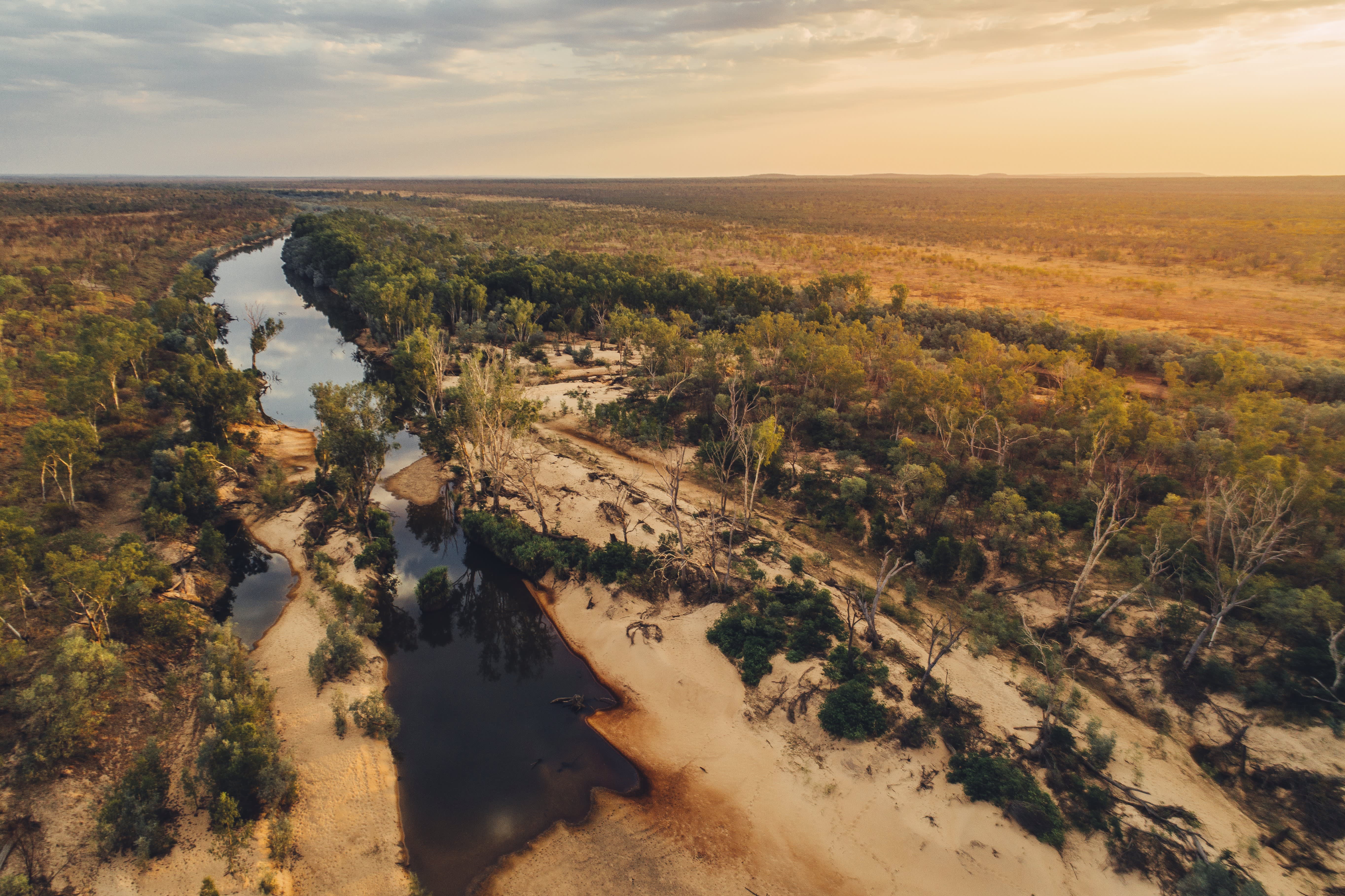
Q: What defines the landscape and wildlife of the Australian Outback?
The Outback is a vast, remote red desert landscape that spans 2.16 million square miles of Australia’s interior. Despite its arid environment, it is a biodiversity hotspot for adapted wildlife, including kangaroos, emus, and rare reptiles. It is geographically defined by major formations like Uluru and Kata Tjuta.
- Geographical Feature: Expansive red desert punctuated by iconic sandstone monoliths.
- Recommended Luxury Travel: The Ghan is a legendary train service that offers spacious cabins, gourmet dining, and curated excursions through the heart of the Outback, providing a comfortable exploration experience.
- Night Sky Highlight: The Outback’s skies are often cited by the International Dark-Sky Association as among the world’s best for stargazing.
3. Son Doong Cave (Vietnam)

Q: Why is Son Doong Cave considered the largest natural wonder and where is it located?
Son Doong Cave, located deep in Vietnam’s Phong Nha-Ke Bang National Park, is officially the world’s largest natural cave by volume, vast enough to contain an entire city block. According to Guinness World Records, its main cavern alone reaches a volume of up to 38.5 million cubic metres. It is a self-sustaining underground ecosystem featuring an interior jungle (growing beneath collapsed ceilings that allow sunlight), a flowing river, lakes, and bioluminescent creatures.
- Location: Phong Nha-Ke Bang National Park, Vietnam.
- Scale Fact: It is the largest natural cave in the world; it has its own weather system.
- Key Internal Feature: The “Great Wall of Vietnam,” a massive calcite barrier, which serves as an alternative exit route for experienced adventurers.
- Ecosystem: Contains a prehistoric-feeling environment of plants, insects, and blind fish.
4. The Fjords of New Zealand

Q: How were New Zealand’s fjords formed, and what makes them unique?
New Zealand’s fjords were shaped over millions of years by powerful glaciers, resulting in sheer cliffs, deep waterways, and dramatic peaks that rise directly from the sea. The deepest fjord is Doubtful Sound, with a depth of 1,381 feet. They are unique for the presence of “vertical forests” clinging to the rock walls and a rare underwater phenomenon.
- Geological Origin: Glacier activity over millennia.
- Visual Characteristic: Frequent waterfalls cascade down the cliffs, especially after rain, and mist often drifts through the lush forests.
- Unique Marine Feature: A layer of freshwater sits atop the saltwater, which allows deep-sea corals and rare marine species to thrive at surprisingly shallow depths, creating a vibrant underwater world. This includes deep sea black coral, typically found at depths of over 300 feet, to thrive as just over 30.
5. The Northern Lights (Aurora Borealis)

Q: What are the Northern Lights, and what are the best places to view them?
The Northern Lights (Aurora Borealis) are a mesmerizing natural light display resulting from solar particles colliding with Earth’s atmosphere. The spectacle illuminates the sky with colorful, rippling ribbons of light.
- Scientific Cause: According to the National Oceanic and Atmospheric Administration, the Lights are the visible result of solar wind particles, primarily electrons, pulled into our atmosphere by Earth’s magnetic field. This causes atmospheric gases to emit light.
- Best Viewing Locations:
6. The Amazon Rainforest

Q: Why is the Amazon Rainforest globally significant for biodiversity and climate?
The Amazon Rainforest, spanning nine countries (primarily Brazil), is the world’s largest rainforest and is home to an astonishing ten percent of all known species on Earth, including jaguars, rare birds, and countless endemic plants. It is globally significant because it plays a crucial role in regulating the global climate. The World Wildlife Fund estimates it absorbs up to a quarter of the world’s annual carbon emissions.
- Biodiversity Statistic: Contains 10% of all known species on Earth.
- Geographical Scope: Spans nine South American countries and covers roughly 2.1 to 2.7 million square miles.
- Human Element: Home to many Indigenous communities, including some that remain uncontacted.
- Travel Note: Can be explored via stays in remote luxury jungle lodges arranged by Enchanting Travels, balancing wilderness immersion with comfort.
7. Cappadocia (Türkiye)

Q: What is Cappadocia known for, and what are its main features?
Cappadocia, a region in Türkiye, is known for its otherworldly landscape defined by iconic rock formations called “fairy chimneys.” First inhabited around 6,000 BC, inhabitants have carved homes, churches, and entire underground cities into the soft volcanic rock for millenia. Today it is listed as a UNESCO World Heritage site, recognized for its combination of geological formations and human history.
- Geological Feature: Iconic “fairy chimneys” (conical rock formations).
- Historical Use: Ancient cave dwellings, underground cities, and churches, many of which are now modern cave hotels and restaurants.
- Top Viewing Experience: Taking a hot air balloon ride at sunrise offers sweeping, luxurious views of the unique valleys and cliffs.
Book Your Bespoke Journey to a Natural Wonder
Enchanting Travels specializes in creating seamless, custom-crafted journeys to these natural wonders and over 70 destinations worldwide. We ensure every detail is handled, allowing you to focus purely on the sense of wonder these extraordinary landscapes inspire.
www.enchantingtravels.com (Article Sourced Website)
#Natural #Wonders #World #Enchanting #Travels