
A new food pyramid drop for a dietitian is equivalent to a surprise Taylor Swift album release for Swifities. We’re stoked, confused, a little dramatic, and definitely ready to debate every lyric (food group) with anyone who will listen.
Here’s my real opinion:
Disclaimer + Reminder: I purposely tried to not consume any content around the new guidelines prior to writing this, other than seeing some headlines that I couldn’t avoid. So I’m not sure if this is going to be a popular take or lead to a bunch of unsubscribes LOL.
Anyone you see talking about the food pyramid online is giving their opinion based on their own worldview and life experience. 45% of America will find any reason to hate it. 45% will find any reason to love it. 10% (I’m in a generous mood) will actually look at it completely objectively.
But, no one is right or wrong. Including me.
Listen to yourself + your own body when evaluating the new guidelines. You are in charge of yourself.
My overall take:
At first glance, I’m loving the whole foods > processed foods vibe. Not that processed foods were ever overly encouraged, but I like the emphasis on whole foods here and my hope is that this will put pressure on the national + state level to prioritize more access to whole foods.
Thoughts on fat: I wouldn’t personally put butter + beef tallow above high-quality grains, nuts, and seeds or at the same level as fruit, but overall, I’m happy fats are no longer to be “used sparingly” and I’m hoping this is the end of the low-fat food craze that still lives inside our bodies since the 90s. The emphasis on avocado + olive oil makes me happy!
It’s interesting that saturated fats are recommended to remain at 10% of fat intake, while butter is sitting next to grapes on the pyramid. Feels like a typo.
What to watch out for:
Making fat a free-for-all. One of the biggest reasons I see women remain stuck (or even gain weight) in Metabolism Makeover when they first join is their newfound freedom with fat. Fat is still a calorie-dense macronutrient, and if you’re pouring ¼ cup of heavy cream in your coffee every morning, loading up on cheese and sour cream, and dousing your food in olive oil at every meal, it’s probably going to be too much fat for weight loss. Eat more high-quality fat, but just be chill.
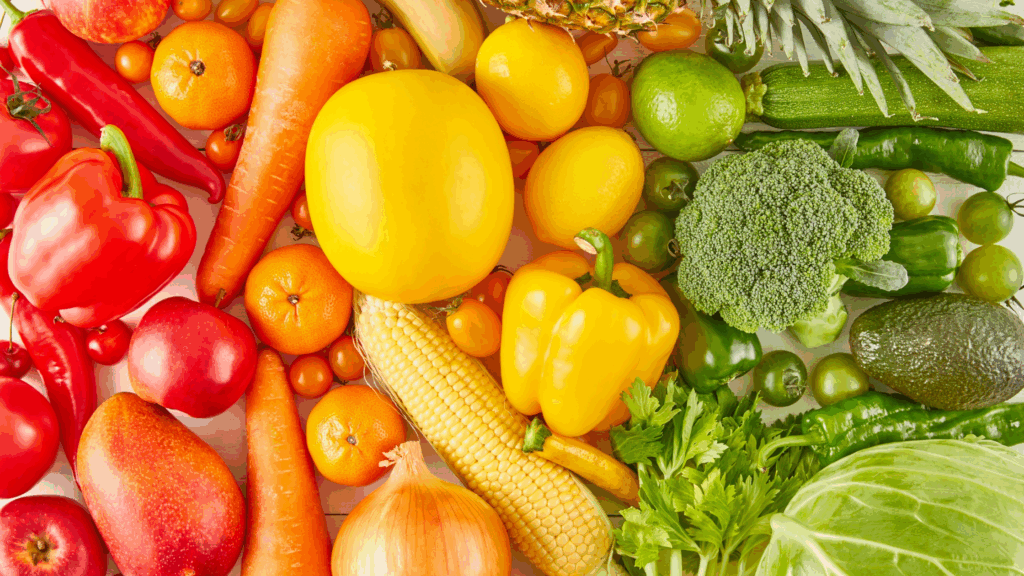
Thoughts on fruits and vegetables:
I love the heavy emphasis on color in this pyramid!
What to watch out for:
I don’t see any specific fiber recommendations (please correct me if I’m wrong), and I don’t love that. We need a number to shoot for because, overall, Americans are getting less than half of the amount of fiber they should be getting. I believe this is a big contributor to the rise in colon cancer. I’ll be sticking to 25-35g/day for women.
Thoughts on protein:
FINALLY we’re seeing a much-needed increase in protein recommendations! The previous recs were based on surviving a coma (literally), and I think we can all agree those recs were not accurate for someone chasing toddlers, running companies, and/or hitting the gym. Or, really, just trying to survive real life lol. We went from about 0.3g protein/pound body weight to 0.55-0.75g protein/pound body weight.
What to watch out for:
For weight loss + women who are peri/menopausal, you’ll want to, at the very least, hit the upper limit on this recommendation. For most of you reading this newsletter, I’d recommend shooting closer to 0.8-1.0g protein/pound body weight. If you are very overweight, a little trick I use with clients is to find out what your body weight would be if you were a BMI of 25 and use that weight instead of your actual weight.
Thoughts on grains:
This was the group of foods that really got flipped on its head and is now in the “use sparingly” category with a recommended 2-4 servings (which comes out to about 30-60g of carbs via grains) per day.
I had to think about this one quite a bit because at first glance, I thought, this is way too few carbs. But is it?
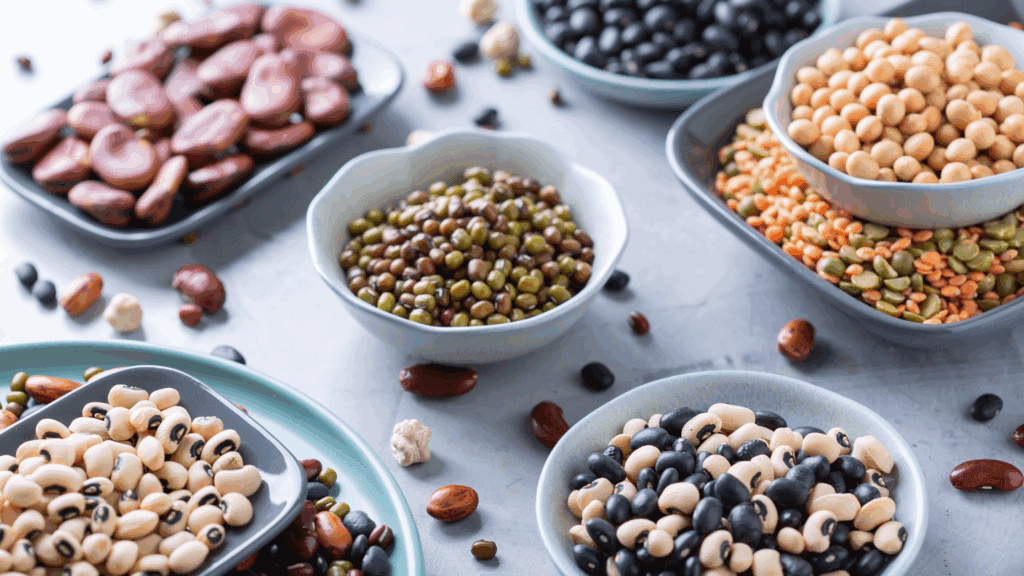
Grains are only a portion of our daily carbohydrate intake. Carbs also include fruits, vegetables, beans, lentils, nuts, seeds, potatoes, avocados, and dairy products. The guidelines suggest 2-4 “servings” of grains/day which comes out to about 60g of carbs coming from grains.
For perspective, this could look like 1/2 cup (dry) oats at breakfast and a turkey sandwich at lunch. Or a piece of toast at breakfast and 3/4 c rice at dinner. And then, of course, it doesn’t include any potatoes, lentils, beans, vegetables, or fruit that you’ll have at that meal or other meals.
This is pretty close to the recommendations in Metabolism Makeover. We generally push for lentils, beans, potatoes, veggies, and fruits > grains because we can get more bang for our buck with fiber + color on our plate.
What to watch out for:
Thinking that 2-4 servings of grains is the same as 2-4 servings of “carbs, as I’ve already outlined. These are not the same. Grains are foods like bread, rice, quinoa, pasta, and couscous, and don’t include fruits, vegetables, beans, lentils, avocados, seeds, nuts, or dairy.
The few headlines I did see made me feel like there was a lot “shock” in the media over this pyramid, but it’s really not all that radical. There’s an emphasis on protein, healthy fats, fruits, vegetables, and whole food carbs. Something we’ve been preaching here for almost 10 years.
Thoughts on the return to the pyramid > plate: I think I’m going to be an outlier here. I have a feeling people are going to be upset that portion sizes are not emphasized but…I kind of like this.
We all have such different needs. Men, women, athletes, pregnant women, breastfeeding, peri/menopausal women, those with different health conditions….I mean, I recommend proportions of protein + carbs + fat to all my clients based on their individual needs.
I like the overall emphasis on eating more whole foods, better sources of proteins + fats, and prioritizing beans/fruit/veggies over grains and deciding proportions based on needs.
What to watch out for: I’m speaking to a portion of the population that knows what’s up. You guys are educated. You’re reading my newsletter. Does the general population know what portion sizes they need? Probably not.
Some things that made me wonder if no one proofread this thing:
The rice + beans next to the bowl of rice.
The “war on protein.” You can buy protein water for Christ’s sake. That was a little dramatic.
The huge stick of butter next to the grapes. There are far better whole food saturated fat options like coconut that I would have gone with here. And butter is a pretty dense source of saturated fat, which we were told to use sparingly.
I’m sure there’s more, but I only had an hour to write this.
I think, overall, the emphasis on more nutrient-dense foods is a net positive, and you can take what you need from it. If it doesn’t feel good to eat red meat, don’t. If you feel like your body thrives on more grains, cool.
At the end of the day, does anyone actually care what the government has to say about what we should be eating these days? No. It’s just fun to talk about.
If you’d like support with incorporating whole foods realistically into your lifestyle + and to gain access to a community of humans supporting each other in the process, join The Membership here!
mydietitian.me (Article Sourced Website)
#thoughts #food #pyramid