
A powerful cold snap is sweeping across the globe, gripping nations with freezing temperatures, heavy snowfall, and rare weather extremes to regions both used to harsh winters and those far less prepared for the chills.
From Arctic blasts sweeping across North America and Europe to unexpected sub-zero temperatures in parts of the Middle East and South Asia, countries are recording some of their coldest readings of the season — and in some cases, of recent years. This biting cold wave, which includes, snowstorms, frost, and icy winds have disrupted daily life, travel and infrastructure, while authorities issue weather warnings and advisories.
This roundup takes you around the world to show how the cold snap is making its presence felt in different countries — from record-low temperatures and severe storms to the breathtaking winter scenes shaping this global weather event.
Stay up to date with the latest news. Follow KT on WhatsApp Channels.
United States
A major winter storm is expected to affect more than 175 million people as they face heavy snowfall and its impact including power outages and travel disruption. Several carriers, including UAE-based Emirates, cancelled flights ahead of Storm Fern, as Texas declared an emergency.
Predicted to peak on Thursday and Friday, the storm is also expected to engulf an area stretching from Texas and the Great Plains region to the mid-Atlantic and northeastern states.
Check out the snowfall in the area around Grand Central Terminal as people walked by in New York:

Cold weather from a sweeping winter storm caused pancake ice to form on Lake Michigan, affecting parts of Indiana and Michigan.
Check out this video shared by AP News:
According to the National Weather Service (NWS), the storm will move across much of the country, creating extremely hazardous conditions.
This major winter storm is expected to bring frigid temperatures and severe wind chills. Numerous low temperature records are likely to be broken, according to the NWS.
Shoppers in Little Rock, Arkansas, were already stocking up on essentials with customers visiting Kroger and Walmart in preparation for the approaching winter blast.
Canada
Much of Canada remains gripped by a deep freeze, as the Arctic air fuelling the powerful winter storm in the United States originates from the country itself, according to Environment and Climate Change Canada (ECCC).
ECCC said a strong Arctic air mass has settled over the Prairies, with wind chills in some areas making temperatures feel as low as –55°C, creating dangerous conditions across large parts of the region.
In southern Ontario, residents are also bracing for more disruption, with a major snowstorm forecast to deliver between 20 and 30 centimetres of snow on Sunday. The extreme weather has already taken its toll, as a powerful storm swept through on January 22, forcing schools in Ottawa to close for a second consecutive day on January 23.
Eastern Ontario is still digging out after Thursday’s heavy snowfall, with residents clearing snow and motorists navigating icy, snow-covered roads.
Gaza
According to a statement released by UNICEF on January 20, children in Gaza are facing increasingly dangerous conditions as harsh winter weather compounds an already dire humanitarian crisis.
Repeated winter storms have destroyed or damaged thousands of makeshift tents and shelters. As a result, families are being forced to endure cold, wet and unsafe living conditions.
Children are being exposed to cold temperatures, heavy rain and strong winds reaching 30–40kmph, while contaminated floodwaters sweep through displacement areas. Night-time temperatures are dropping to between 8°C and 11°C, leaving thousands of children without enough shelter or protection from the cold.
Amid the devastation, a fleeting moment of colour cut through the grey winter sky. A rainbow arched over rows of tents sheltering displaced Palestinians in Khan Younis, in the southern Gaza Strip on January 13. Against the backdrop grey skies and rain-soaked ground, the image offered a brief symbol of hope — standing in stark contrast to the fragile shelters below and the harsh reality families continue to face as winter storms batter the region.
Saudi Arabia
Turaif in the Northern Borders Region recorded the Kingdom’s lowest temperature this winter, plunging to –3°C on Wednesday, according to the National Center for Meteorology (NCM).
Frost blanketed the area, and other parts of the region experienced icy roads and overnight frost, particularly in open areas.
The country saw heavy rain and hail on Southern Tabuk on Saturday, and light rainfall in Umluj.
A video circulating online shows just how intense the cold has become in Saudi Arabia, with water poured from a plastic bottle freezing instantly — piling up like a small icy mound before it even hits the ground.
Check out the video below:
تج٠د اÙÙ Ùا٠Ù٠سدÙر ش٠ا٠اÙرÙاض اÙÙÙ٠اÙخ٠Ùسpic.twitter.com/5aj4f7XOpM
— أخبار عاجÙØ© (@News_Brk24) January 22, 2026
Pakistan
Heavy rain and snowfall affected northern and provincial regions across Pakistan, prompting the National Disaster Management Authority to urge citizens to take precautions. Areas impacted include Naran, Kaghan, Dir, Swat, Kalam, Chitral, Kohistan, Mansehra, Abbottabad, Shangla, Astore, Hunza, Skardu, Murree, Galiyat, Neelum Valley, Bagh, Poonch, Haveli, and Rawalakot.
In Muzaffarabad, residents cleared snow from rooftops, while tourists in Murree walked along snow-covered roads, experiencing one of the region’s most intense winter events this season.
Take a look at how residents kept themselves warm during cool weather in early January, from sitting near a fire to sipping hot chai:
Russia
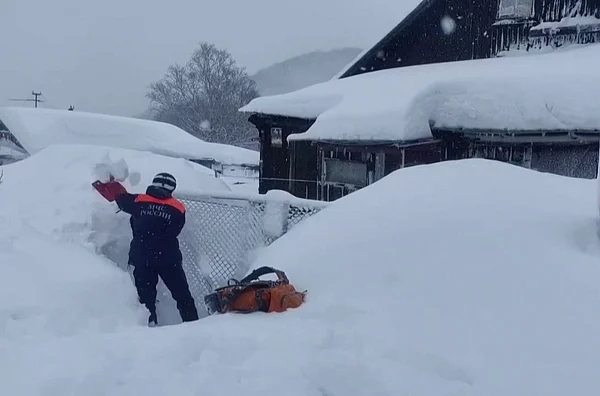
Russia’s Far East experienced its heaviest snowfall in 60 years on January 20, burying towns under metres of snow.
In Kamchatka Peninsula, locals were seen shovelling in the streets, as rescuers helped people trapped in their homes.
Public transportation was partially suspended in the regional capital, Petropavlovsk-Kamchatsky, after the height of the snow reached approximately 10 feet.
China
The winter blast swept across Asia this week, dusting Shanghai in white as a surge of cold air moved through southern China. The rare snowfall, which fell on Tuesday (January 20), delighted residents of the financial hub, even as authorities warned that the frigid conditions could persist for at least three days.
Located on China’s east coast, Shanghai last saw heavy snowfall in January 2018. The sudden chill marked a sharp contrast to conditions just a week earlier, when the city experienced unusually warm temperatures of around 20°C — warm enough for some osmanthus trees to begin blooming, according to local media.
Workers are also seen clearing snow from a pavement during heavy snowfall in Beijing on January 18, 2026.
South Korea
Seoul has also been gripped by a powerful cold wave, causing the Han River to freeze over.
Icicles are seen hanging from plants along the frozen river, while rescue teams navigate icy waters.
Pigeons are also seen gathering along the riverbanks, highlighting the unusual intensity of the cold in the region.
UAE
The UAE has seen a dip in temperatures, with the National Centre of Meteorology confirming the lowest reading of the season at 0.2°C on January 22 at 5.45am.
The cold spell marks the nation’s coldest winter days so far this season. NCM experts explained to Khaleej Times that the current cold spell affecting the UAE is not an isolated local event, but part of broader global climate dynamics.
Central to this is the La Niña phenomenon — a climate pattern driven by cooler-than-normal sea surface temperatures in parts of the Pacific Ocean, which impacts weather patterns around the world.
2026’s lowest reading so far was recorded in the majestic Jebel Jais mountains, located in Ras Al Khaimah, which is a spot known for its cooler weather. The high altitude leads residents to bundle up in jackets, even during UAE summer.
As winter hits, the mountains are enveloped with chilling air. UAE’s lowest temperature ever was also recorded on Ras Al Khaimah’s Jebel Jais — a freezing -5.7°C on February 3, 2017.

www.khaleejtimes.com (Article Sourced Website)
#cold #world #Snow #storms #freezing #temperatures #grip #Gaza #UAE