
This is my go-to method for making a perfect rib roast that’s tender, juicy, and full of rich beefy flavor. This cut of meat is expensive, and often sitting on holiday tables, so it can be a little intimidating, but I promise I’ll walk you though every step of the way! I use a simple garlic and herb rub for incredible flavor, and we’ll cook some ajus so you have something to drizzle over the roast as well. This is what my family eats for big holiday meals (like at Christmas time!) It’s an impressive dish that you’ll be coming back to again and again!
Make sure to scroll through all the details below, because I’ll walk you through the options when purchasing one as well.

Buying a Rib Roast: What You Need to Know
If you like ribeye steak, this is your roast. A rib roast is basically a collection of ribeye steaks still in one big piece. When your butcher slices that same roast into individual pieces, you get ribeyes. One of the reasons it’s so good is because, just like ribeye steaks, it has a lot of fat and marbling. If you like a leaner cut with less fat to cut around, you might prefer a beef tenderloin, or a tri tip roast.
Where to buy: You can find rib roasts at most major grocery stores, warehouse stores (Costco, Sam’s etc) or your local butcher. Around holidays they are very common, but most stores will cut one for you any time of year if you ask. Don’t be afraid to chat with the butcher if you need help!
Prime vs. Choice: You’ll usually see roasts labeled as Prime or Choice, which refers to marbling (the fine streaks for fat running through the meat). It doesn’t have anything to do with the name “prime rib”. That’s mostly just a nickname that restaurants use for this cut of roast, so don’t let that confuse you.
- Prime: This is the best, highest rating. It means it has maximum marbling, richer flavor and is very tender. However, it’s also the most expensive.
- Choice: Slightly less marbling, still wonderful, and significantly cheaper than the prime cut. I almost always buy Choice, so don’t feel pressured to splurge unless you want to (and it’s in your budget!)
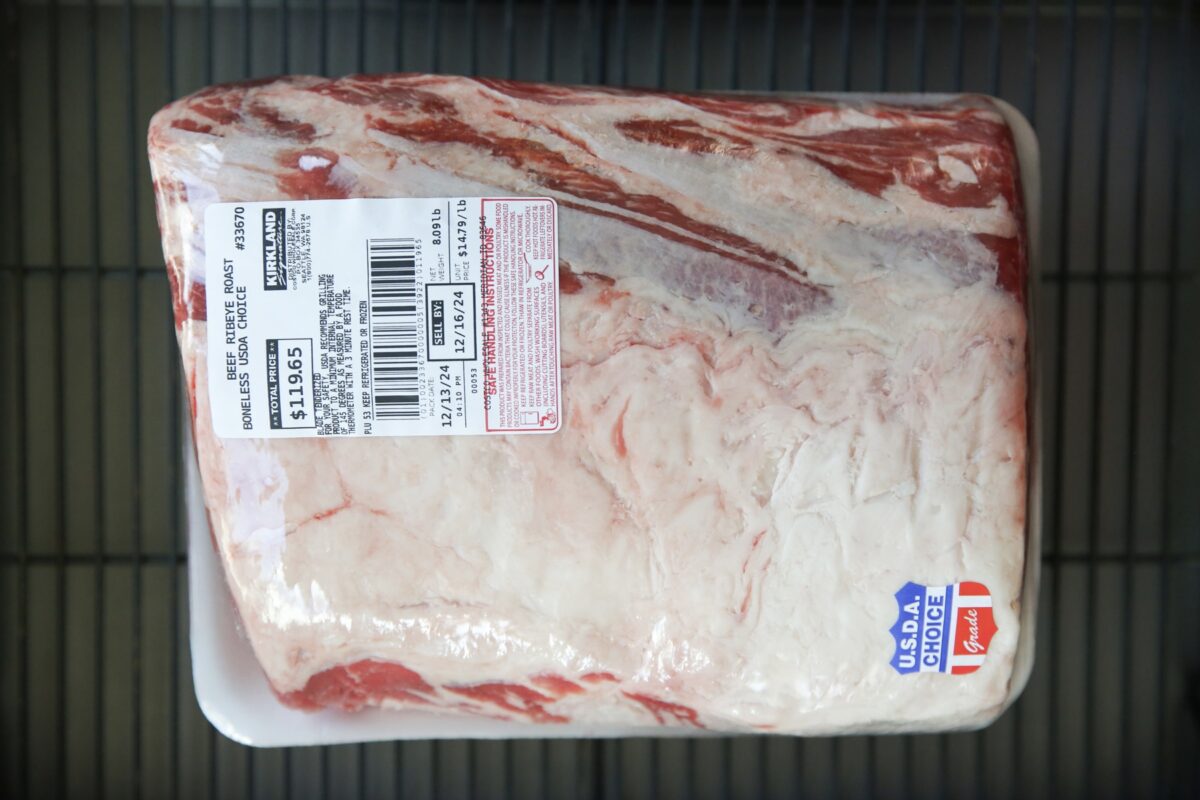
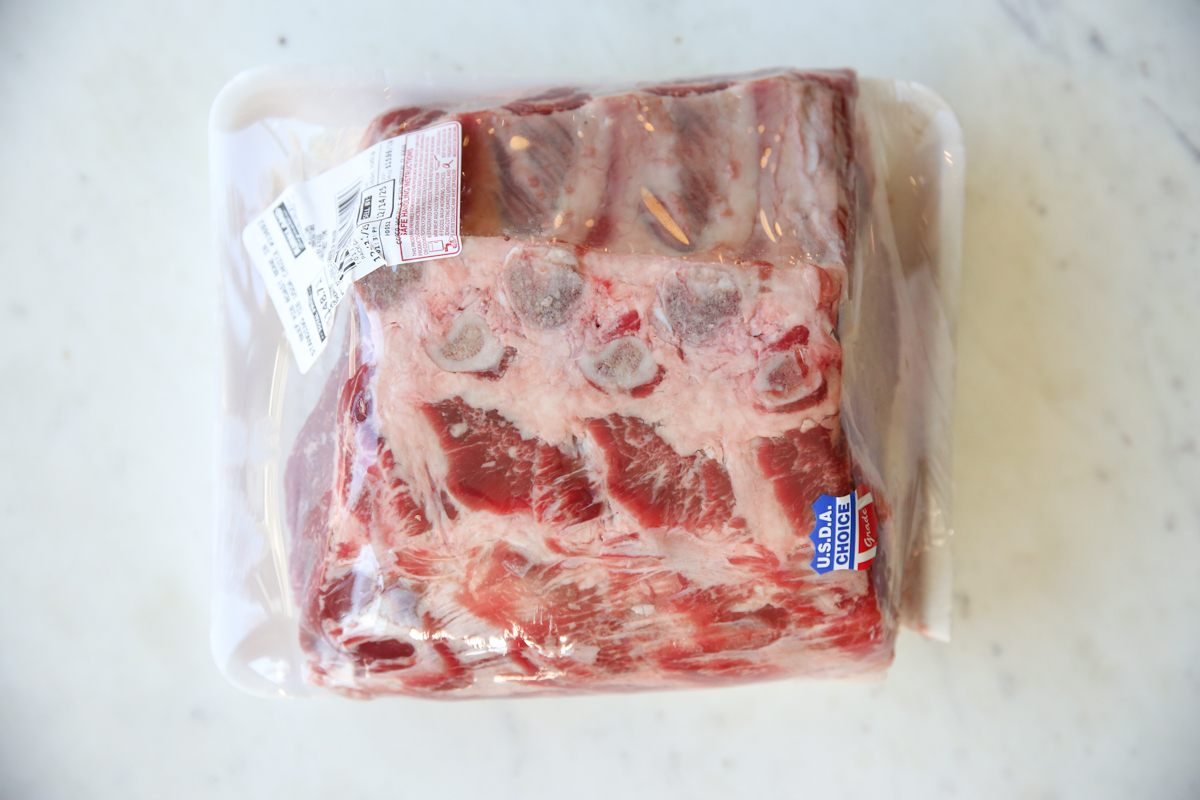
Bone-In vs Boneless: Either one works, just depends on what you prefer!
- Bone In: Usually labeled as a “Standing Rib Roast” because the roast literally sits on top of the bones, which act as a natural baking rack. A bone-in roast usually takes just a bit longer to cook, but it looks really impressive on display. It’s a little tricker to carve, since you have to cut the meat off the bones after cooking. One option (you can ask the butcher to do this, or do it yourself) is to detach the bones and tie them back on for easy cooking, and slicing after.
- Boneless: A boneless roast is easier to carve and cooks a bit faster. It’s typically a little cheaper per pound as well. The flavor difference is subtle. You’ll get a delicious roast either way so pick whichever one you like!
How Much to Buy: Plan on about 1 pound per person (or if if I’m looking at the number of ribs, it usually ends up being about 2 people per rib).
Ingredients and Equipment Needed
This is just a preview of ingredients and method, keep scrolling for full printable recipe.
- Rib Roast – this can be a roast with rib bones, or without.
- Kosher Salt – don’t use table salt for this recipe. Kosher, or Diamond Crystal kosher will work best.
- Black Pepper
- Fresh Garlic
- Fresh Rosemary – if you don’t love rosemary, feel free to leave out.
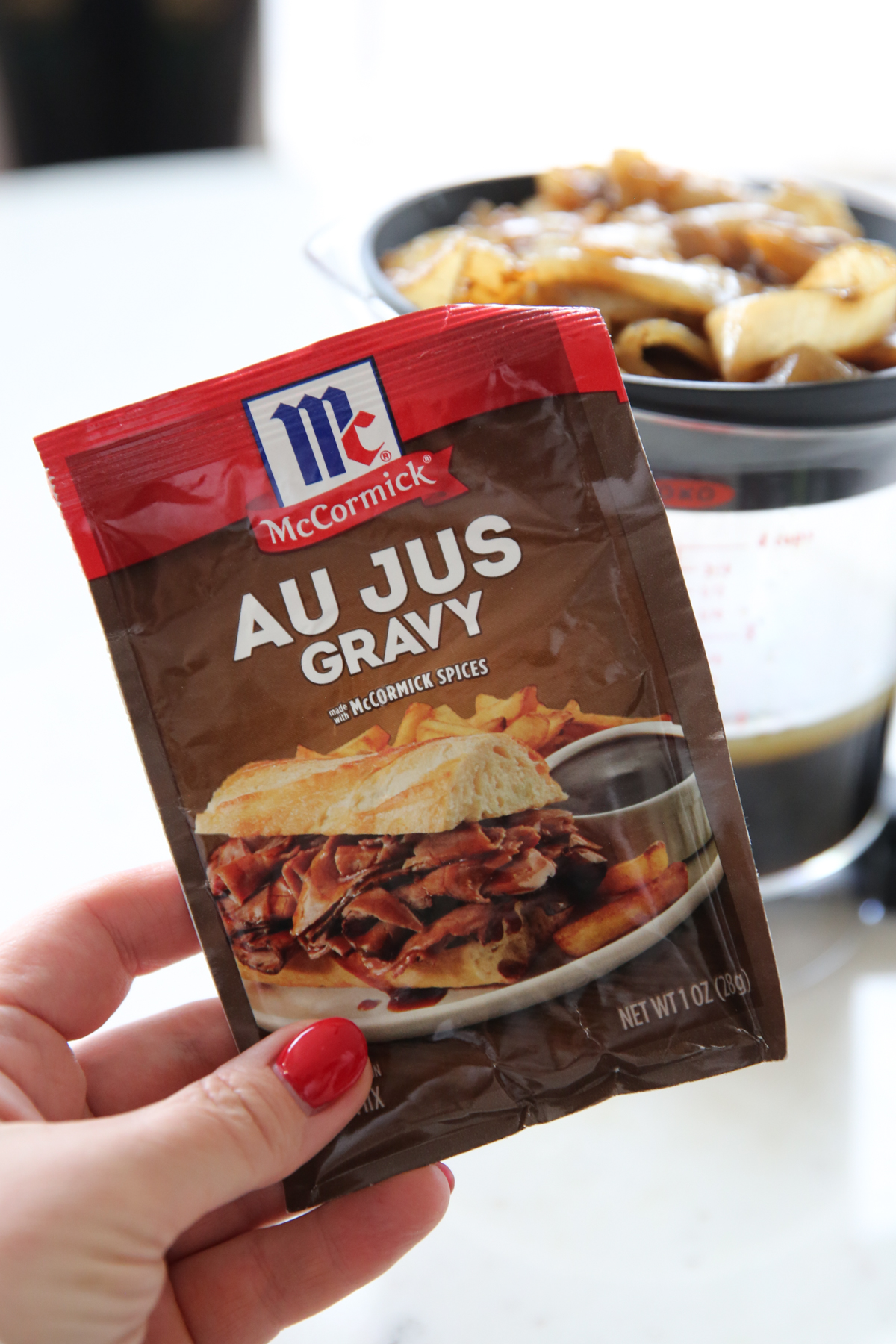
- Optional but recommended: 1-2 large onions for a natural rack, 1 packet of Ajus mix.
Equipment
How to Make
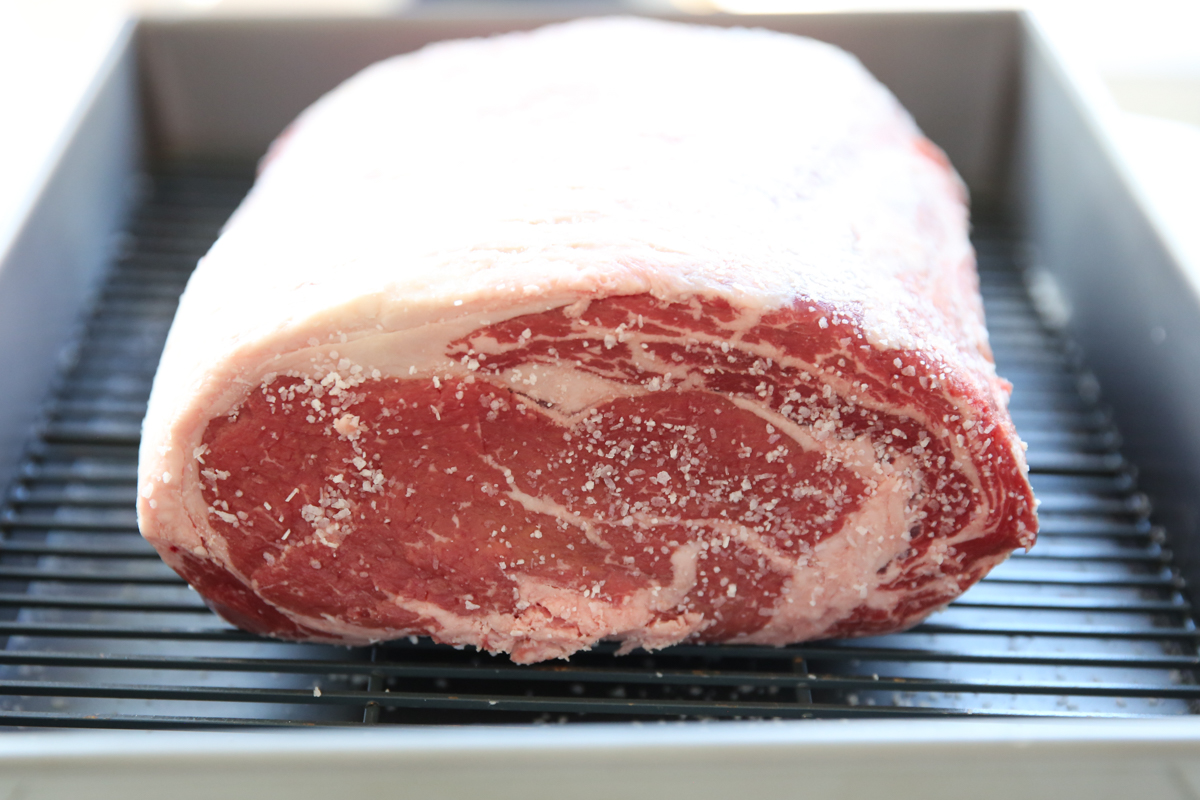
- Prep your roast: Remove roast from packaging and set it on a rack on top of a baking tray.
- Salt your roast: Rub kosher salt on all sides of roast. Estimate about 1/2 teaspoon per pound of meat, so about 2 tablespoons for a 6lb roast. Place roast in the fridge, uncovered, preferably overnight but at least an hour at the very least. This allows the salt to penetrate into the meat, seasoning it throughout while helping it retain moisture during cooking. It also dries the outer layer of the roast, which promotes browning.
- Mix your rub: Combine olive oil, black pepper, garlic and rosemary.
- Prepare your pan: Slice your onion/s into thick 1-inch slices. Keep the slices in tact and place them on the bottom of your roasting pan. You can use the onions as a rack by resting the meat on top of them, or you can place a roasting rack on top.
- Pour 1-2 cups beef broth into the bottom of the pan. This prevents the drippings from burning on the bottom of the pan, and helps create a base for the ajus.
- Place your roast on top of the onions, or the rack, depending on what you are using.
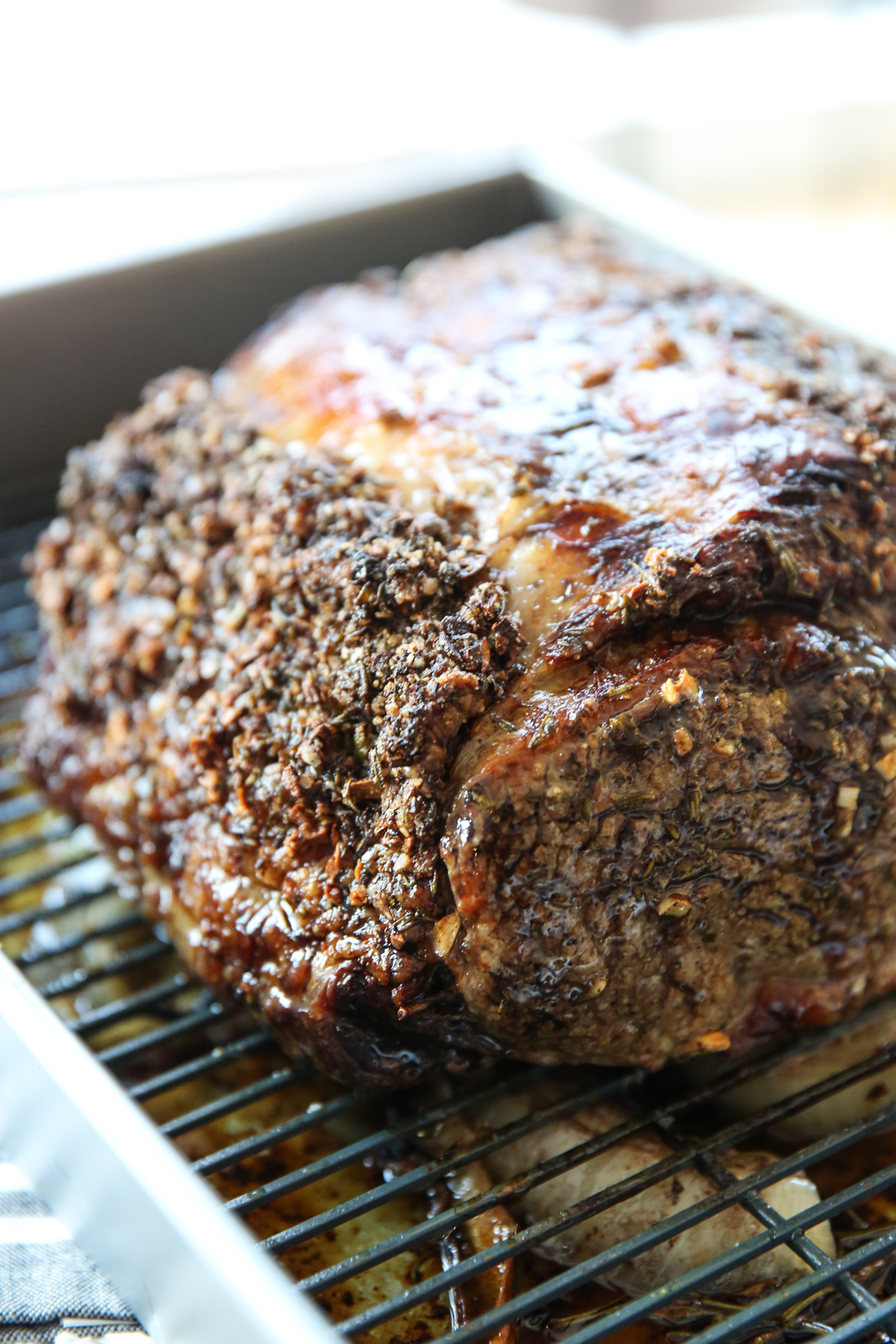
- Rub the garlic rosemary mixture all over the roast, including the ends.
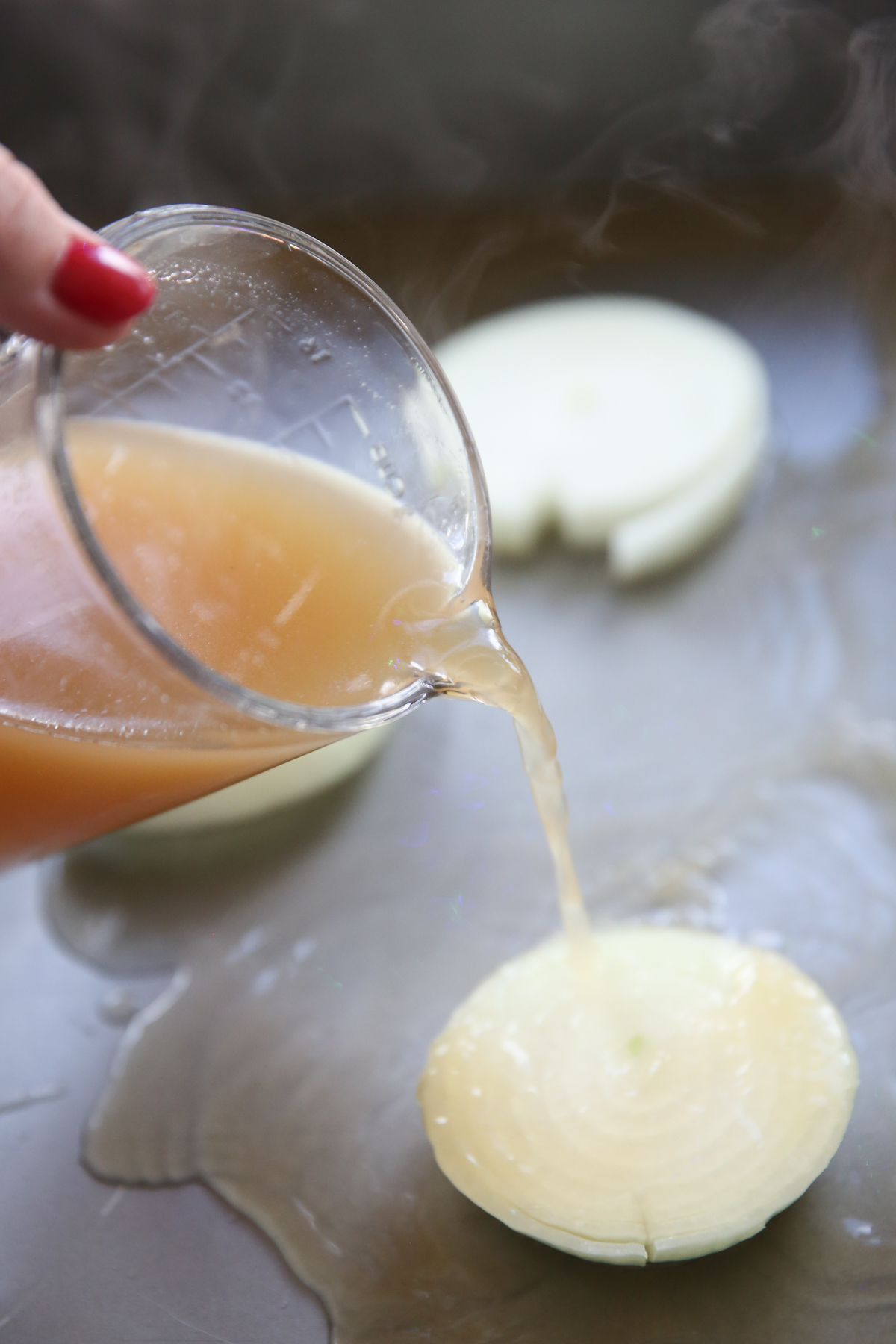
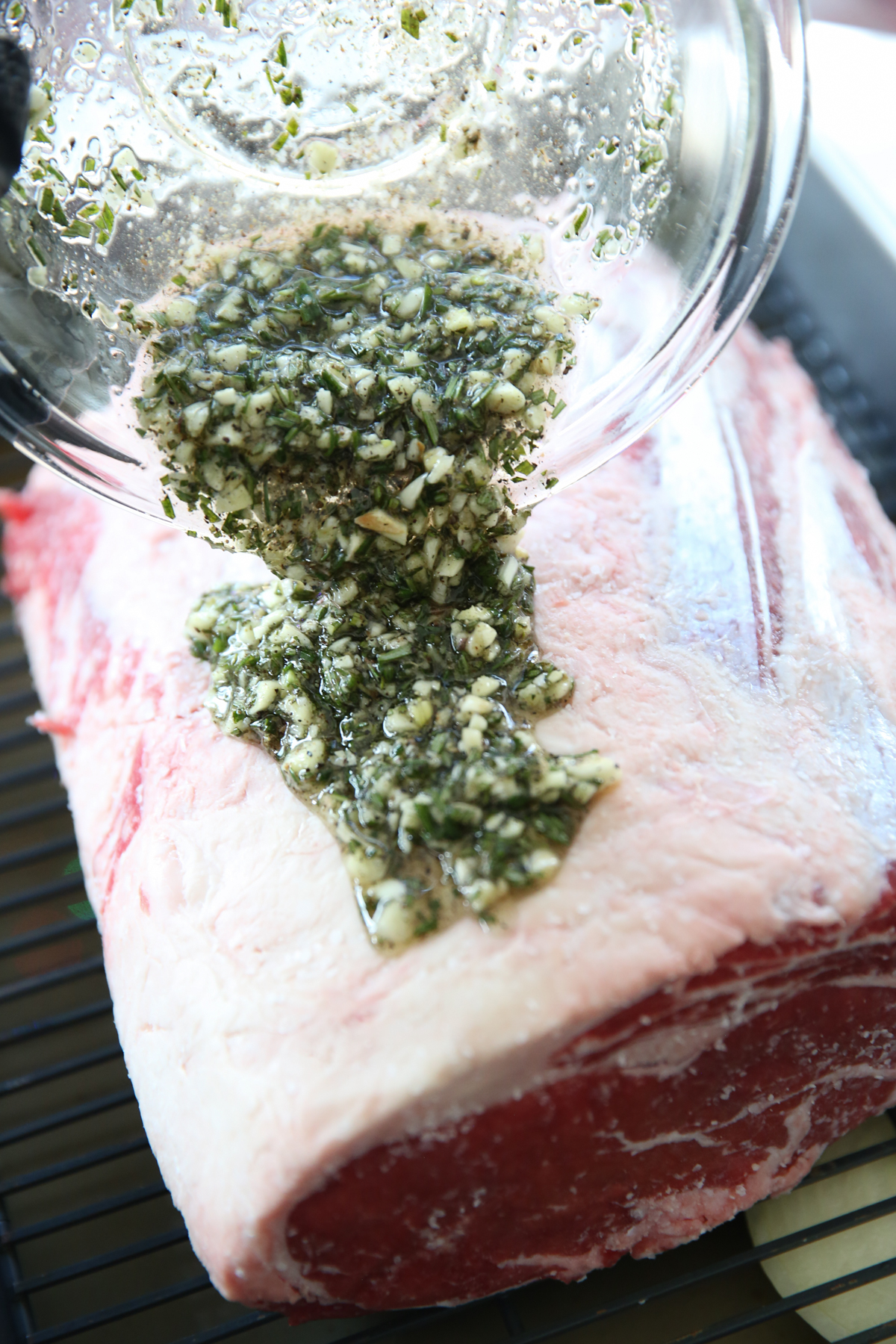
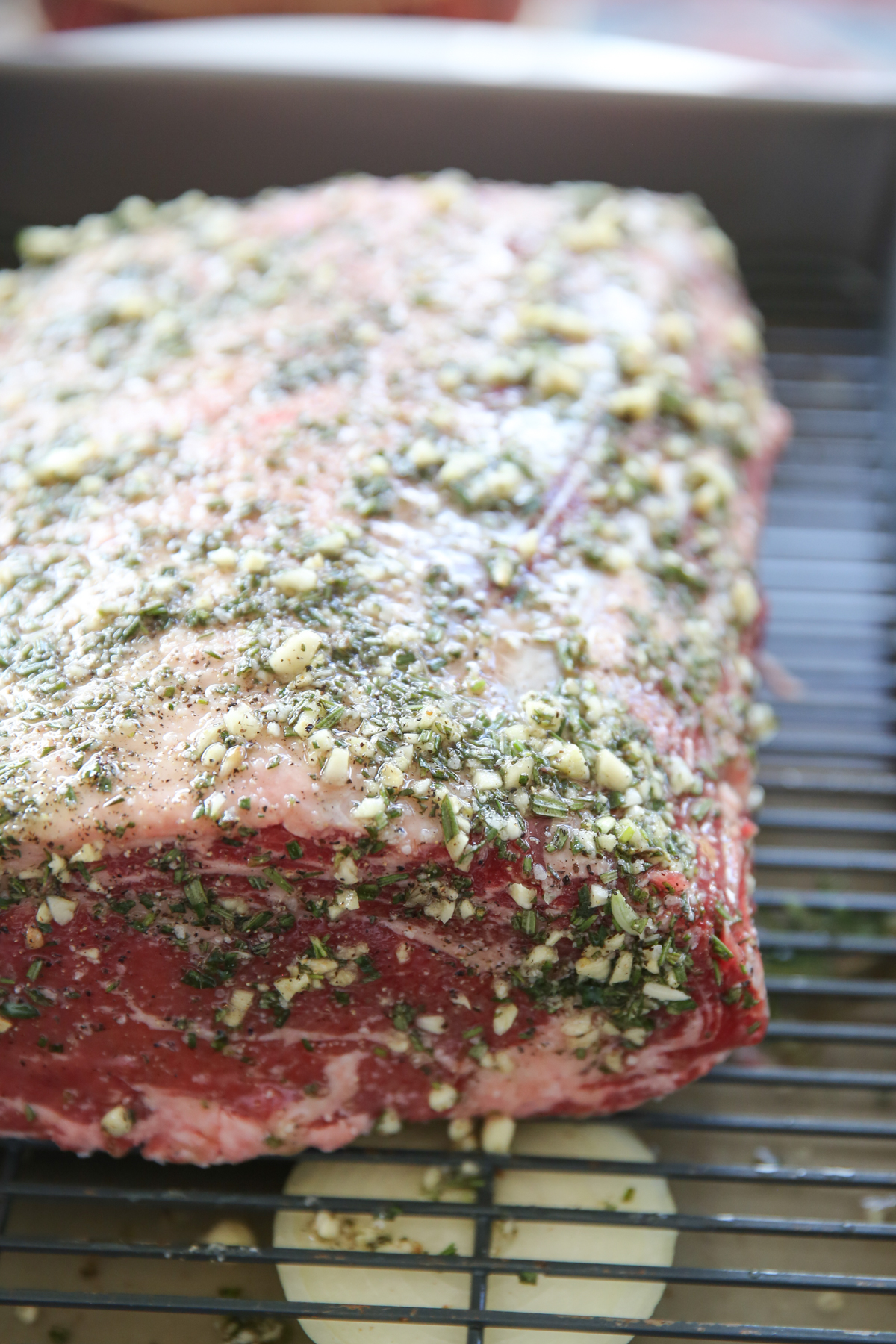
The photos above show how I add onions to the bottom of the pan for flavor and use a rack for the roast. The photo below shows how I set a bone-in roast directly on top of the onions as a make-shift rack. Lots of options!
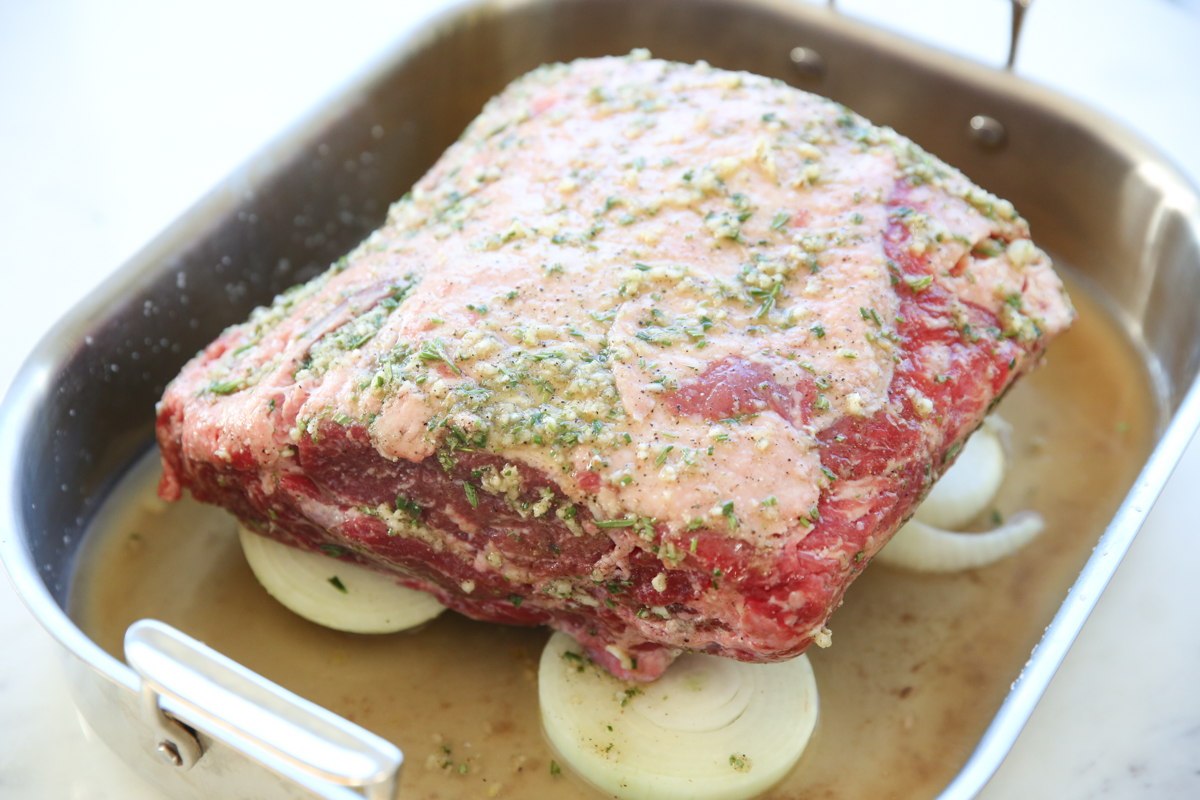
- Roast following instructions on the recipe card and rest when finished.
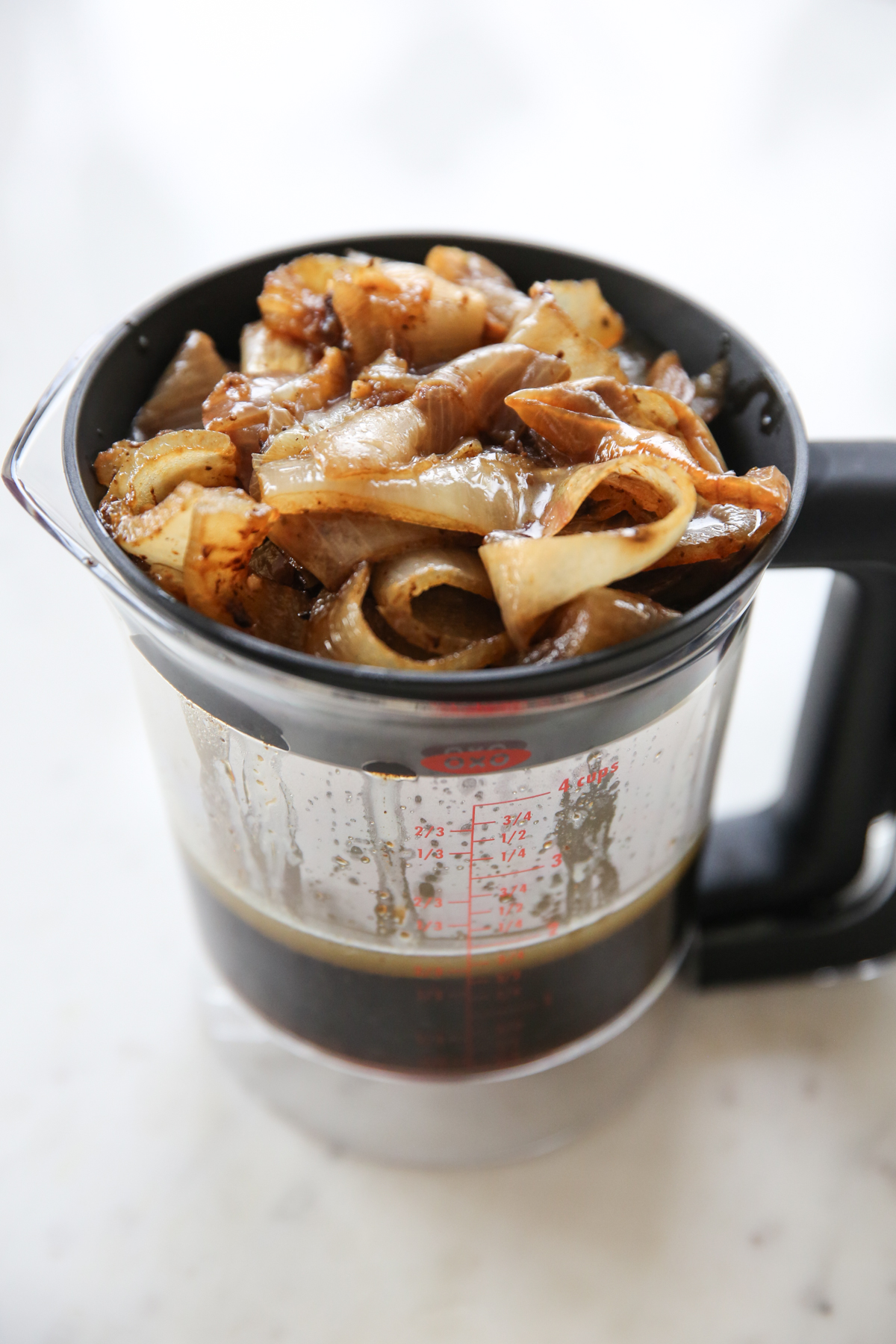
- While roast is resting, separate drippings to remove fat and cook ajus. Slice roast and serve with ajus.
Useful Tools
- Instant Read Digital Thermometer – This is a non-negotiable. I would not under any circumstance attempt to make a large roast like this (and at this price) without an instant read thermometer. It’s the one thing that will tell you exactly when your roast is done cooking. Best option is a thermometer that stays in the roast for the duration of the cook and alerts you when it’s to the proper temperature. But regardless, you’ll want a good quality instant read to check.
- Fat Separator – This useful tool makes it easy to collect all the drippings and easily discard the fat.
Pull Temperature
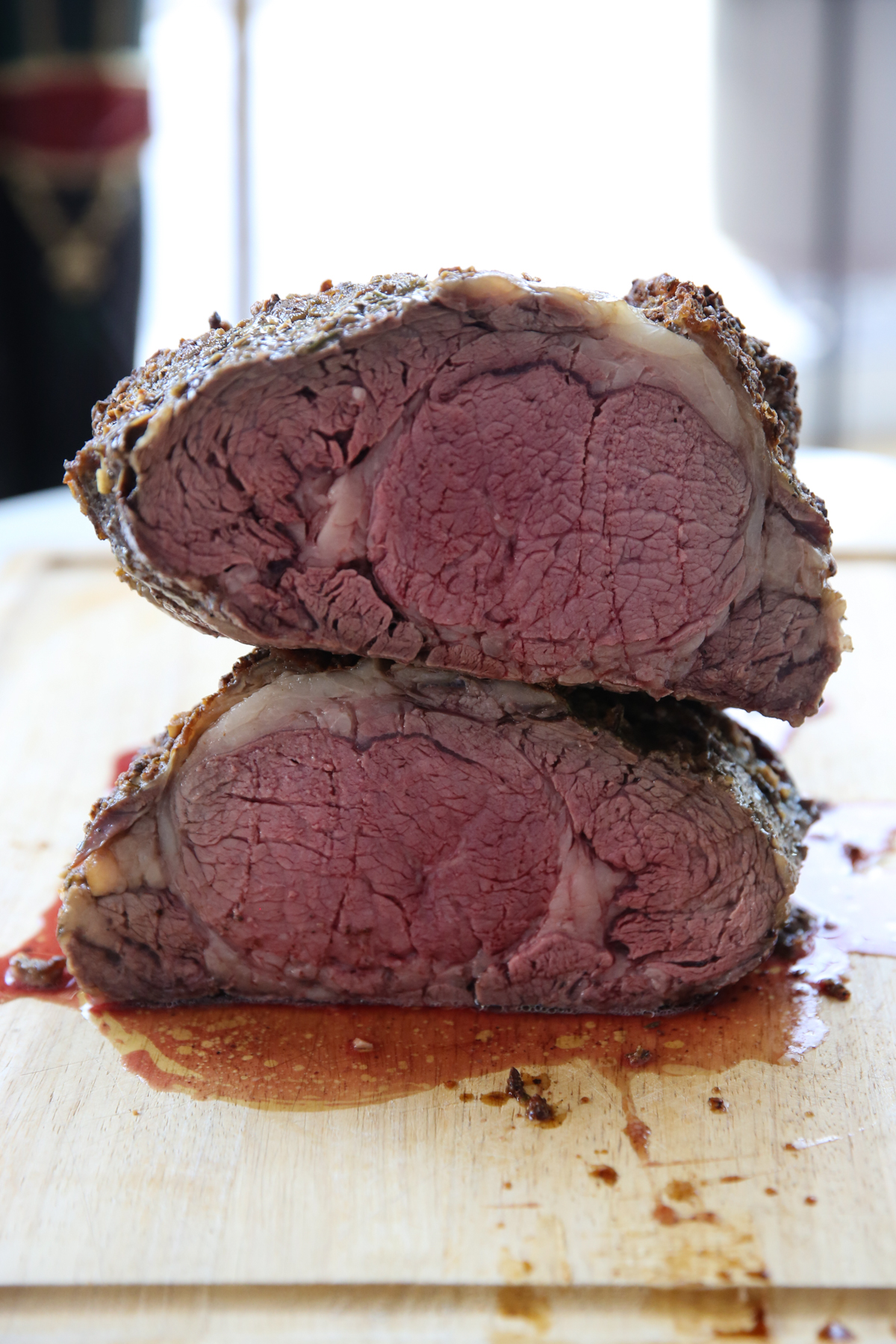
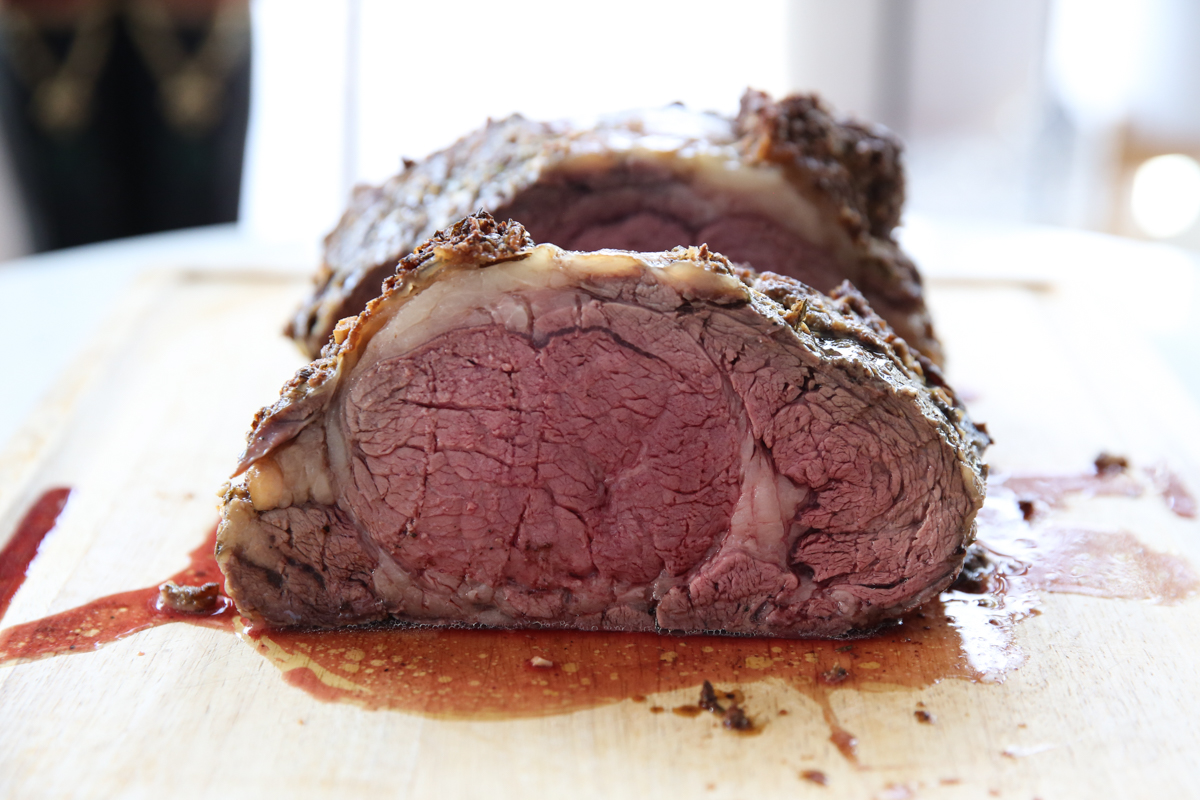
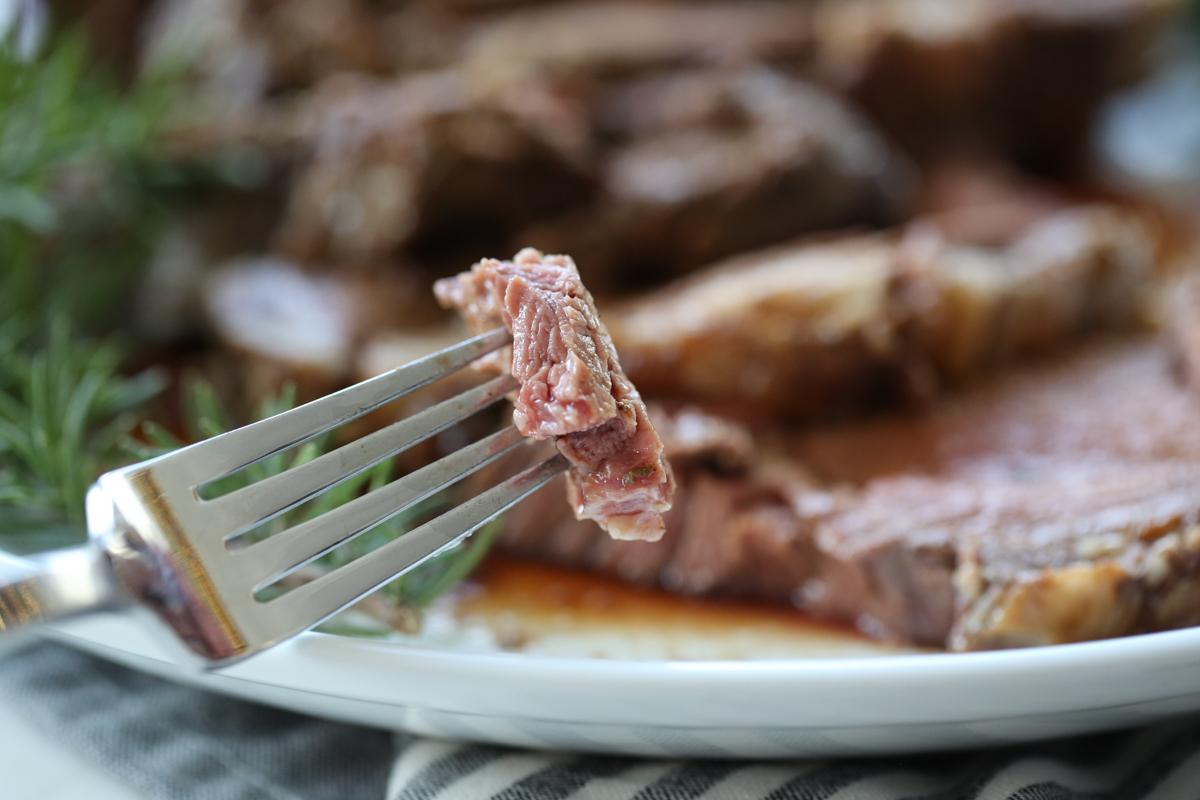
Prime Rib is traditionally served on the rare end. If you don’t like your meat quite so rare, it’s still delicious cooked to a slightly higher temperature. However I don’t recommend cooking it past medium, or you will sacrifice tenderness of this high quality cut!
The following are PULL temperatures. Meaning, pull your roast out of the oven when it reaches this temperature in order to achieve the desired level of doneness. This is because the temperature will continue to rise while resting out of the oven.
I personally prefer pulling my roast between 128-133 ish.
Rare: 120°F: Rare
Medium Rare: 125°F: Medium-Rare (recommended)
Medium: 130°F: Medium (recommended)
Well Done: 145°F+ : Not recommended
Make it a Meal!
Here’s a few sides I love serving with a delicious rib roast.
Perfect Prime Rib (Rib Roast)
A gorgeous and delicious rib roast, coated in a garlic-rosemary rub and served with ajus. Perfect for any special occasion! Recipe is written for a 6-8lb roast, but the method works for larger or smaller roasts, just adjust the cooking time and seasoning accordingly.
Servings
Ingredients
- 1 Rib Roast 6-8 pounds recommended
- Kosher Salt see amounts below
- 4 tablespoons Olive Oil
- 2 tablespoons finely minced fresh garlic
- 1½ teaspoons Black pepper
- 1-2 tablespoons fresh rosemary, finely minced
- 1-2 large onions
- 1-2 cups Beef broth
- 1 packet Au jus mix find this near the gravy packets at the store
Instructions
Prep your roast: Remove roast from packaging and set it on a rack on top of a baking tray. Salt your roast: Sprinkle kosher salt on all sides of roast. Estimate about ½-1 teaspoon per pound of meat (about 1-2 tablespoons per 6-8lb roast, personally I always salt on the higher end. Just imagine you’re salting a steak, don’t overthink it!) Place roast in the fridge, uncovered, up to 24 hours, OR at least one hour before cooking. If you only have time for one hour, just leave the salted roast at room temperature.
When ready to cook, preheat oven to 475℉ and mix your rub: Combine olive oil, garlic, black pepper, and rosemary and set aside.
Prepare your pan: Slice your onion/s into thick 1-inch slices. Keep the slices in tact and place them on the bottom of your roasting pan. You can use the onions as a rack by resting the meat on top of them, or you can place a roasting rack on top of them. Pour 1-2 cups beef broth into the bottom of the pan, depending on the size of pan. You do not want your roast swimming in liquid, you just want the liquid to barely come up the sides of the pan about 1/4 inch.
Place your roast on top of the onions, or the rack, depending on what you are using. If using a bone-in roast, the bones should be on the bottom.
Rub the garlic rosemary mixture all over the roast, including the ends.
- Cook: Place the roast in the preheated oven and cook for 15 minutes without opening the door. Reduce temperature to 325℉. Cook until internal temperature reaches 125℉ for Medium-rare, or 130℉ for Medium. (I pull mine at 130℉ and it’s still plenty pink. Remember the temperature will continue to rise a few degrees while resting). Tip: Generally this is about 13-20 minutes per pound. Always cook by temperature, not by time. The time estimate is just so you can plan and gauge approximate time needed.Remove roast from oven, carefully transfer rack to a large cutting board and tent with foil. Rest for 20-30 minutes before carving.
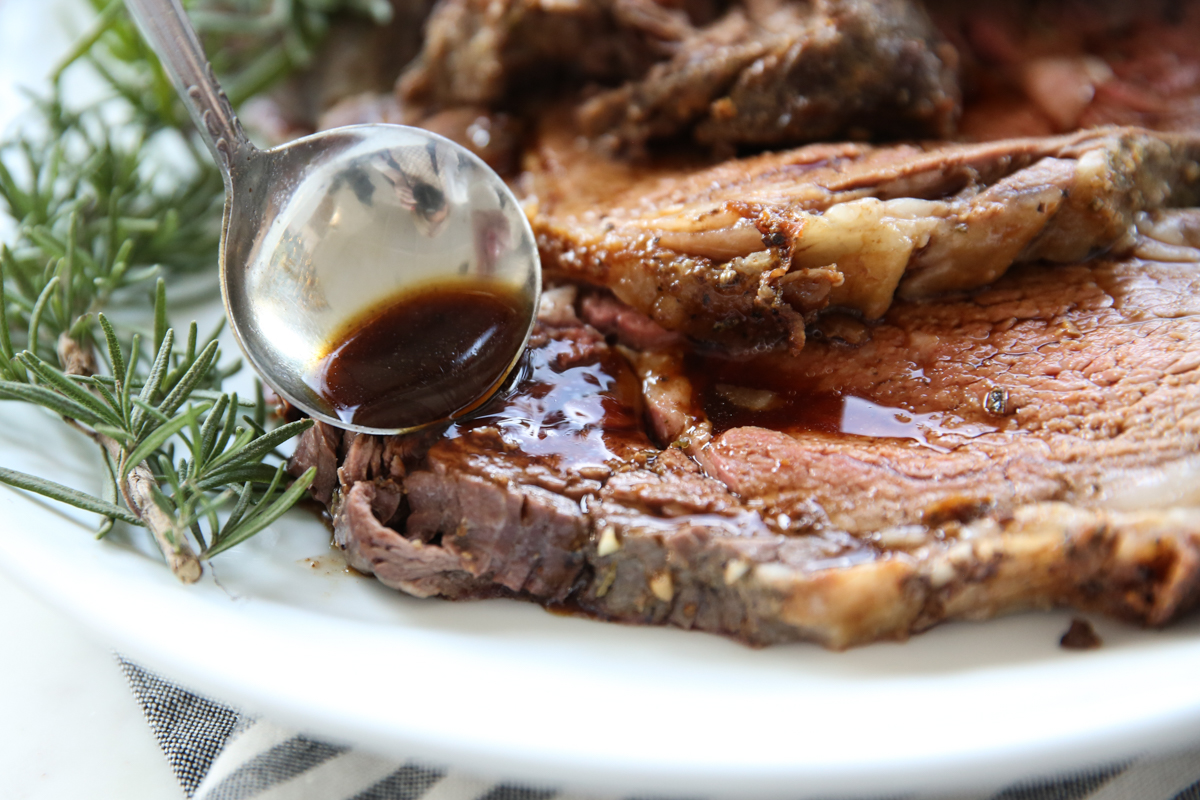
While roast is resting, scrape the pan to loose any cooked on bits. Separate drippings to remove fat, and cook the au jus packet. I always like to taste my reserved drippings to make sure it’s not too salty, and then add desired amount of drippings (if not all of them) to the au jus.
- For a boneless roast, simply slice across the roast. For a bone-in roast, carefully cut away bones first, then slice meat. If your bones were tied back on, simply remove ties and bones and slice. Serve sliced roast with ajus on the side. If you didn’t make an au jus packet, I recommend seasoning the sliced meat with a sprinkle of kosher salt.
ourbestbites.com (Article Sourced Website)
#Perfect #Prime #Rib #Rib #Roast