
Alright, how is it even possible that H is a teenager already? I swear, I was just teaching her how to tie her shoes. Now here I am, writing about how to help her navigate high school and step into young adulthood. Wild, right? We’ve moved from talking about how to teach kids patience to talking about goal-setting and future dreams.
If you’re anything like me, your own teenage years might have felt a bit overwhelming without a clear roadmap. I know I had plenty of goals swirling around in my head. Fortunately, I figured it out with the guidance of my parents and a bit through my own trial and error. But I can’t help but think how helpful it would’ve been to have a clear step by step on how to actually set goals and stay on track.
That’s exactly why I’m writing this post. Teaching our teens how to set goals now isn’t just about high school (which H is entering into next year). It’s about helping them build habits and confidence that’ll carry them into adulthood, too. As much as we wish we could pave every path for them, the best thing we can do is teach them how to walk it on their own.

Goal-Setting for Teens: Smart Goals Made Simple
If no one ever taught you how to set goals, it’s easy to think it’s just… something people do. You dream something up and hope it happens, right? But the truth is, there’s actually a bit of science behind goal-setting and achievement. And when you understand how it works, it makes a big difference.
Helping teens learn how to set goals they can actually reach doesn’t just help them check things off a list. It builds confidence, motivation, and a sense of direction.
Today, I’m walking you through why goal-setting matters for teens. I’ll also dive into how you can teach them to do it in a way that works. Plus, I’ll share some easy (and fun!) activities to help them set and stick to their own goals.

Why Is It Important for Teenagers to Set Goals?
Provides a Sense of Direction
The teen years can feel like a whirlwind, full of big emotions, big changes, and a whole lot of unknowns. That’s why goal-setting is so powerful. It gives teens something to focus on, plan for, and feel confident about.
Whether it’s school, friendships, or personal growth, having goals helps them feel more in control of their path. Plus, they feel a little less overwhelmed by all the twists and turns that life inevitably presents.
Teaches Responsibility and Time Management
When teens work toward a goal, they’re learning more than just how to get from point A to point B. They’re developing real-life skills such as responsibility and time management. Because, let’s be honest, as much as we wish we could snap our fingers and have what we want? Things take time.
Reaching a goal means making a plan, sticking to it, and managing one’s time (even with busy schedules). And there’s no better way to learn those skills than by practicing them firsthand.
Want to dive deeper into teaching these essentials? Check out my other posts, “How to Teach Responsibility” and “How to Teach Time Management.”
Builds Confidence and Motivation
There’s something pretty special about the confidence that comes from reaching a goal. You get to look back and say, “I did that!” And that feeling? It sticks with you.
It’s the same for our teens. When they set a goal and actually reach it, they feel proud of themselves in a big way. As a result, their self-esteem gets a big boost, too. And let’s be honest, that’s something every teen can use.
Even better? Reaching one goal often motivates them to set another. And another. Before you know it, they’re building momentum and believing in what they’re capable of. That’s the kind of confidence that can carry them through high school and beyond.
Prepares Them for Adulthood
Once the teen years are behind them, your child will step into a whole new world. Think: college applications, career choices, new relationships, and everything that comes with growing up. And what’s the thing all of those big milestones have in common? They’re so much easier to navigate when you know how to set meaningful goals and follow through.
Teaching goal-setting early gives them a foundation they can rely on for years to come. It’s one of those skills that pays off again and again as they step into adulthood.
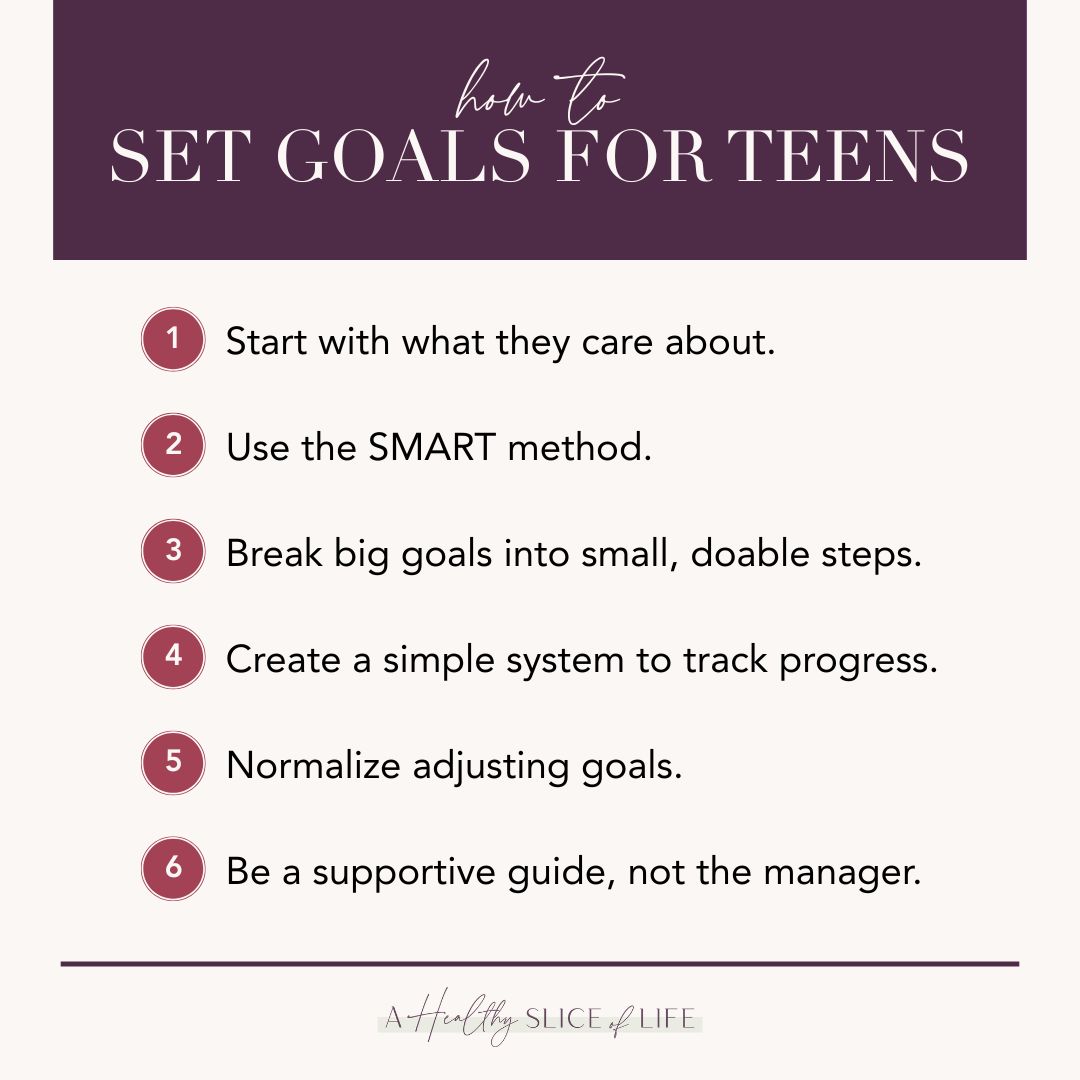
How to Set Goals for Teens
Start with what they care about.
Here’s the thing about goal-setting: it only really works if it’s tied to something your teen actually cares about. Goal-setting to get the dishes done? May not always be effective. So before you dive into planning or timelines, take a step back and figure out what matters to them. That internal motivation is what keeps the momentum going long after the excitement wears off.
Maybe they want to learn a new instrument, master a move in sports, or explore a new hobby just for fun. Or maybe they have a personal goal like improving their mile time or reading a certain number of books. Whatever it is, start there. The more meaningful the goal, the more likely they are to stick with it—and feel proud when they reach it.
Use the SMART method.
If you want to help your teen set a goal they can actually reach, the SMART method is the way to go. SMART is an acronym that stands for Specific, Measurable, Achievable, Relevant, and Time-bound. And it works like magic for turning big dreams into real results.
I love using SMART goals when talking to teens about goal-setting. It gives them a solid framework they can use again and again—no matter what they’re aiming to achieve. The goal could be to increase their grades, save up for something special, or train for a 5K. SMART goals take the guesswork out of the process and give a clear path forward that feels doable.
Break big goals into small, doable steps.
It’s totally normal to feel overwhelmed when a goal feels too big, especially those long-term goals that seem miles away. But here’s the trick: break it down.
Breaking that big goal into smaller, bite-sized steps makes it feel so much more manageable. Eventually, these short-term goals help keep things moving forward without all the pressure. And every little win builds momentum toward the bigger picture. It’s all about progress, not perfection!
Create a simple system to track progress.
Teens are all about instant gratification—it’s just part of the age. And while teaching them the value of delayed gratification (like sticking with a long-term goal) is super important, there’s also a way to give them that little boost of now.
One easy way to do that? Help them track their progress. When they can actually see the small wins they’ve already knocked out, it gives them that “instant” feeling of success. That’s all without losing sight of the big picture. It keeps them encouraged, on track, and way more motivated to keep going.
Normalize adjusting goals.
Reaching a goal doesn’t always happen in a straight line, and that’s totally okay. Sometimes your teen might need to shift direction or tweak the goal a bit, rather than quitting altogether.
Letting your teen know it’s normal to adjust a goal helps teach them something even more important than success: flexibility. They learn to problem-solve, pivot, and keep moving forward. Remember, growth isn’t about sticking to the original plan no matter what. It’s about learning, adapting, and staying motivated even when the path changes.
Be a supportive guide, not the manager.
As parents, it’s so tempting to step in and do things for our kids. But when it comes to goal-setting and building real-life skills, our role isn’t to be the manager. It’s to be the cheerleader. Have them take the lead. Let them stumble a little, figure things out, and grow through the process.
And when they come to you for advice? That’s your moment to offer support and gentle guidance. It’s all about finding that sweet spot between giving them space and being their biggest fan. It might take practice, but that balance? It’s worth it in the long run.
Goal-Setting Activities for Teens
The “Future You” Visualization
You know that classic interview question, “Where do you see yourself in five years?” Well, this is kind of like that—but way more fun (and perfect for teens!).
Try this: ask your teen to imagine what their life could look like 6-12 months from now. Get specific. Maybe they’ve finished their first 5K. Or maybe they’ve launched a YouTube channel or written a short story they’re proud of. The goal is to tap into their imagination, emotions, and sense of identity.
Once they’ve got that picture in their mind, have them reverse-engineer it. What would need to happen between now and then to make it real? Have them jot down 3-5 action steps they can start today to move in that direction.
This exercise gives them a vision to aim for. Plus, it builds confidence by showing them they’re capable of turning dreams into real, doable goals.
1% Better Challenge
One of the simplest (but most powerful) ways teens can reach their goals is by building tiny daily habits.
Even putting in just 1% more effort each day can lead to big changes over time. Just ask Chris Nikic, the man who came up with this method. He achieved his goal of being the first person with Down syndrome to complete an IRONMAN triathlon!
Ask your teen to pick one area they’d like to grow in. Maybe it’s their confidence, fitness, or organization. Then brainstorm one small thing they can do every day to move the needle just a little bit. Keep it simple and doable.
Some examples include reading for five minutes, doing 10 push-ups, or putting clothes away every night. Then, use a habit tracker to check off each day’s progress. It could be a notebook, an app, or even a sticky note. These small steps build consistency, confidence, and momentum. And that’s how real change happens.
The Goal Jar
Here’s a fun and simple way to keep your teen motivated: set up a Goal Jar.
Once they’ve picked a goal and created a plan, give them a jar (or even a small box) to track their progress. Every time they take a step toward their goal, they write it on a slip of paper and drop it in. It’s a visual reminder that they’re making progress, even if the steps feel small.
At the end of the week (or month), have them empty the jar and read through everything they’ve accomplished. It’s a great way to reflect, celebrate wins, and stay excited. Plus, there’s something really satisfying about seeing that jar fill up over time!
Set your teen up for success by teaching them how to set goals the right way.
Let’s be honest, our teens might act like they’ve got it all figured out sometimes—but we still have a few tricks up our sleeves. One of the best ways we can support them? Teaching them how to set meaningful, realistic goals.
Goal-setting is more than just jotting down a dream on a sticky note. It’s about breaking it into doable steps, staying flexible when life throws curveballs, and cheering them on along the way. Now you have the tools to help your teen map out their dreams—and maybe even achieve goals of your own in the process.
If this post was helpful, make sure to join my newsletter! I offer plenty of other practical parenting tips and a peek into the chaos (and joy!) of raising teens.
www.ahealthysliceoflife.com (Article Sourced Website)
#GoalSetting #Teens #Smart #Goals #Simple