
As Dubai’s school gates swing open and shut each weekday, nearby roads often grind to a crawl with thousands of parents driving children to and from classrooms.
Peak-hour congestion around school zones has become a familiar pressure point for families and commuters alike.
From 2026, Dubai’s Roads and Transport Authority (RTA) hopes to ease that pressure through a pilot school transport pooling initiative aimed at cutting down private car drop-offs and improving daily mobility — a move being welcomed by road transport experts, schools and parents.
Stay up to date with the latest news. Follow KT on WhatsApp Channels.
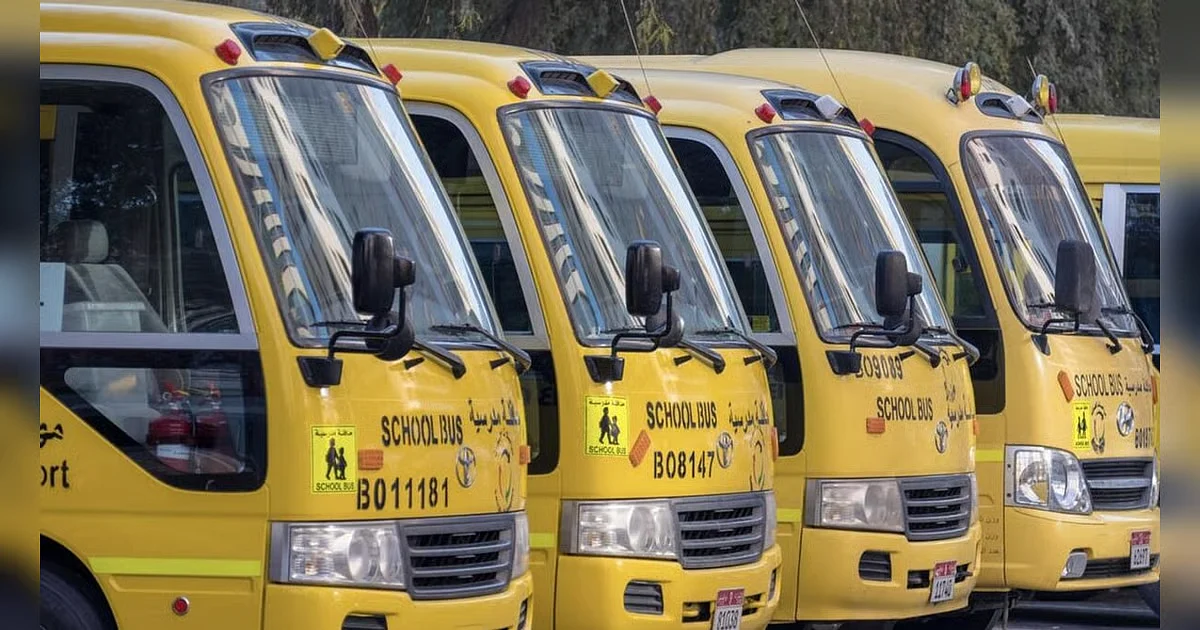
Rolled out in collaboration with Yango Group and Urban Express Transport, the pilot will introduce shared buses transporting students from multiple schools within defined geographic zones.
Technology will support trip management, vehicle tracking and operational monitoring, with the RTA stressing that all safety, security and regulatory requirements governing school transport in Dubai will be met.
If successful, the programme could open the door to new models of student mobility across the emirate, with road safety experts saying the impact on congestion could be significant, especially during the most pressured hours of the day.
Cutting peak-hour congestion
Thomas Edelmann, Founder and Managing Director of RoadSafetyUAE, points to how sharply travel times rise when schools open and close, highlighting why taking cars off the road matters.
“Generally speaking, we see a morning rush hour, where in Dubai the average trip takes about 60 per cent longer around 8am when schools open than if there would be clear roads. Between 3pm and 4pm when schools typically close, this value goes up to about 80 per cent.”
He said the school run clearly adds to the morning rush, but it’s hard to put an exact figure on how much of the overall congestion is caused by it alone.
“However, one school bus can take up to 50 cars off the roads, which is critical in peak congestion times. We have been lobbying for a long time to do the utmost to push individual car transportation to school bus transportation, for these reasons and also for sustainability, safety and students’ happiness reasons.”
Edelmann also pointed out that this pilot is a unique chance to ‘sample’ the experience of school bus transportation to students who might have never been taken a school bus before, as well as to parents who will understand their benefits.
“We have been lobbying for providing incentives and subsidies to school bus operators to make school bus transport more affordable for all students in all schools. A higher utilisation of school buses will be vital for route optimisation and operational efficiency for school bus operators. The benefits to the public of taking private cars off the roads by moving students to school buses are just too tempting,” he added.
Increasing affordability, efficiency, innovative transport
From the RTA’s perspective, affordability and efficiency are central to the pilot’s goals. Officials have said the initiative is intended not only to cut congestion but also to explore more innovative ways of moving students safely and efficiently across the city.
Ahmed Hashem Bahrozyan, CEO of the Public Transport Agency earlier said, “Through this initiative, RTA aims to offer an alternative school transport solution at affordable rates, helping to improve traffic movement and deliver a more efficient daily mobility experience.
“The initiative aims to explore innovative school transport models based on the principle of pooling, supporting better vehicle utilisation, reducing traffic congestion during peak hours, and raising safety and quality standards in student transport services.”

School leaders emphasise parents’ acceptance will hinge on trust, particularly when it comes to safety and supervision. While shared transport may be an easier sell for older students, younger children present different concerns.
Still, educators believe a well-designed system could gradually ease pressure on families.
Deepika Thapar Singh, CEO-Principal, Credence High School said, “Families are likely to be receptive to a shared school transport model, particularly for senior students, provided there are strong assurances around safety, punctuality and supervision. Parents of younger children may be more cautious about multi-school travel, which is understandable.
“A well-regulated, technology-enabled zonal system can still significantly reduce congestion, improve commute efficiency and ease peak-hour stress for families over time”.
Model good for cost, safety, daily pressures
For many parents, however, the decision to drive is shaped as much by cost as by convenience.
Bhavya Rao, whose children attend a British-curriculum school near Emirates Living, says proximity and rising transport fees have kept her behind the wheel, even if the daily routine can be frustrating.
“I prefer dropping off and picking up my children myself because I’m a stay-at-home mum and the school is just around five kilometres from our home. Sure, leaving early and finding a parking spot during dismissal can be a hassle, but I’d rather deal with that than rely on unsafe, illegal transport — or even the school bus, which is quite expensive.
“The bus also takes longer for such a short distance since it has to make multiple pick-ups and drop-offs. For a round trip, it would cost Dh10,000 a year per child, which adds up to Dh20,000 for my two kids. Honestly, I’d rather handle the school run myself than spend that much on transport. However, if more affordable alternatives are made available — whether through schools or new initiatives introduced by the government — it would come as a huge relief for us and would be most welcome.”
For parents whose children travel longer distances, the appeal of pooling is clearer. Damac Hills resident Claire Dubois, says daily long drives highlight the broader impact of individual school runs on city roads.
“My child’s school is quite far, so I usually have to drive long distances to drop her off and pick her up every day. While that’s manageable for our family, I do see how school buses — especially a shared system like this — can make a real difference.
“Fewer individual cars heading to multiple schools at the same time would naturally ease congestion around school zones, and for working parents in particular, a well-regulated, technology-enabled option like this could be more cost-effective than a normal school bus, as well as equally reassuring like a school bus. But once this pilot rolls out, only then shall we know, how practical this solution proves to be,” added the French expat.

www.khaleejtimes.com (Article Sourced Website)
#Dubai #School #bus #pooling #cut #costs #peakhour #rush #experts