
Does sauerkraut go bad? Yes, sauerkraut can go bad, but its shelf life varies dramatically depending on the type and how you store it.
Tangy, crunchy, and packed with probiotics, sauerkraut has been a beloved condiment for centuries. This fermented cabbage dish adds a distinctive zing to everything from hot dogs and sandwiches to salads and charcuterie boards.
However, if you’ve ever stared at a jar of sauerkraut that’s been sitting in your fridge for months, you might wonder exactly when it expires and how to tell if it’s still safe to eat.
Whether you’re enjoying store-bought pasteurized kraut or homemade raw sauerkraut, understanding how to recognize spoilage is important. In this article, we’ll discuss the signs of sauerkraut spoilage, proper storage methods, and answer frequently asked questions about keeping your kraut fresh.
Key Takeaways
- Proper storage significantly extends sauerkraut’s shelf life, though it can eventually go bad
- When stored in the refrigerator, unpasteurized sauerkraut lasts 4-6 months, while pasteurized varieties last 1-2 months after opening
- Watch for mold growth, off odors, slimy texture, and significant discoloration as signs of spoilage
- Always keep sauerkraut submerged in brine and use clean utensils to prevent contamination
Does Sauerkraut Go Bad?
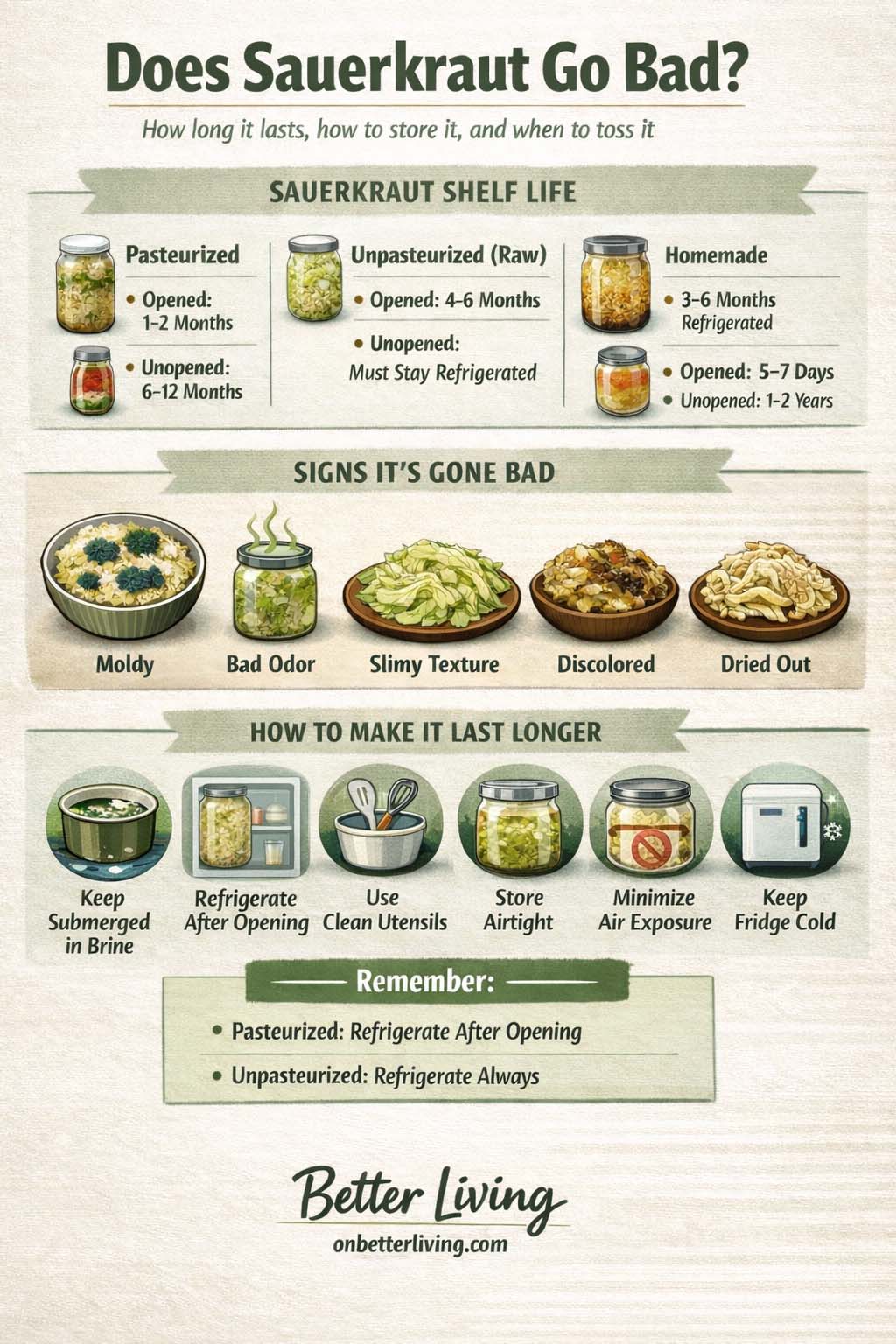
Yes, sauerkraut can definitely go bad. Although the fermentation process creates natural preservatives through lactic acid and low pH, sauerkraut isn’t immune to spoilage.
The fermentation that makes sauerkraut so tangy and probiotic-rich also gives it impressive longevity. Nevertheless, that doesn’t mean it lasts forever. Even the best-fermented kraut can spoil through improper storage, contamination, or simply too much time.
Several key factors determine whether your sauerkraut goes bad:
- Type of sauerkraut: Pasteurized vs. unpasteurized makes a huge difference in shelf life
- Storage temperature: Refrigeration dramatically extends freshness
- Brine submersion: Cabbage exposed to air will spoil quickly
- Contamination: Dirty utensils or double-dipping introduces harmful bacteria
- Time: Even properly stored sauerkraut eventually loses quality
Understanding these factors helps you maximize your sauerkraut’s shelf life and recognize when it’s time to toss it.
How Long Does Sauerkraut Last?
Three critical factors determine sauerkraut’s shelf life: the type of sauerkraut, whether you’ve opened it, and how you store it.
Store-Bought Pasteurized Sauerkraut
- Unopened, pantry storage: 6-12 months (or until the “best by” date)
- Unopened, refrigerated: 3-6 months past the best-by date
- Opened, refrigerated: 4-6 weeks
Heat treatment kills bacteria in pasteurized sauerkraut, extending shelf life. However, this process also eliminates most of the beneficial probiotics.
Unpasteurized (Raw) Sauerkraut
- Unopened, refrigerated: Must always be kept refrigerated
- Opened, refrigerated: 4-6 months when properly stored
Stores sell raw sauerkraut in the refrigerated section because it contains live, active cultures. According to research from the USDA and National Center for Home Food Preservation, unpasteurized sauerkraut contains diverse lactic acid bacteria including Leuconostoc mesenteroides, Lactobacillus plantarum, and other beneficial species that give it probiotic properties.
Canned Sauerkraut
- Unopened, pantry: Up to 1-2 years (sometimes longer)
- Opened, refrigerated: 5-7 days
Once you open canned sauerkraut, transfer it to an airtight container and consume it within a week for best quality, according to food safety guidelines.
Homemade Sauerkraut
- During fermentation (room temperature): 1-3 weeks
- After fermentation (refrigerated): 3-6 months, potentially longer with proper care
Understanding Sauerkraut and How It’s Made
Sauerkraut is essentially fermented cabbage created through a natural process that’s been used for thousands of years. Understanding how people make it helps explain why it lasts so long – and when it can go bad.
The Fermentation Process
According to Penn State Extension, sauerkraut production involves these key steps:
- Shredding and salting: Makers finely shred fresh cabbage and mix it with approximately 2-2.5% salt by weight
- Brine formation: Salt draws moisture from the cabbage, creating a brine solution
- Bacterial succession: Lactic acid bacteria naturally present on the cabbage begin fermenting the sugars
- Acidification: These bacteria produce lactic acid, lowering the pH and creating the characteristic sour flavor
Research from the USDA Agricultural Research Service shows that during fermentation, beneficial bacteria like Leuconostoc mesenteroides initiate the process. Subsequently, Lactobacillus species complete the fermentation and lower the pH to around 3.5 or below.
This acidic environment preserves the sauerkraut and prevents harmful bacteria from growing. Nevertheless, it doesn’t make sauerkraut invincible to spoilage.
Types of Sauerkraut and Their Differences
Not all sauerkraut is created equal. The type you buy significantly affects how long it lasts and how you should store it.
Pasteurized vs. Unpasteurized
Pasteurized Sauerkraut:
- Manufacturers heat-treat it to kill bacteria (including beneficial ones)
- Remains shelf-stable until you open it
- Has longer pantry life but shorter fridge life after opening
- Provides minimal probiotic benefits
- Often found on grocery store shelves (not refrigerated)
Unpasteurized (Raw) Sauerkraut:
- Contains live, active cultures
- Requires refrigeration at all times
- Has shorter initial shelf life but lasts longer once you open it (if properly stored)
- Rich in probiotics and beneficial bacteria
- Found in the refrigerated section
Canned vs. Jarred
Canned Sauerkraut:
- Heat-processed and sealed in metal cans
- Offers very long unopened shelf life (1-2 years or more)
- Has short refrigerated life after opening (5-7 days)
- Convenient for long-term pantry storage
Jarred Sauerkraut:
- Packaged in glass jars with brine
- Can be either pasteurized or unpasteurized
- Better for seeing the condition of the product
- Easier to keep contents submerged in brine
Understanding these differences is crucial for proper storage and knowing when your sauerkraut might be past its prime.
Signs Your Sauerkraut Has Gone Bad

Even with proper storage, sauerkraut can eventually spoil. Here are the clear warning signs that your kraut has reached the end of its edible life:
Mold Growth
Any visible mold – whether green, blue, white, pink, or black – means you should discard the entire batch immediately. Unlike hard cheeses, you cannot simply scrape mold off sauerkraut and eat the rest.
According to the National Center for Home Food Preservation, mold in soft, moist foods like sauerkraut penetrates deeply below the surface, even when only visible on top. Therefore, you should throw away the entire jar.
Note: A thin white film during active fermentation can be normal yeast growth called “kahm yeast.” However, once manufacturers package sauerkraut for eating, any visible mold is a red flag.
Off Odors
Fresh sauerkraut has a distinctive tangy, acidic smell that’s sharp but pleasant. In contrast, spoiled sauerkraut will smell:
- Rotten or putrid
- Like rotten eggs (sulfurous)
- Overwhelmingly foul rather than just sour
- Musty or moldy
Trust your nose – if it smells wrong, it probably is.
Slimy or Mushy Texture
Fresh sauerkraut should be crisp and crunchy. Watch out if it becomes:
- Slimy or slippery to the touch
- Sticky or gelatinous
- Excessively mushy or soft
- Has lost all its crunch
These texture changes indicate unwanted bacterial growth, which means you should discard the sauerkraut.
Significant Discoloration
While sauerkraut naturally ranges from pale yellow to light beige, watch for:
- Extensive browning or darkening (beyond the top layer)
- Gray or dull coloring throughout
- Pink or reddish spots (especially in high-salt areas)
- Any unusual color changes
Some darkening at the very top due to air exposure is normal and can be removed. However, widespread discoloration signals spoilage.
Extreme Dryness
If the sauerkraut has dried out significantly and the cabbage has turned crispy or hard rather than crunchy, it’s no longer good. Typically, this happens when you don’t keep sauerkraut submerged in brine.
Factors Affecting Sauerkraut Shelf Life
Several key factors determine how long your sauerkraut will stay fresh and safe to eat.
Temperature and Storage Conditions
Temperature plays a crucial role in sauerkraut preservation. According to Penn State Extension:
- Refrigeration (below 40°F/4°C): Slows bacterial activity and significantly extends shelf life
- Room temperature (65-70°F/18-21°C): Ideal for initial fermentation but accelerates spoilage once fermented
- High temperatures (above 80°F/26°C): Can cause rapid spoilage, softening, and loss of quality
Once fermented, you should always store sauerkraut in the refrigerator to maintain freshness and preserve probiotic benefits.
Preparation Method
Manufacturers heat-treat pasteurized sauerkraut, which:
- Kills beneficial bacteria along with harmful ones
- Extends shelf-stable pantry life
- Shortens refrigerated life once opened
- Removes most health benefits
In contrast, unpasteurized sauerkraut contains live cultures that:
- Continue slow fermentation even when refrigerated
- Require constant cold storage
- Last longer once opened (if stored properly)
- Provide maximum probiotic benefits
Container Type and Seal
The container matters for sauerkraut longevity:
- Airtight containers: Minimize oxygen exposure and contamination
- Loose seals: Allow air in, accelerating spoilage
- Glass jars: Non-reactive and allow you to see contents
- Plastic containers: Can absorb odors but work well if airtight
Brine Submersion
According to Clemson University, keeping sauerkraut completely submerged in brine is critical. The brine acts as a barrier against:
- Oxygen exposure
- Airborne contaminants
- Mold growth
- Drying out
When exposed to air, sauerkraut can develop mold or dry out quickly.
How to Properly Store Sauerkraut
Proper storage is essential for maximizing sauerkraut’s shelf life and maintaining its quality.
Storage Guidelines by Type
Unopened Pasteurized Sauerkraut:
- Store in a cool, dark pantry or cupboard
- Keep away from direct sunlight and heat sources
- Can last 6-12 months at room temperature
- Refrigeration extends life even further
Unopened Unpasteurized Sauerkraut:
- Must always be refrigerated
- Never store at room temperature
- Keep in the coldest part of your fridge
Opened Sauerkraut (All Types):
- Always refrigerate immediately after opening
- Store at 40°F (4°C) or below
- Keep in an airtight container
- Ensure sauerkraut remains submerged in brine
Homemade Sauerkraut:
- Ferment at room temperature (65-70°F) for 1-3 weeks
- Once fermentation is complete, refrigerate immediately
- Store in airtight glass jars
- Keep contents fully submerged
5 Tips to Extend Shelf Life
Here are 5 proven strategies to keep your sauerkraut fresh longer:
1. Keep It Submerged
Always keep the sauerkraut fully covered in brine. If the liquid level drops:
- Add filtered water or a weak salt solution (2% salt by weight)
- Use a clean weight, small plate, or freezer bag filled with brine to keep cabbage submerged
- Never let the top layer be exposed to air for extended periods
2. Use Clean Utensils Every Time
Contamination is a major cause of premature spoilage. Therefore, always:
- Use a clean fork or spoon when removing sauerkraut
- Never eat directly from the jar with a utensil you’ve already used
- Avoid double-dipping
- Wash utensils between servings
This prevents introducing mouth bacteria and other contaminants that can cause the sauerkraut to spoil.
3. Minimize Temperature Fluctuations
- Don’t leave the jar out on the counter during meals
- Remove only the portion you need and return the jar to the fridge immediately
- Store in the back of the fridge where temperature is most stable
- Avoid the refrigerator door where temperatures fluctuate
4. Keep It Sealed
After opening:
- Always seal the container tightly
- Use an airtight lid or cover
- Minimize air exposure
5. Check It Regularly
Even when properly stored, sauerkraut should be monitored:
- Inspect for mold growth weekly
- Check that brine still covers the cabbage
- Smell it to ensure it still has a fresh, tangy scent
- Look for any texture or color changes
Can You Freeze Sauerkraut?
Yes, you can freeze sauerkraut, but there are important considerations:
Freezing Pros and Cons
Advantages:
- Extends shelf life to 8-12 months
- Prevents further fermentation
- Safe for long-term storage
Disadvantages:
- Significantly softens texture
- Reduces probiotic content (many beneficial bacteria don’t survive freezing)
- Changes the crunchy texture to mushy when thawed
- May affect flavor slightly
How to Freeze Sauerkraut
If you choose to freeze it:
- Transfer to freezer-safe containers or bags
- Leave some headspace for expansion
- Remove as much air as possible
- Label with the date
- Thaw slowly in the refrigerator
Best Use: Frozen sauerkraut works well in cooked dishes like stews, casseroles, and baked goods where texture is less important. However, it’s not ideal for eating raw or as a condiment.
For most home users, proper refrigeration is sufficient and preferable to freezing.
Does Sauerkraut Need to Be Refrigerated?
This is one of the most common questions, and the answer depends on the type of sauerkraut and whether you’ve opened it.
Pasteurized Sauerkraut
Before Opening:
- Does NOT need refrigeration if sealed
- Can be stored in a cool, dark pantry for 6-12 months
- Refrigeration extends shelf life but isn’t required
See also

After Opening:
- MUST be refrigerated
- Lasts 4-6 weeks when properly refrigerated
- Will spoil quickly at room temperature
Unpasteurized (Raw) Sauerkraut
Before Opening:
- MUST be refrigerated at all times
- Contains live cultures that need cold storage
- Never store at room temperature
After Opening:
- MUST remain refrigerated
- Lasts 4-6 months when properly stored
- Keep submerged in brine
The Bottom Line
If you want to maintain the health benefits of sauerkraut – including its probiotic content – always choose unpasteurized varieties and keep them refrigerated. For more details on storage requirements, see our complete guide on whether sauerkraut needs to be refrigerated.
What Makes Sauerkraut Last So Long?
Sauerkraut’s impressive shelf life comes from its unique preservation properties created during fermentation.
Natural Preservation Through Acidity
Studies published in the peer-reviewed journal PLOS One demonstrate that lactic acid bacteria create an acidic environment with a pH typically between 3.1 and 3.7. This high acidity:
- Inhibits growth of spoilage bacteria
- Prevents pathogenic bacteria like Clostridium botulinum (which causes botulism)
- Creates an inhospitable environment for most harmful microorganisms
- Acts as a natural preservative
Salt Content
The salt used in fermentation serves multiple purposes:
- Draws moisture from cabbage to create brine
- Inhibits unwanted bacteria initially
- Helps maintain texture and crunchness
- Provides additional preservation
Beneficial Bacteria
The lactic acid bacteria in sauerkraut don’t just create acid. Additionally, they also:
- Produce hydrogen peroxide, which has antimicrobial effects
- Compete with harmful bacteria for nutrients
- Create an anaerobic (oxygen-free) environment
- Continue to protect the sauerkraut over time
These combined factors make sauerkraut one of the longest-lasting fermented foods when properly stored.
5 Common Mistakes That Shorten Sauerkraut’s Shelf Life
Avoid these 5 common errors to keep your sauerkraut fresh longer:
1. Not Keeping It Submerged
The Problem: Exposed cabbage dries out and grows mold
The Solution: Always keep sauerkraut fully submerged in brine; add liquid if needed
2. Using Contaminated Utensils
The Problem: Introducing bacteria from other foods or your mouth
The Solution: Always use clean utensils; never double-dip
3. Leaving It at Room Temperature
The Problem: Warm temperatures accelerate spoilage and fermentation
The Solution: Return to the fridge immediately after serving; don’t leave out during meals
4. Storing in the Wrong Container
The Problem: Non-airtight containers allow air exposure
The Solution: Use proper airtight containers with tight-sealing lids
5. Ignoring Warning Signs
The Problem: Eating questionable sauerkraut can cause foodborne illness
The Solution: When in doubt, throw it out; trust your senses
Using Sauerkraut Before It Goes Bad
Don’t let that jar of sauerkraut go to waste! Here are creative ways to use it up:
- Sandwiches and burgers: Classic Reuben sandwiches, hot dogs, and burgers
- Salads: Add tang and crunch to green salads and grain bowls
- Eggs: Top scrambled eggs, omelets, or breakfast skillets
- Soups and stews: Traditional dishes like Polish bigos or German sauerkraut soup
- Side dishes: Serve alongside sausages, pork chops, or authentic Mexican tacos
- Pizza and flatbreads: Unique topping that adds acidity and probiotics
- Dips: Mix with cream cheese or Greek yogurt for a tangy dip
For more probiotic-rich recipe ideas, check out our guide to the top 20 probiotic foods to incorporate into your diet.
Frequently Asked Questions
How long can you keep sauerkraut in the refrigerator before it spoils?
When properly refrigerated and kept submerged in brine, unpasteurized sauerkraut can last 4-6 months. In contrast, pasteurized sauerkraut typically lasts 4-6 weeks after opening. The actual shelf life depends on storage conditions, how often you open the jar, and whether you use clean utensils.
What are the signs that sauerkraut has gone bad?
The most common signs include visible mold growth (any color), foul or rotten odors (not just sour), slimy or mushy texture, significant discoloration throughout (not just on top), and extreme dryness. If you notice any of these signs, discard the sauerkraut immediately.
Can consuming spoiled sauerkraut lead to food poisoning?
Yes, eating spoiled sauerkraut can cause foodborne illness. While properly fermented sauerkraut is acidic enough to prevent dangerous bacteria like Clostridium botulinum, spoiled sauerkraut can harbor harmful bacteria. These bacteria cause nausea, vomiting, diarrhea, and other symptoms of food poisoning. Therefore, always check for signs of spoilage before consuming.
Does the tanginess of sauerkraut increase over time?
Yes, unpasteurized sauerkraut continues to ferment slowly even when refrigerated, becoming more sour and tangy over time. This is normal and doesn’t necessarily mean it has gone bad. However, if it becomes unpleasantly sour or develops off-flavors, it may be past its prime. In contrast, pasteurized sauerkraut does not continue fermenting and maintains a consistent flavor.
What is the shelf life of unopened sauerkraut?
Unopened pasteurized sauerkraut can last 6-12 months in the pantry or 3-6 months past the best-by date when refrigerated. Meanwhile, unopened unpasteurized sauerkraut must be kept refrigerated at all times and should be consumed by the date on the package. Additionally, canned sauerkraut can last 1-2 years or longer when stored in a cool, dark place.
How long does homemade sauerkraut last?
Homemade sauerkraut ferments at room temperature for 1-3 weeks, depending on desired sourness and temperature. Once fermentation is complete and you refrigerate the sauerkraut, it can last 3-6 months or even longer if properly stored in an airtight container with the cabbage fully submerged in brine. Learn how to make your own sauerkraut at home.
Can you eat sauerkraut after the expiration date?
The “best by” date on sauerkraut is a quality indicator, not a safety date. Unopened pasteurized sauerkraut often remains safe and good-quality for months past this date when stored properly. Similarly, unpasteurized sauerkraut can also last beyond the date if you have refrigerated it continuously. Nevertheless, always inspect for signs of spoilage regardless of the date, and use your senses to determine if it’s still good.
Final Thoughts: Keep Your Kraut Fresh
Thanks to its natural fermentation process, sauerkraut is a remarkably long-lasting food. Nevertheless, it’s not invincible. Understanding the differences between pasteurized and unpasteurized varieties, following proper storage guidelines, and watching for signs of spoilage will help you enjoy this tangy, probiotic-rich food safely and confidently.
Key Reminders:
- Always refrigerate sauerkraut after opening (and unpasteurized varieties even before opening)
- Keep it fully submerged in brine
- Use clean utensils every time
- Watch for mold, off odors, and texture changes
- When in doubt, throw it out
By following these guidelines, you can maximize your sauerkraut’s shelf life and enjoy its delicious tang and health benefits for months to come. Whether you’re topping a hot dog, adding crunch to a salad, or exploring ways to improve your gut health, properly stored sauerkraut will be ready when you need it.
Further Reading
Does Horseradish Go Bad?
Does Molasses Go Bad?
Does Mustard Go Bad?
Should Mustard Be Refrigerated?
Should Worcestershire Sauce Be Refrigerated?
Does Ketchup Go Bad?
Health Benefits of Sauerkraut
The Top 20 Probiotic Foods
Does Sauerkraut Need to Be Refrigerated?
Better Living uses affiliate links. If you make a purchase through them, we may receive a small commission (for which we are deeply grateful) at no cost to you.
onbetterliving.com (Article Sourced Website)
#Sauerkraut #Bad #Living