

The past year has been defined by rapid shifts in brand discovery and huge advances in Gen AI creative technology. What felt experimental in 2024 became mainstream in 2025. In 2026, the stakes will continue to rise.
AI-generated answers continue to disrupt the search landscape, while platform fragmentation and changing consumer behaviours are forcing brands to rethink their visibility strategies from the ground up.
Meanwhile, creatives are entering a new era, where generative tools no longer simply support ideas but meaningfully shape and accelerate them.
1. GEO goes mainstream, but remains experimental
What began as a much maligned term within the SEO industry has become a board-level priority over the last few months. Nearly every brief from senior leaders now focuses on visibility within AI-generated answers. We’re also seeing huge indicators of the investment from big tech companies, such as Adobe’s recent $1.9billion purchase of SEMrush, to beef up its LLM monitoring capabilities.
GEO (generative engine optimisation) is being sold as the answer to AI search, but we’re still early in its maturity curve. In many ways, GEO is simply a modern label for maintaining good website hygiene, a relevant PR strategy and a successful media strategy to boost brand awareness.
The underlying challenge in defining this as a distinct discipline is that unlike search engines, AI models have opaque retrieval systems. Reverse-engineering ranking logic has always been imperfect, but with LLMs, the opacity increases significantly.
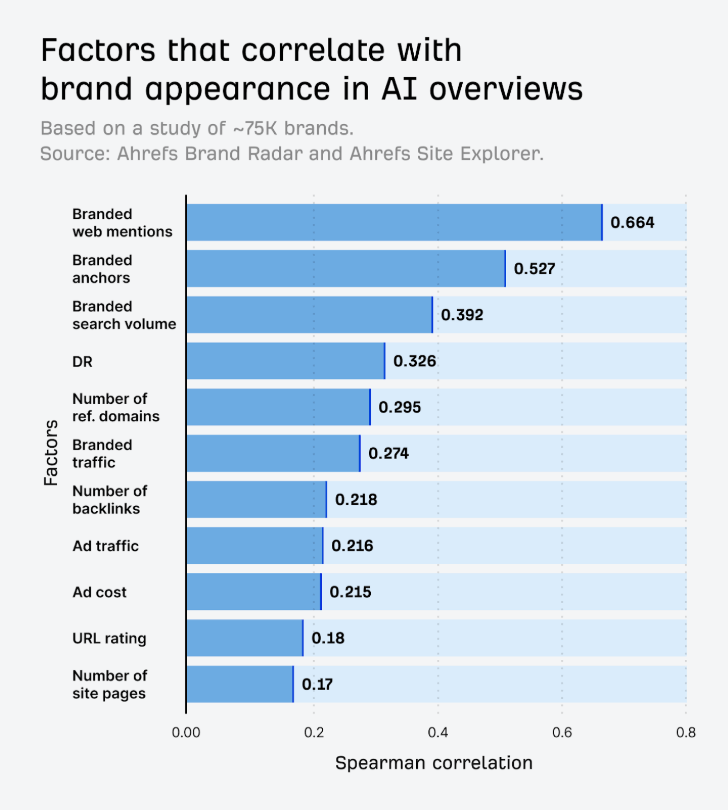
However, as much as many SEO practitioners hate to admit it, there are some subtle nuances to appearing in answer engines. We know that citations, off-site signals, reputable coverage and brand mentions are now central inputs into LLM visibility – and have been proven to be the number one factor correlating with strong performance.
What brands should do:
- Treat GEO not as a tactic but as an extension of brand building – credibility, authority and recognisable expertise matter more than ever.
- Invest in Digital PR, reviews, social proof and high-quality citations – all essential LLM data sources.
- Build measurement frameworks around LLM share of model and visibility benchmarking, a capability still nascent but rapidly maturing.
- Expect volatility: success will fluctuate as models update, retrain and redesign attribution systems.
2026 will no doubt see zero click search continue to rise. Investing in “GEO” means investing in another year of testing, learning and recalibrating tactics based on the levers proven to have the most impact. Expect more clarity in the year ahead as further research is released on the factors correlating with LLM visibility.
2. More brands embrace total search
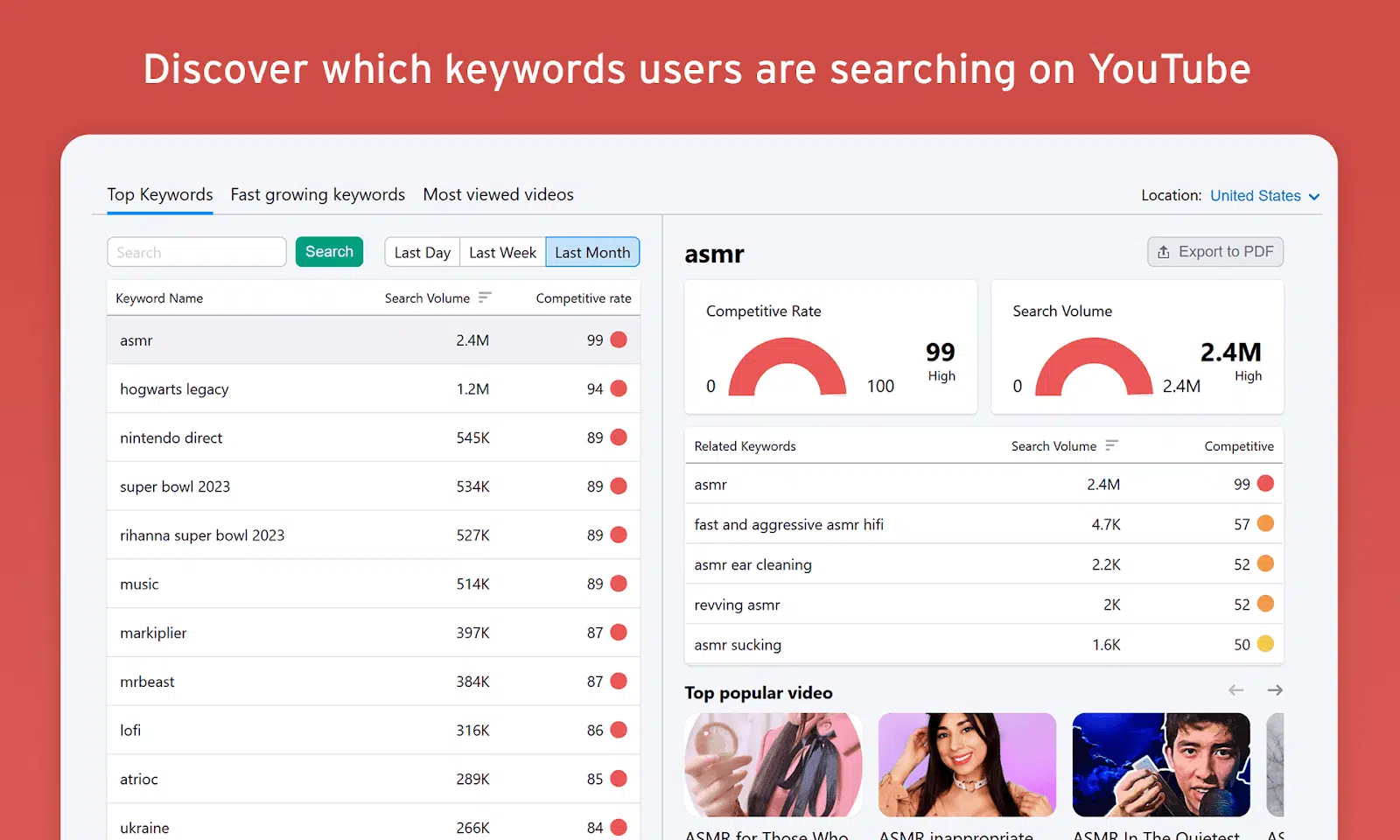
Discovery is no longer anchored to one platform. Social search is growing at pace, influencer-driven exploration is reshaping decision journeys, and younger audiences are bypassing Google entirely.
Nearly 40% of Gen Z now turn to TikTok or Instagram first for search-like tasks, with meaningful decreases in Google reliance compared with older cohorts
The result is a fragmented discovery ecosystem where brand visibility must stretch far beyond traditional SEO. Indeed, even traditional social curation platforms such as Pinterest are leaning into search, citing it as “the core of the business”.
What brands should do:
- Build a total search strategy: optimise content, creative and metadata across TikTok, YouTube, Pinterest, Amazon, Reddit and LLMs simultaneously.
- Invest in human-led storytelling that aligns with each platform – authenticity consistently outperforms polished brand content, particularly in B2B.
- Rebuild measurement around cross-platform search visibility, not just Google.
Being discoverable everywhere your audience spends time is becoming a key tactic for many brands, especially as traditional search traffic from Google continues to dry up.
3. Gen AI creative levels up, as creatives move to the centre
In the past few months we’ve seen generative AI become a meaningful accelerant for creativity rather than a shortcut for production. AI now transforms loose ideas into tangible concepts in minutes, enabling faster iteration and more ambitious experimentation.
A recent experiment at SXSW London offered a glimpse of what’s now possible. In just 24 hours, a small team of strategists, creatives and AI specialists built an entirely new brand from scratch, complete with packaging, social assets and a launch-ready video. Using Springboards for the strategic groundwork and Pencil Pro, powered by Google’s Veo 3, for rapid visual production, they turned rough concepts into a coherent brand world at remarkable speed. The resulting ad, produced in a matter of hours, landed in the top tier of System1’s benchmarks, outperforming the category norm.
Critics will continue to argue that AI will never be genuinely creative, and that it can only reassemble what already exists. But that view underestimates what happens when machines are guided by real insight and strong strategic direction. Used well, AI doesn’t replace human creativity, it expands it.
The question isn’t whether AI can create on its own, but how powerfully it can elevate the ideas we feed into it.
What will hold true in the year ahead:
- Execution is democratised, ideas matter. As AI can now generate visual assets with minimal friction, the differentiator is the creative idea itself.
- AI does not remove the need for creative direction. Early research shows that human curation still outperforms model-generated idea selection.
- Quality is becoming indistinguishable. AI video is approaching a point where even industry professionals struggle to detect it. The Liquid Death spec ad marked a significant shift toward acceptably high-quality AI-first creative production.
What brands should do:
- Treat AI as a creative collaborator, not a replacement for talent, but an amplifier of it.
- Use AI to widen the exploration phase, not to automate the idea itself.
- Elevate creative standards: with execution cheaper and faster, mediocrity becomes the real cost.
Importantly, creative differentiation is still a strategic advantage.
4. More budget moves to brand as performance competition intensifies
As AI lowers the cost of content production, while also reducing the organic search landscape available to brands, performance channels are becoming more competitive. CPCs continue to rise as organic algorithms increasingly favour brands with strong equity.
This shift is triggering more brands to invest in brand-building campaigns designed to strengthen reputation and expand share of voice. We’ve discussed how a widely cited, trusted brand directly improves LLM visibility, and that connection is now landing with performance marketers.
Brand advertising doesn’t just drive vanity metrics – it lifts overall performance by increasing mental availability and ensuring the brand shows up more often, in more places, when it matters.
Finally, building a reputable B2B brand in 2026 requires a renewed emphasis on winning trust via showcasing subject matter expertise, community and human connection.

Short-form thought-leadership content, influencers and in-person events are outperforming traditional brand advertising because they deliver something brands alone cannot: trust and human connection.
What brands should do:
- Rebalance investment toward distinctive brand campaigns, expert-led content, and community experiences.
- Use incrementality experiments to showcase the impact of running brand advertising in controlled environments.
- Focus on mental availability – the most important search engine remains the one in your mind!
5. The open web continues to shrink, as apps and walled gardens surge
AI is not only disrupting search; it is undermining the economics of the open web. 84% of advertisers now report behavioural shifts away from traditional browsing as AI answer engines reduce the need to click through to sites
Publishers are already seeing declines in organic traffic as users increasingly rely on ChatGPT, Perplexity and other assistants.
In the next 12 months, 45% of brands plan to divert investment into mobile in-app environments, retail media and CTV – channels with clearer attribution, higher engagement and more controllable inventory.
What brands should do:
- Diversify into environments where attention is growing: apps, podcasts, connected TV and creator-led ecosystems.
- Reassess the role of programmatic web inventory as supply contracts and quality declines – or at least refine your placement targeting.
- Strengthen first-party data strategies to operate effectively in closed ecosystems.
The open web won’t disappear, but it will matter less in driving brand visibility as users dwindle across popular publishers.
6. Share of Model becomes a baseline metric for search
As search fragments and AI-generated answers proliferate, a new analytics frontier is emerging: LLM visibility. Over the past few months there’s been a huge rise in tools designed to assess how and where brands surface in AI model outputs.
This mirrors the transition from rank tracking to SERP feature tracking a decade ago. The difference now is that the “results page” is fluid, contextual and personalised. Being visible in model outputs will become table stakes, particularly in categories with prolonged research periods.

The priority for most brands today is to ensure their brand isn’t cited, referenced or described accurately within LLMs, and this starts with measurement.
What brands should do:
- Build LLM visibility measurement into analytics frameworks – start tracking share of LLM.
- Strengthen off-site signals, expert-authored content and structured data – the assets most likely to influence model retrieval.
Brands that embed AI visibility into operations now will be better positioned as the space formalises.
In summary: another year of acceleration and adjustment
2025 was the year AI disrupted search in a major way – 2026 is the year it reshapes it entirely. GEO will mature through continued experimentation, while brand discovery will stretch across more surfaces than ever.
Creative production will accelerate thanks to Gen AI advances, and the economics of attention will continue shifting toward walled gardens as the open web struggles to cope with the new search ecosystem.
The golden thread running through every trend is consistent – brands must build trust, distinctiveness and authority across multiple platforms, human and machine alike.
The brands who act early, test continuously and invest in long-term brand building will be best positioned to thrive in an increasingly AI dominated landscape.
The post Digital marketing trends: looking ahead to 2026 appeared first on Hallam.
hallam.agency (Article Sourced Website)
#Digital #marketing #trends #ahead