
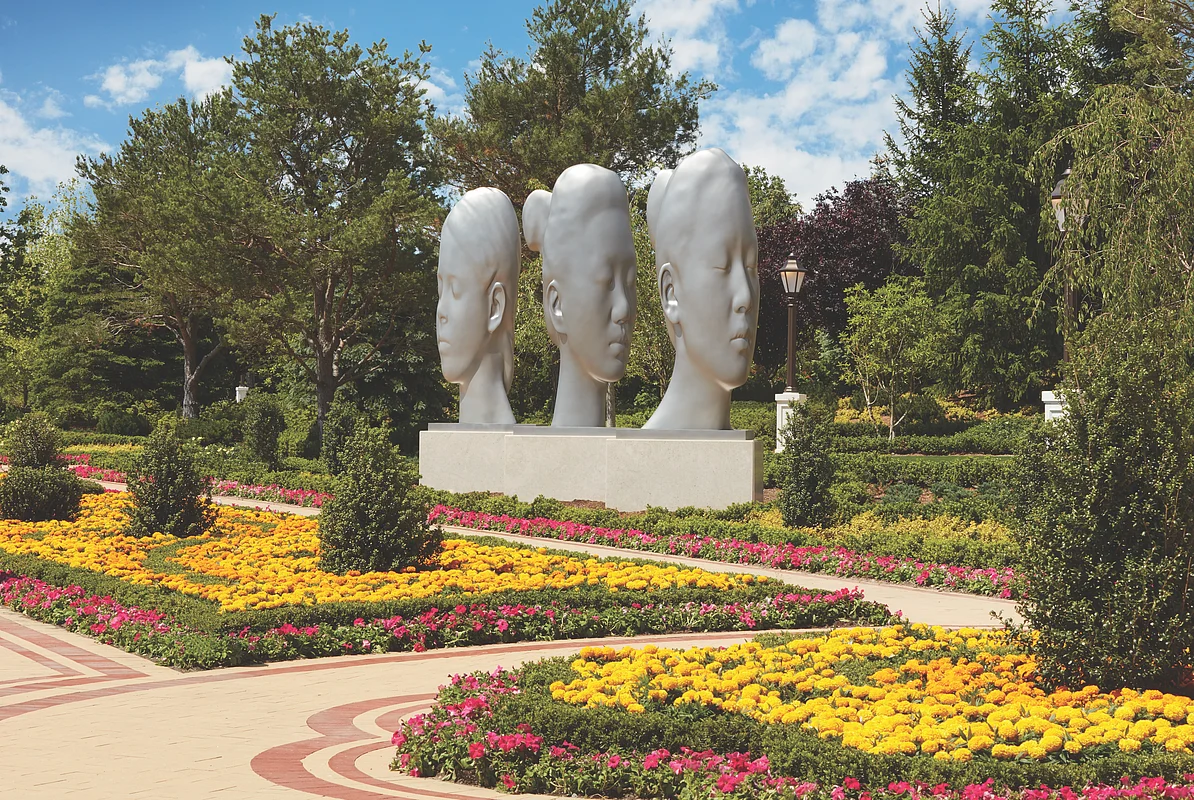
With the region’s first integrated resort set to open in spring 2027, Wynn Al Marjan Island’s chief creative officer has offered a rare glimpse into how guests will experience the property as they move through it.
According to Todd-Avery Lenahan, President and Chief Creative Officer of Wynn Design and Development, the arrival sequence was conceived with the same mindset used in filmmaking.

“I’ve always been fascinated by how film guides an audience, how movement is controlled, how perspective shapes emotion, and how what appears to be a simple pan is often carefully constructed,” he told Khaleej Times in an interview. “Our lobby was approached with that same mindset. It functions almost like a piece of set design, placing guests directly into Scene One of a cinematic journey — an extraordinary experience unfolding at the edge of the ocean.”
Stay up to date with the latest news. Follow KT on WhatsApp Channels.
While the resort does not rely on a single defining space, Lenahan said the lobby and arrival experience come closest to capturing the overall intent. “It’s designed to create wonder, anticipation, and the sense that a story is about to unfold.”
That approach, Lenahan said, means the resort has been designed to reveal itself gradually, with discovery forming a central part of the guest experience from the moment of arrival. “Nothing is accidental — every detail has been thoughtfully considered.”
“Rather than revealing everything at once, Wynn Al Marjan Island is designed as a sequence of unveilings, a choreography of teasing and revealing always offering the promise of something spectacular waiting just beyond the horizon,” he said.
The RAK influence
Wynn’s first project in Ras Al Khaimah balances the brand’s established design identity with a response to its surroundings.
“What will feel unmistakably Wynn is the level of craft and composition. We design entire worlds, not just buildings. There is a clarity of proportion, a sense of theatre and an attention to detail that is recognisably ours,” Lenahan explained.
“What will feel unmistakably Ras Al Khaimah is how those decisions respond to place. The resort prioritises space, privacy, and calm, with layouts and sightlines designed to create a sense of ease and discretion rather than spectacle.”
That emphasis, he added, extends into the guest rooms. “The guest rooms, for example, are conceived as layered, intimate spaces that feel sheltered and restful.”
LA flair in UAE
While Wynn is often associated with the energy and visual dynamism of Las Vegas, Lenahan said that spirit has been expressed differently for the region.
“People may associate Wynn with Las Vegas flair because the environments there are highly entertaining and visually dynamic. We are an entertainment company, so the energy is not confined to one venue. It is layered into the restaurants, the nightlife, the movement through space, and the way architecture and emotion work together.”
At Wynn Al Marjan Island, he said, that spirit is expressed differently. “The flair here comes from scale, composition, and contrast rather than color or intensity. The lower levels have that high energy you might expect, and then the atmosphere becomes lighter and calmer as you move up through the building. It still feels recognizably Wynn, but the experience is of the place and belongs to the Middle East.”
Sun, sand and more
The surrounding landscape fundamentally shaped the design of Wynn Al Marjan Island, starting with the positioning of the building itself.
“With the beach to the north, we deliberately oriented the resort toward the open sea, ensuring the primary focus is the timeless majesty of the water,” said Lenahan.
Lenahan said the movement of the sun across the Gulf was another key consideration.
“The sun moves from south to north, striking the Gulf in a way that reveals its most vivid blues and aquamarines. By aligning the resort to this natural rhythm, the building consistently captures the most beautiful expression of the sea.”
Art and architecture
Art, Lenahan said, was embedded into the project from the earliest stages of design. “In fact, some of the most significant acquisitions happened before the design was deeply underway.”
“When you find a work with a strong level of presence, it does more than decorate a space. It shapes it. Several pieces became the starting point for entire rooms. They set the scale, the palette, and the proportion, and the architecture grew from them.”
As a result, he said, art and architecture were developed together. “Our focus was never to add art at the end. We built the resort around the art. It is a living gallery, and the collection is in dialogue with the architecture.”
The collection spans ancient works to contemporary commissions, with placement guided by resonance rather than chronology.
“The range is intentional. We wanted the collection to feel like a true dialogue across time, not a set of categories placed in neat rows. So the placement was driven by resonance rather than chronology. An ancient piece can sit beside a contemporary work if the two speak to each other. That contrast is what gives the collection its energy.”
Many works are encountered outside traditional gallery settings.
“We did not want people to experience art the way they do in a museum, where you stand back and observe passively from behind a rope. We are inviting our guests to interact with our art.”
The collection also reflects the region’s cultural history and influence.
“This region has an extraordinary cultural legacy, and its influence on art, particularly the Orientalist movement, is profound. Many Western artists painted here in situ, documenting landscapes and cultures that were new to the world at that time. Bringing some of those works back to the place that inspired them felt important.”
“It reverses that original journey and allows the pieces to be understood in the right setting.”
At the same time, contemporary artists from the region are also included. “The goal was never to treat the art as decoration, but as part of the narrative fabric of the resort.”
Asked about the most challenging creative decisions on the project, Lenahan said they were often the least visible.
“There were several decisions that required real conviction, and they arrived at different points in the process. Choosing the overall orientation of the building was a defining moment, as was determining how to integrate an art collection of this scale into a resort environment.”
“Each choice influenced countless others. I could point to specific examples, but the most challenging decisions are often the ones that shape the project quietly and continuously rather than dramatically in a single moment.”

Sahim Salim
Staff Writer

As Associate Editor, Sahim Salim helps tell the UAE story like no one else does — and leads a team of reporters that asks the questions to get news and headlines that matter.
www.khaleejtimes.com (Article Sourced Website)
#Designed #film #guests #experience #Wynn #Marjan #Island