
Ai Weiwei, known to many simply as Ai, is among the most widely recognised artist-activists alive. A relentless critic of state surveillance, corporate capitalism and the ways power infiltrates daily life, he has spent decades using art to expose systems most would rather ignore. His practice treats culture as a battleground, and art as one of the last spaces where authority can be questioned or overturned in public.
Born in Beijing in 1957, Ai spent his childhood in political exile after his father, the poet Ai Qing, was branded a “rightist” under Mao. He moved to New York in 1981 to study at Parsons, absorbing the city’s experimental energy before returning to Beijing in the 1990s, to help shape an underground art scene outside state control.
His work pushed against official narratives: Dropping a Han Dynasty Urn (1995) — in which he smashed a 2,000-year-old relic and tore into the idea of who gets to own history; Study of Perspective (1995-2017) saw him photograph himself raising a defiant hand at global monuments, from Tiananmen Square to The White House. After the 2008 Sichuan earthquake, he led a citizen investigation to identify thousands of children killed in collapsing school buildings. The resulting exhibits were an indictment of state negligence that drew international attention. Detained for 81 days in 2011, he later left China and has continued to work and speak freely, most recently from Lisbon, Portugal. Last year, Ai took his first-ever exhibition to Kyiv, Ukraine, amid its war with Russia.
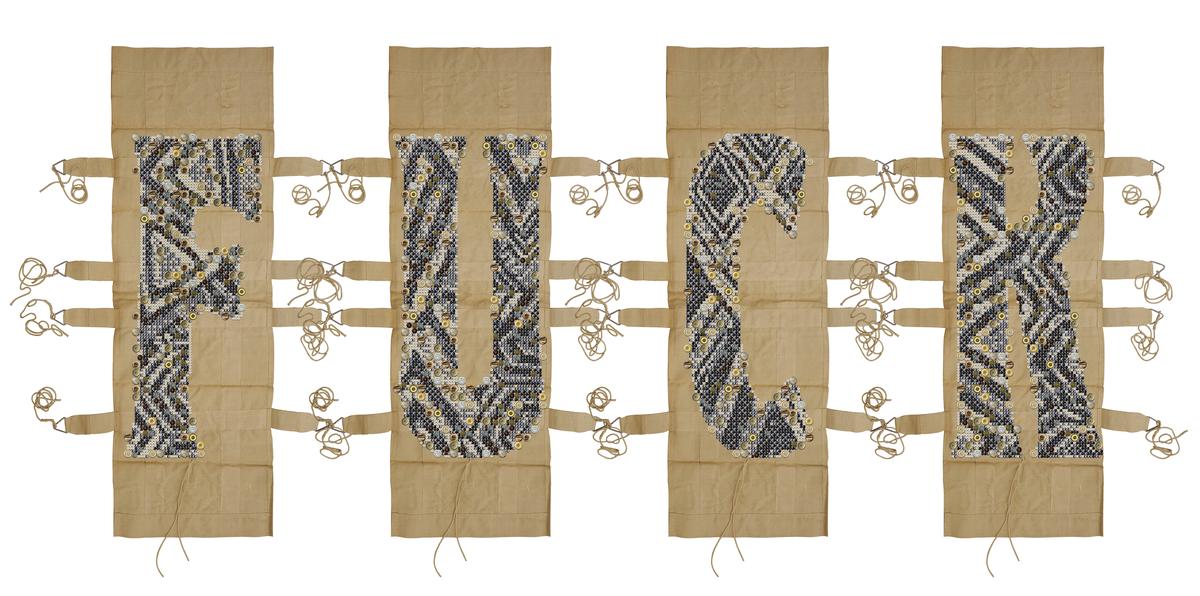
F.U.C.K, 2024, four World War II stretcher fabric stitched with hundreds of buttons.
| Photo Credit:
©Ai Weiwei, courtesy the artist and Galleria Continua/Duccio Benvenuti – Art Store

Neolithic Coca-Cola Vase, 2015, paint on pottery.
| Photo Credit:
©Ai Weiwei, courtesy the artist and Galleria Continua/Duccio Benvenuti – Art Store
This past week, his first solo show arrived in India, at Delhi’s Nature Morte gallery, presented with Galleria Continua, bringing together 15 works that track cultural fault lines across nearly three decades — China’s upheavals, global supply chains, and the world’s rolling crises. Five-thousand-year-old Neolithic axes and Qing dynasty chairs are painted white to suggest the flattening of history; the Neolithic Vase with Coca-Cola Logo appears like a corporate-era warning flare; four World War II stretchers stitched with hundreds of buttons form F.U.C.K.; and a wall of Lego “paintings” — remakes of iconic works by Hokusai, Vermeer, Da Vinci, Monet, V.S. Gaitonde, S.H. Raza and a Pichwai — pulls them into the pixel age.
Ahead of his visit to India Art Fair next month, in an email interview, Ai speaks about power, collapse, and why art still matters. Excerpts:
Question: How do you feel about your first India exhibition and what conversations do you hope to inspire?
Answer: Though I had never been to India until now, it is a country that fills my imagination with both a divine quality and a deeply, worldly social character. This mysterious place has always made me think of Buddhism, which has exerted a lasting and profound influence on China.
In my childhood, I encountered the work of the Indian poet [Nobel laureate] Rabindranath Tagore on my father’s bookshelves. In Chinese eyes, his appearance resembles that of a spiritual practitioner devoted to inner cultivation: a deep gaze, a full beard, and a long, flowing robe, evoking in me a sense of a familiar kind of foreignness.
All of my father’s books were burnt by the authorities, during the Cultural Revolution in the 1950s, a period of political harshness. So being able to come here, at this moment in time, feels like a blessing.
I hope that my modest exhibition can serve as a prelude, a catalyst, prompting young artists and thinkers to reflect on the dialogue between humanity and nature. These dialogues bring to mind Tagore’s poem [Gitanjali, 1913]: This frail vessel thou emptiest again and again, and fillest it ever with fresh life. The poem is suffused with hope. The source of hope lies in experience itself. One cannot entirely refuse hope, just as one cannot refuse experience.

“What China and India are facing today is a condition confronting the entire world: autocracy, the concentration of power, the collapse of humanity’s spiritual life, and an era of materialism pushed to its extreme.”
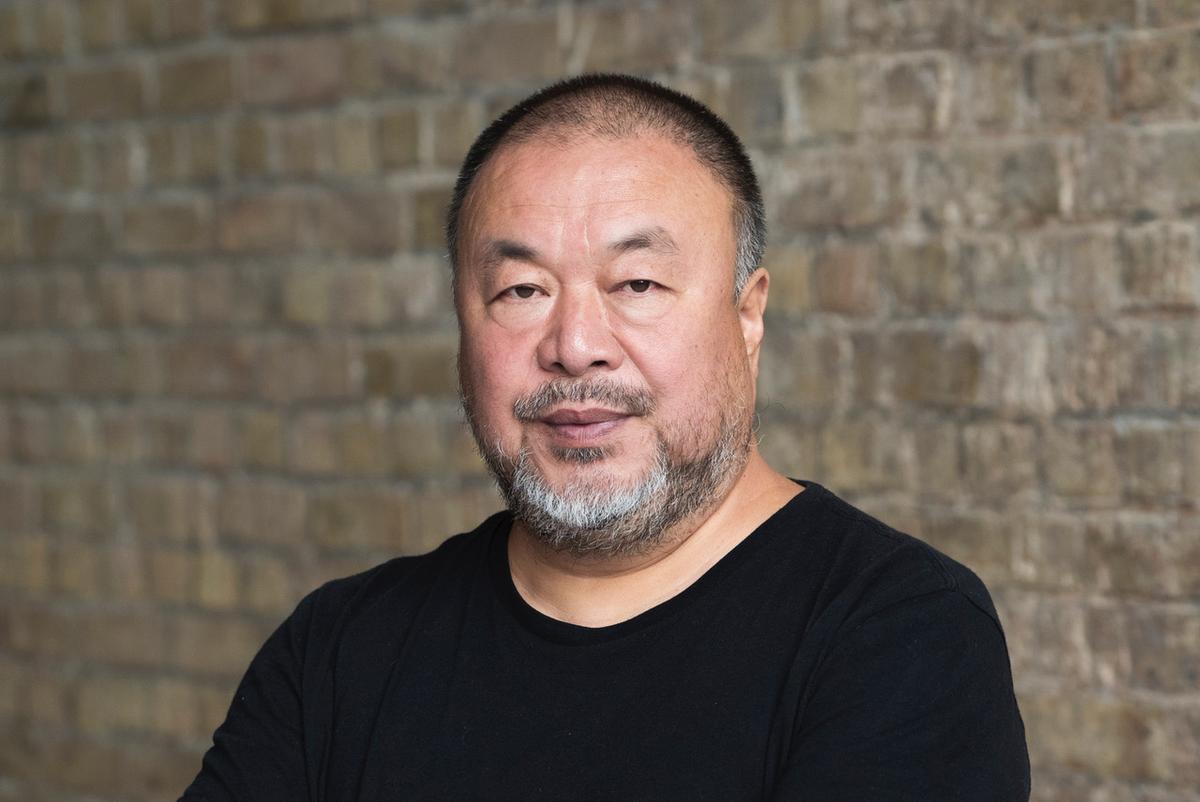
Chinese artist Ai Weiwei.
| Photo Credit:
©Ai Weiwei, courtesy the artist and Galleria Continua/Duccio Benvenuti – Art Store
Q: You’ve chosen works that stretch across thousands of years and many traditions. What connects them?
A: To offer a new interpretation and meaning to familiar objects has been an ongoing endeavour of mine: how objects survive history, change under power, and continue to speak across time.
Q: In spite of their shared histories, India and China are often framed as political rivals.
A: China and India are far more closely related than I once imagined or could fully grasp. These are two countries that have always possessed cultures of their own and have continued uninterrupted for 4,000-5,000 years, making them both unique presences in the cultural history of the world. This long continuity has allowed both cultures to develop profound ways of understanding the human condition. In both Indian and Chinese cultures, these questions have been lived, contemplated, and recorded with profound depth.
Q: You bring up philosophical questions across civilisations. How do you gauge the condition of human life today?
A: What China and India are facing today is a condition confronting the entire world: autocracy, the concentration of power, the collapse of humanity’s spiritual life, and an era of materialism pushed to its extreme. Humanity has never truly realised, or even imagined, such a state under globalisation, a time that feels almost like an abyss.
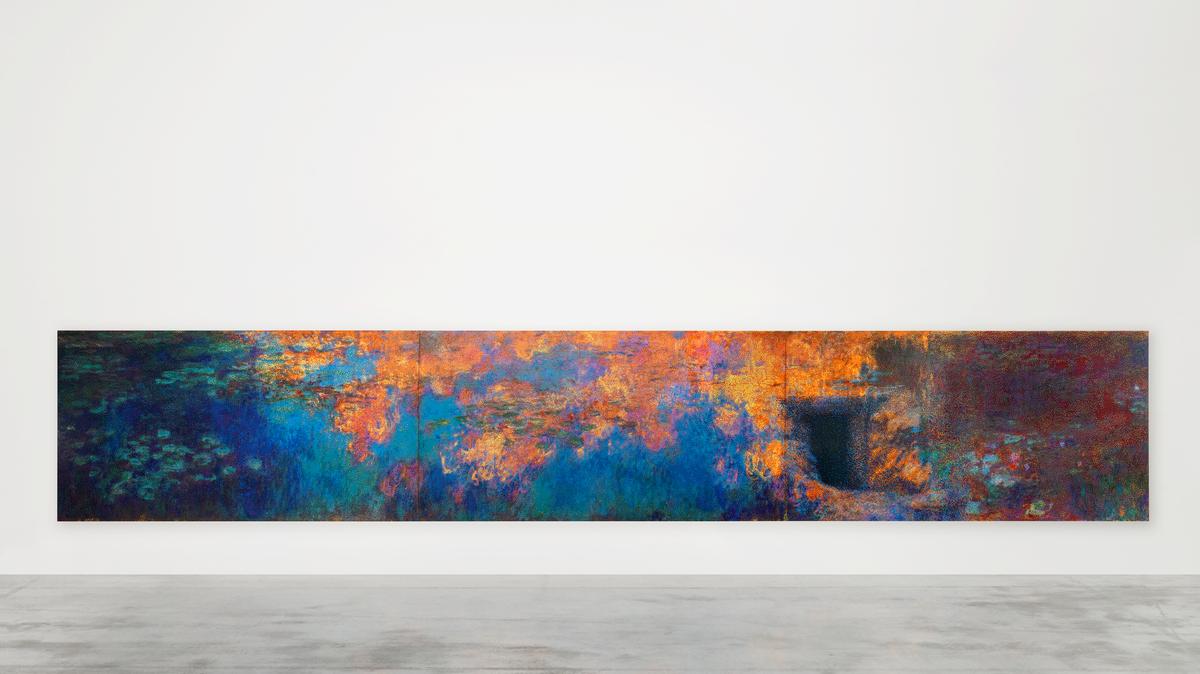
Monet’s Water Lilies, 2023, reimagined in toy bricks.
| Photo Credit:
©Ai Weiwei, courtesy the artist and Galleria Continua/Duccio Benvenuti – Art Store
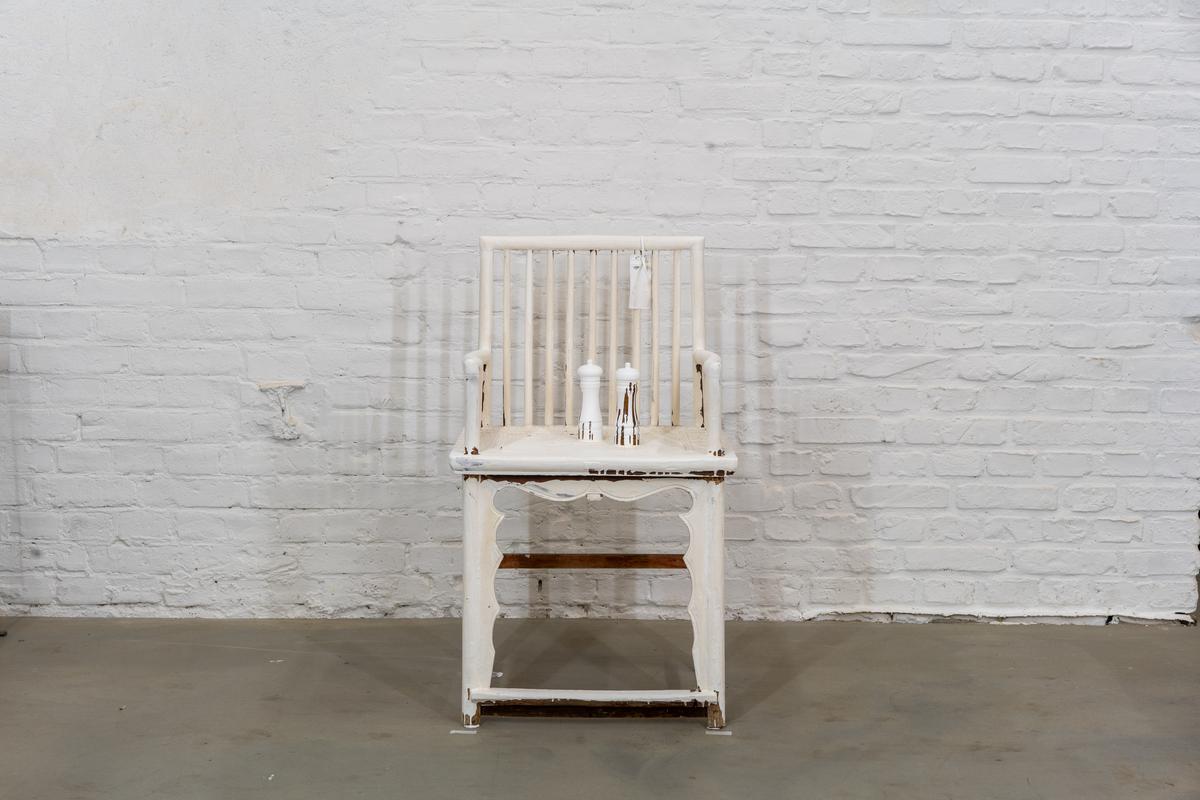
Whitewashed Remnants of History of the State of Emerging Future Works, 2025, in mixed medium.
| Photo Credit:
©Ai Weiwei, courtesy the artist and Galleria Continua/Duccio Benvenuti – Art Store
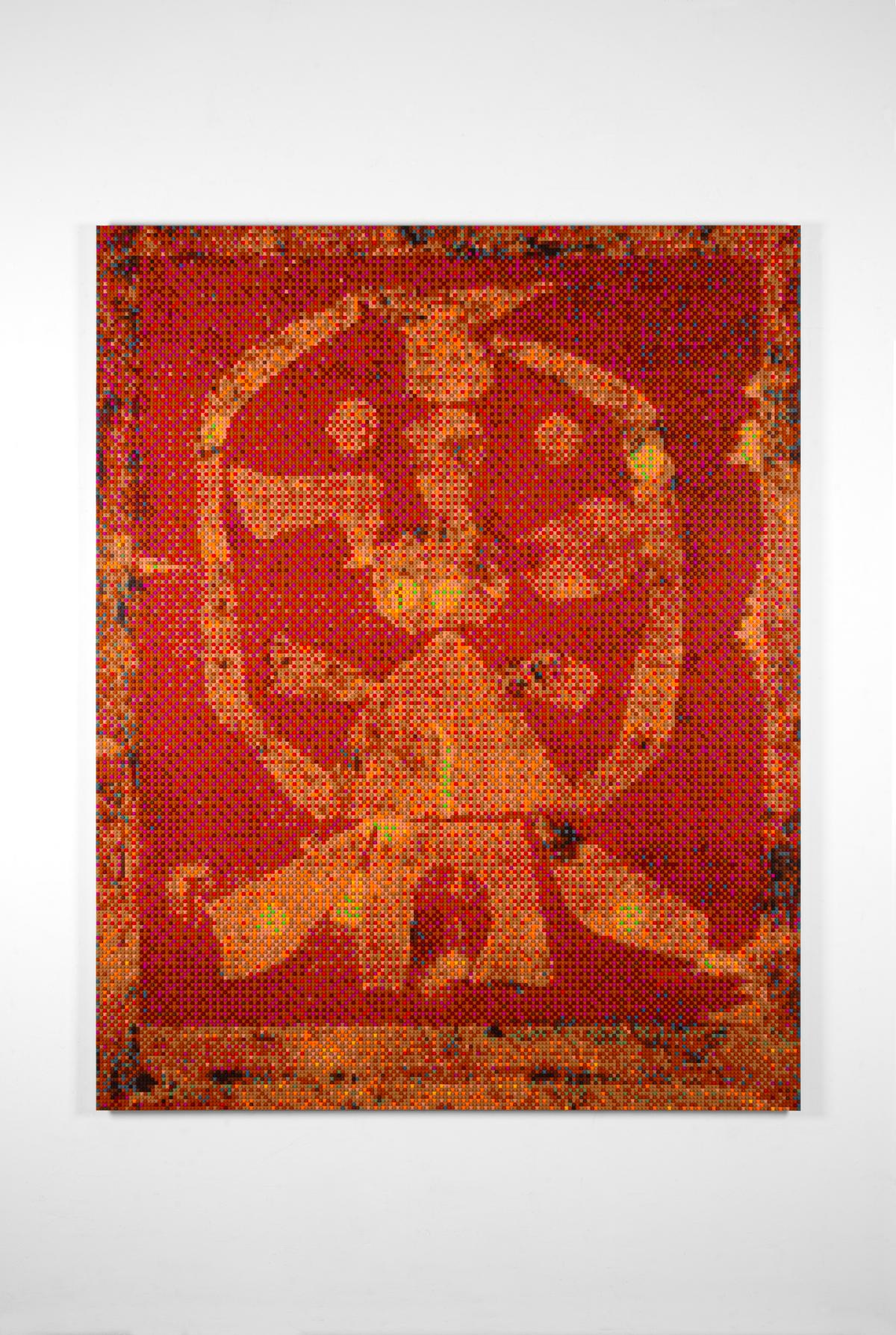
V.S. Gaitonde’s Untitled, 2025, reimagined in toy bricks.
| Photo Credit:
©Ai Weiwei, courtesy the artist and Galleria Continua/Duccio Benvenuti – Art Store
Q: With surveillance, digital control and AI shaping everyday life, where do you see artistic freedom heading?
A: Today, in our lived reality, we can see that human life is increasingly controlled and surveilled through reinforced discourses of power and digital systems. Artificial Intelligence (AI) continuously absorbs what belongs to ordinary sentient beings of the mundane world — their joys and sorrows alike.
At such a moment, art is like the staff held in the hand of a spiritual practitioner, or a leaf falling beneath the Bodhi tree. No matter how perplexing the outside world becomes, or how close it seems to an inferno of suffering, the inner world can remain in bloom. It is precisely where art exists in the world: as a form of self-cultivation and as resistance.
I believe that precisely because we are living in an era that constantly diminishes, cancels, or erases the inner lives of individuals — a technologised age — art has more reason to exist now than in any other period, because only through self-reflection can humanity continue to move forward.
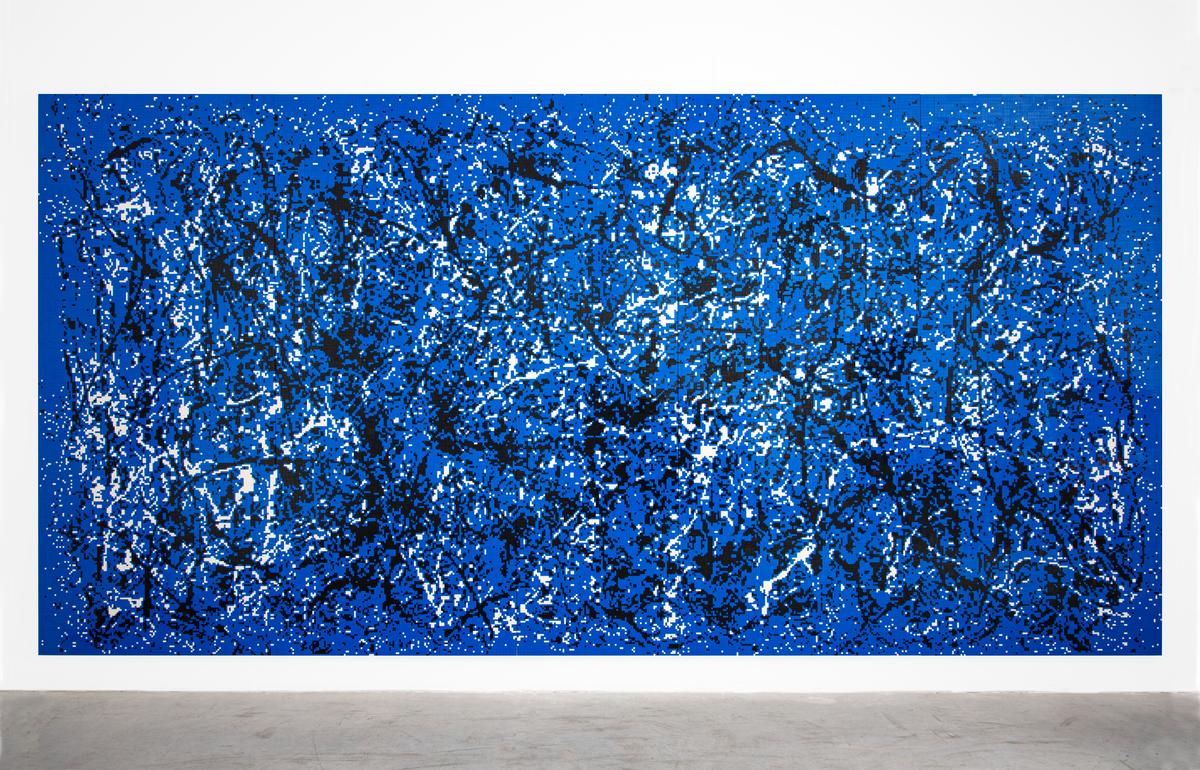
Pollock in Blue, 2019, in toy bricks.
| Photo Credit:
©Ai Weiwei, courtesy the artist and Galleria Continua/Duccio Benvenuti – Art Store
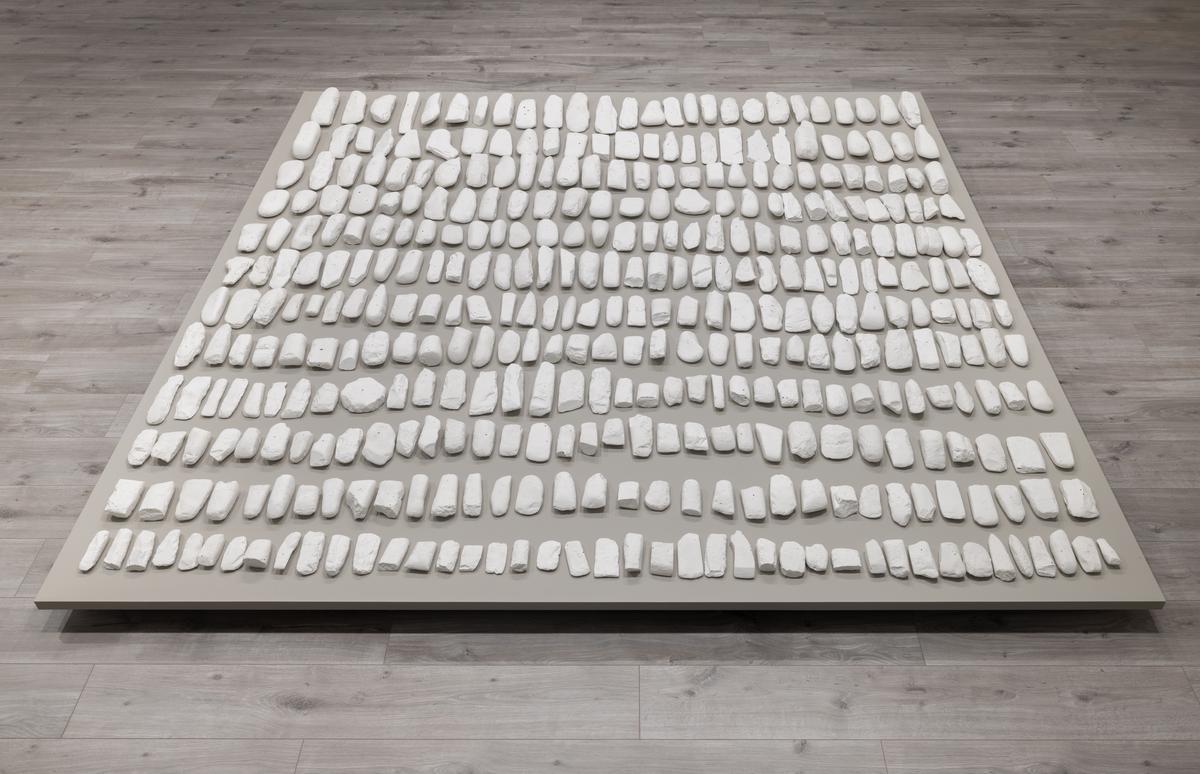
Stone Axes, 1993-1999, white stones and paint.
| Photo Credit:
©Ai Weiwei, courtesy the artist and Galleria Continua/Duccio Benvenuti – Art Store
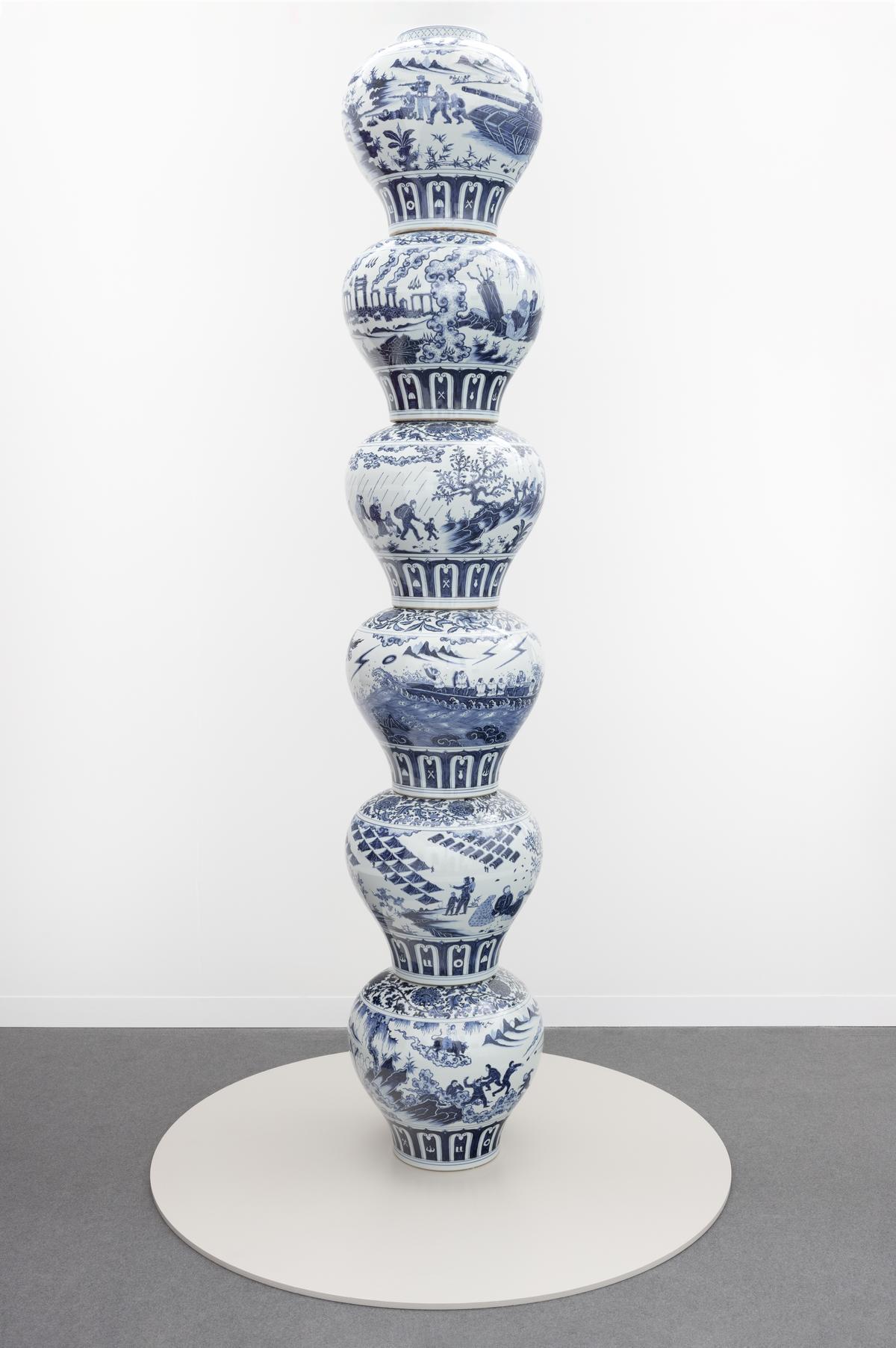
Porcelain Pillar with Refugee Motif, 2017.
| Photo Credit:
©Ai Weiwei, courtesy the artist and Galleria Continua/Duccio Benvenuti – Art Store
Ai Weiwei’s solo show is on view at Nature Morte, Dhan Mill complex, Chhattarpur, Delhi, from January 15-February 22.
The interviewer specialises in reporting on art, design and architecture.
www.thehindu.com (Article Sourced Website)
#Weiwei #interview #China #India #facing #collapse #humanitys #spiritual #life