
“Marketing operations” is one of those phrases that gets thrown around a lot, and any marketing ops professional will tell you it means different things to different people depending on the maturity of the organization.
It’s a catchall for just about every function performed by your marketing department. When we talk about “marketing operations,” we talk about dozens, if not hundreds or even thousands of things. From campaign management and data management all the way through customer service enablement and reporting within a marketing metrics framework, these operations are expansive.
When it comes right down to it, though, there are really only three foundational elements to all marketing operations, sometimes referred to as the “people, processes, technology” triad:
- People.
- Process.
- Technology.
If we’re going to discuss marketing operations – and you bet we are – it needs to be framed around those three core pillars. Understanding how people, processes and technology intertwine is the cornerstone of modern marketing operations management.
Pay careful attention: Every aspect of your marketing efforts is profoundly influenced by what we cover in this blog post. Any ops professional looking to improve marketing operations needs to master these basics.
1. People: The Who
What does it mean to say you’re a marketer?
The answer: Nothing at all.
Because saying you’re a “marketer” is about as descriptive as telling someone you’re a person. It says very little about your skills, your goals, how you spend your time or what you actually do within the wider role of marketing operations.
That’s why the first tenet of marketing operations is this: Your marketing operations team isn’t made up of marketers; it’s made up of several specialists who do marketing.
In other words, a marketing ops team is a collective of ops professionals whose individual disciplines combine to advance a company’s broader marketing strategy.
Any marketer who claims they can “do it all” is a liar or gravely misunderstands the amount of skill, experience, time and expertise that goes into different marketing roles.
Let’s unpack those roles so every aspiring marketing ops pro or seasoned professional can see where they fit in:
Strategists

They go by many names. Marketing manager. Content marketing strategist. Marketing operations leader. But they are, in essence, members of marketing operations management. They serve as the connective tissue for people, processes and technology.
Meaning: They create marketing strategies that support business goals. They’re proficient at collecting, organizing and interpreting data, and they always tie each marketing activity back to revenue.
A strategist needs a strong theoretical understanding of all marketing operations. They don’t necessarily need to know how to segment an email database or author a blog post. But they must understand the role that every marketing activity can play in a marketing operations strategy. That knowledge includes how much effort, time and money are involved in each marketing execution, and most importantly, when to prescribe which marketing efforts to accelerate the desired outcomes.
Strategists also need to be familiar with digital marketing resources like Google Analytics, Google Search Console, marketing software and keyword research tools. They have to be comfortable with CRM software (e.g., Salesforce), and they need to be excellent communicators and savant slide deck builders.
Project Managers

Your project managers liaise between strategists and the marketing specialists who handle the various elements of a marketing campaign, ensuring agile marketing principles don’t get lost in translation.
They organize content calendars. They figure out deadlines. They help manage resources allocated to projects, and it’s their job to flag with the strategist when budget, time or effort is being over-extended.
They also act as quality control for creative deliverables, which means they need to be closely aligned with the strategist about the intended effects of the marketing deliverables they oversee.
The perfect project manager is highly organized, empathetic, communicative and flexible. They need to be able to find their way around spreadsheets, documents, slide decks and project management software. They must keep the entire ops team rowing in unison.
Content Creators

These are the writers, the designers, the developers, the animators, the videographers, the illustrators, the social media managers and the many other talented people who actualize a marketing operations strategy and execute day-to-day marketing activities.
Speaking from experience, marketing is full of restraints. As a creative, you have to work with the goals and the data that are presented to you. Sometimes, you have to make hard decisions about whether it’s better to create the best piece of content or the best piece of content to serve a particular strategy. The two are not always in alignment in the mind of a creative person.
The more daunting task is trying to maintain creativity day in and day out. When you’re in a creative role, you don’t have the luxury of waiting for inspiration to strike. You have to find it every day.
For the marketing ops professional who lives in the creative lane, that consistency is a superpower. It’s not easy work. But it’s essential, and it underpins the success of modern marketing operations teams.
SEOs and Digital Marketing Specialists

We call them consultants at Brafton.
These highly knowledgeable, tech-savvy marketing experts audit website performance using a variety of tools – including Google Analytics, user-experience heatmaps and Screaming Frog.
via GIPHY
A quick heads-up: Screaming Frog, not to be confused with a shouting amphibian, is a technical SEO tool.
Digital marketing specialists also provide supplemental research for creative teams that ensure content is optimized to achieve a marketing goal and align with the broader operations marketing playbook.
For instance, at Brafton, SEOs are the ones who create our Search Performance Briefs. These documents are based on data about what recurring topics and key terms appear in the webpages that rank well for a specific keyword.
In a typical marketing team, strategists often double as SEO specialists. This is a recipe for spreading strategists too thin. Strategic planning is a full-time job concerned with tying marketing goals to business goals and overseeing a larger strategy.
Search engine optimization is a broad practice that covers everything from keyword research to website structure, page speed, UX analysis and much more — so a dedicated ops professional in this area is invaluable.
Social Media Managers and Consultants

Social media marketing has its own nuances. Like interacting with influencers. Building followers. Targeting and engaging specific groups of followers. And of course, posting at a regular cadence that supports larger campaign management cycles.
By any name – strategist, consultant, manager – social media experts straddle the line between tactician and creative expert. They need to know how to interpret data across multiple channels, but they also need to be able to creatively communicate with an audience of followers.
Social consultants also need to be well-versed in PPC advertising strategy on the occasions that paid social is warranted in your marketing mix, making them an indispensable part of any marketing operations team.
Don’t underestimate the importance of social media managers. They occupy a unique space in marketing and are crucial for guiding any strategy that intersects with social media, ensuring the overall marketing operations strategy remains cohesive.
Developers/Tech Specialists

We use the phrase “developers” loosely here to refer to many types of website work.
A great developer who specialises in digital marketing needs to be a jack of all trades, bridging operations and technology so the rest of the ops team can deliver frictionless experiences.
They help with the technical side of things, including executing technical SEO campaigns, sprucing up webpages with UX elements, improving site accessibility and so much more.
There’s also a heck of a lot of troubleshooting. Technology has a way of breaking, and developers have a way of fixing — a vital skill for keeping the operations team engines humming.
Key Takeaway: It Takes a Village
The skills involved in marketing ops are incredibly diverse, and no one person possesses them all. That’s why the role marketing operations plays is inherently collaborative.
Most marketing teams do what they can with the resources they have, which is understandable. But if the goal is to truly optimize and improve marketing operations, you can’t do it without access to a complete marketing team or a trusted agency partner that understands people, processes and technology.
2. Process: The What
Entire books have been written about how to “do” marketing, but very few of them show how to weave an agile marketing mindset into the daily grind of operations.
So instead of telling you what specific actions you need to take, we’ll focus specifically on who should be handling which specific marketing operations. This way, you can ensure every role is clearly mapped.
The following is a list of marketing processes by stakeholder:
Strategists:
- Collaborate with business management to align marketing goals and business objectives.
- Pull data and create performance reports and presentations for management, anchoring insights within a marketing metrics framework.
- Work with marketing specialists on persona development.
- Track ROI of marketing efforts to demonstrate how pro marketing initiatives influence revenue.
- Earn buy-in from the rest of the marketing team and other ops teams across the organization.
Project management:
- Oversee campaign execution in coordination with the ops team.
- Monitor spend.
- Track deliverable status and update project stakeholders.
- Post live content or otherwise assist the marketing specialist in charge of website maintenance.
- Collaborate with every other marketing stakeholder on all deliverables, reinforcing an agile marketing culture.
Content creators:
- Create copy for landing pages, blog posts, case studies, marketing collateral (white papers and eBooks), emails, product descriptions, video scripts, ads and other marketing materials.
- Create graphics and custom illustrations to accompany written copy.
- Design webpages, banner ads and calls to action and other visual marketing elements.
- Format eBooks, infographics, white papers, one-pagers, case studies and other marketing assets.
- Build new webpages.
- Plan, shoot and edit video content.
- Storyboard and create animations, all while integrating data marketing insights from the wider marketing ops team.
SEOs and other digital marketing specialists:
- Perform keyword research.
- Develop data-driven creative briefs to help guide content creation efforts.
- Conduct website and UX audits.
- Conduct technical SEO audits.
- Manage paid search campaigns.
- Handle email marketing campaigns, including list segmentation and sending.
- Implement calls to action, including form and opt-in boxes.
- Assist with persona development.
Social media managers:
- Manage social media accounts with a customer-service-first mindset.
- Build followers.
- Interact with influencers.
- Launch user-generated content campaigns.
- Regularly update social channels with new content.
- Manage paid social campaigns.
- Nurture leads and ensure data flows back into CRM and marketing software for unified reporting.
Developers/tech specialists:
- Create templates in content management systems.
- Refactor code (i.e. make it more readable).
- Build custom marketing forms.
- Build UX elements.
- Support compliance with data privacy regulations.
- Assist in technical SEO campaigns.
- Troubleshoot issues as they arise.
- SSL setup.
- Much more that keeps the people-process-technology triad firing on all cylinders.
Key Takeaway: Know Which Activities to Outsource
Clearly, there are a lot of processes that go into a marketing program.
In a perfect world, you would always be on top of all of these aspects of digital marketing. However, it’s a lot to juggle, which is why strategy is such a crucial part of the marketing mix. Savvy organizations often bring in an external marketing ops consultancy.
Strategists – aka marketing managers – are largely responsible for knowing which processes are most important for their operations, and for seeing where the opportunities for greatest improvement lie.
Sometimes, that means knowing where to hire in-house, and where to seek the help of an outside agency for support or to handle larger, more intricate projects, such as a website redesign.
In all our years as an agency, we can count on one hand the number of clients we’ve worked with who haven’t simultaneously been working with other marketing agencies.
It just isn’t feasible to expect to be able to:
- Have every marketing skillset you need employed in-house.
- Have the bandwidth to do all the things that need to be done in marketing.
3. Technology: The How
Technology has the potential to transform the efficacy and scale of your digital marketing operations, and it’s crucial to the modern customer experience.
But it’s there for one single purpose: to enable your people and to enhance processes.
With that in mind, we’ve listed out the most important marketing technologies that your team needs to execute their operations effectively:
Web Analytics Tools

Google Search Console dashboard.
- Google Analytics.
- Google Search Console.
Who uses them: Strategists and SEO experts.
What they use them for: Track key indicators such as website traffic, conversion rates, unique users, average position in search, keyword rankings and other important data.
Email and Marketing Automation Tools
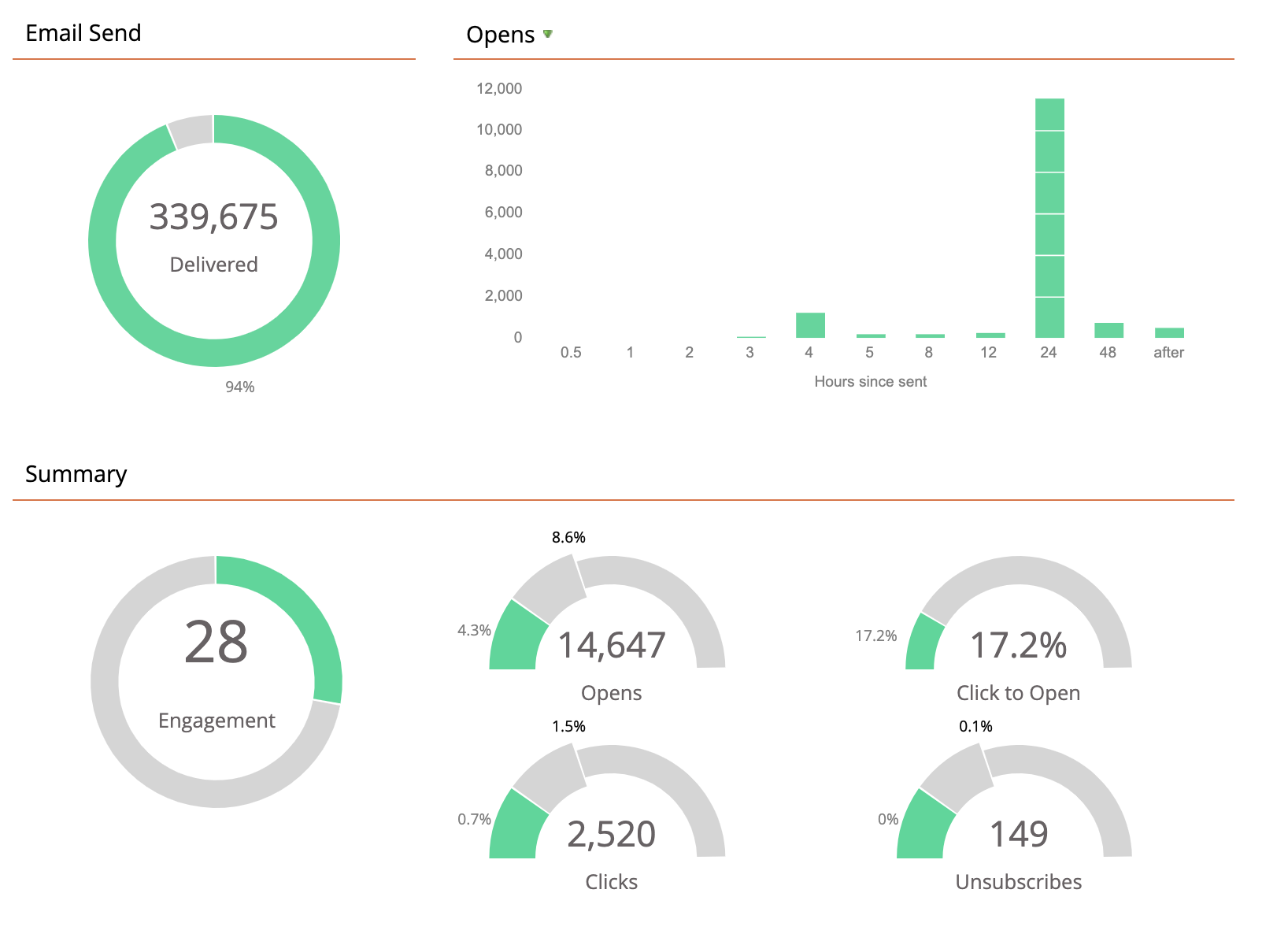
Email automation metrics in Marketo.
- Marketo.
- Pardot.
- Hubspot.
- Mailchimp.
- Salesforce.
Who uses them: Strategists, lead management teams, email-marketing specialists.
What they use them for: Email list segmentation, email sending and lead qualifying.
Project Management Software
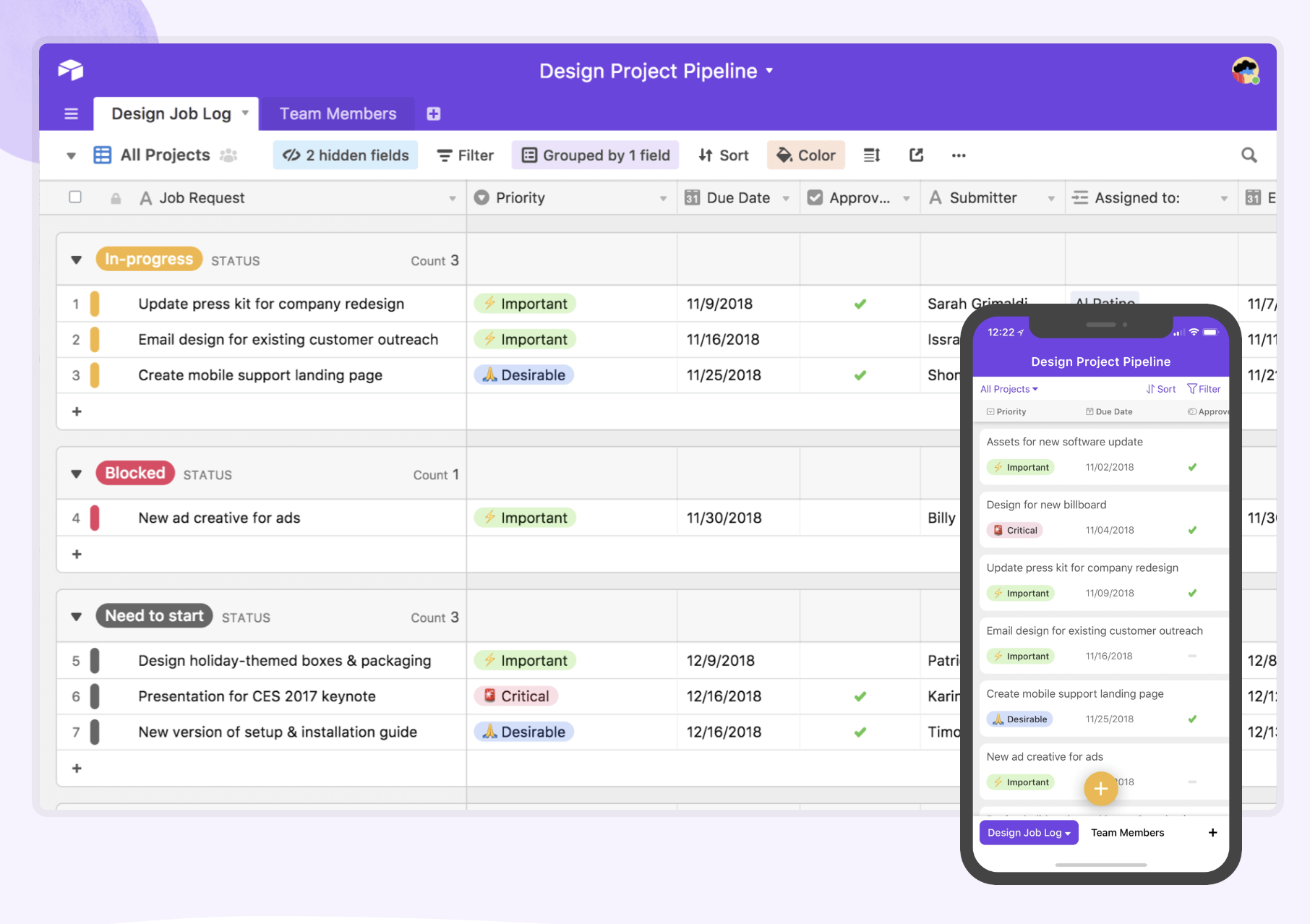
Airtable at work.
- Airtable.
- Asana.
- Trello.
- Wrike.
- Google Sheets/Microsoft Excel.
- Productive.
Who uses them: Mostly project managers, but also strategists, specialists and every marketer on your team who has deliverables that they need to track or manage.
What they use them for: To track campaigns, projects and individual marketing deliverables and to coordinate all marketing efforts in one place.
Keyword Research Tools
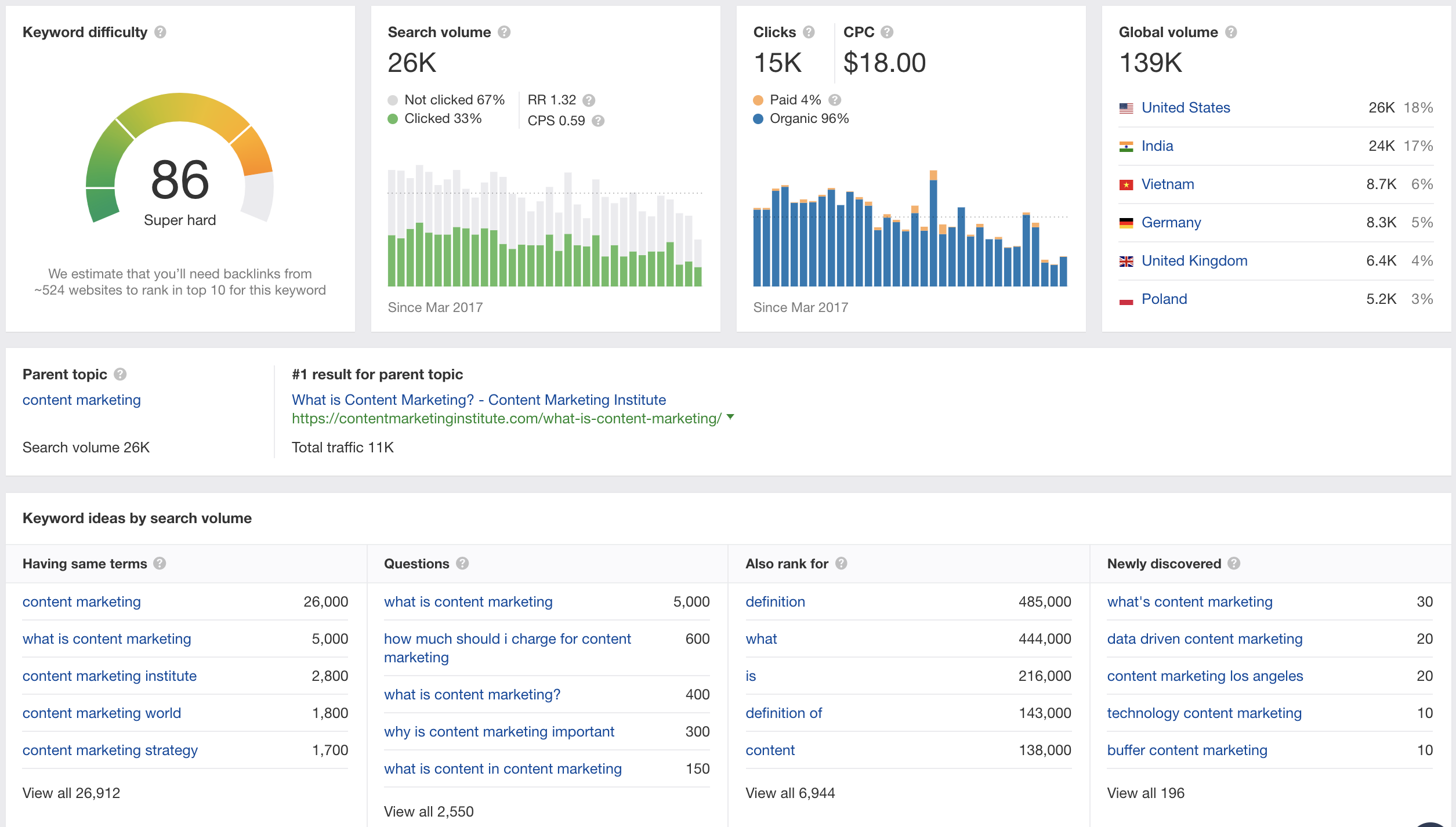
Ahrefs data for the keyword “content marketing.”
- Moz Keyword Explorer.
- Ahrefs.
- SEMrush.
- KWFinder.
Who uses them: Strategists, SEO specialists, content writers.
What they use them for: To create lists of keywords to target in each blog post or landing page that goes on a website (every new webpage that goes on your site should always target a single keyword with strong monthly search volume and a keyword difficulty score that is lower than your domain authority); to see what keywords competitors are dominating.
Specialized SEO and Website Performance Tools
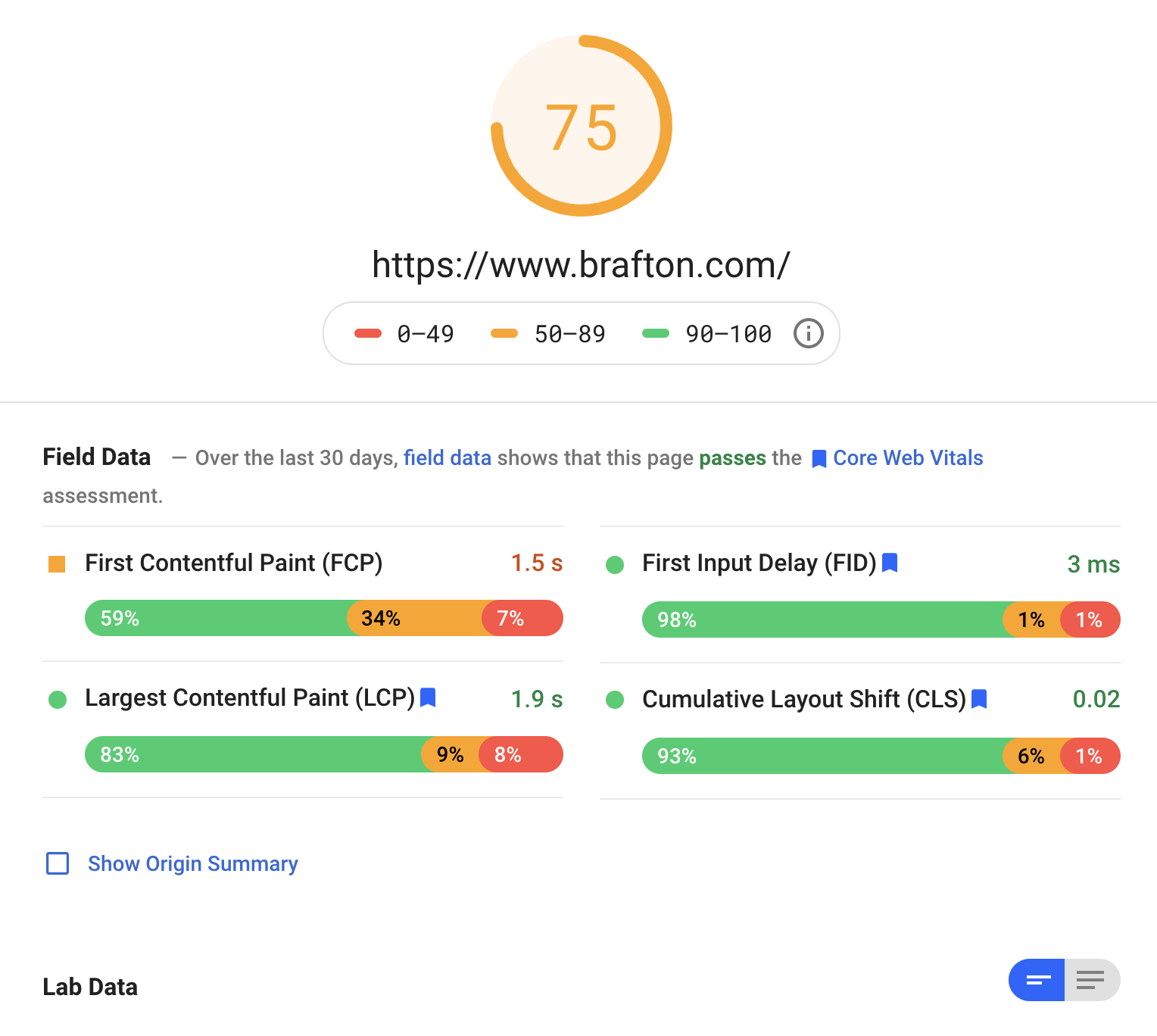
PageSpeed Insights Dashboard.
- Google Analytics.
- Google Search Console.
- PageSpeed Insights.
- Screaming Frog.
- MarketMuse.
- Google Ads
- Sprout Social.
- Much more.
Who uses them: SEO and digital marketing specialists, PPC consultants, technical SEO specialists, developers, UX and design experts.
What they use them for: Everything from creating content briefs that will improve the odds of ranking for a specific keyword, to managing paid search campaigns, posting on social media channels, fixing crawl errors and much more.
Content Publishing Tools
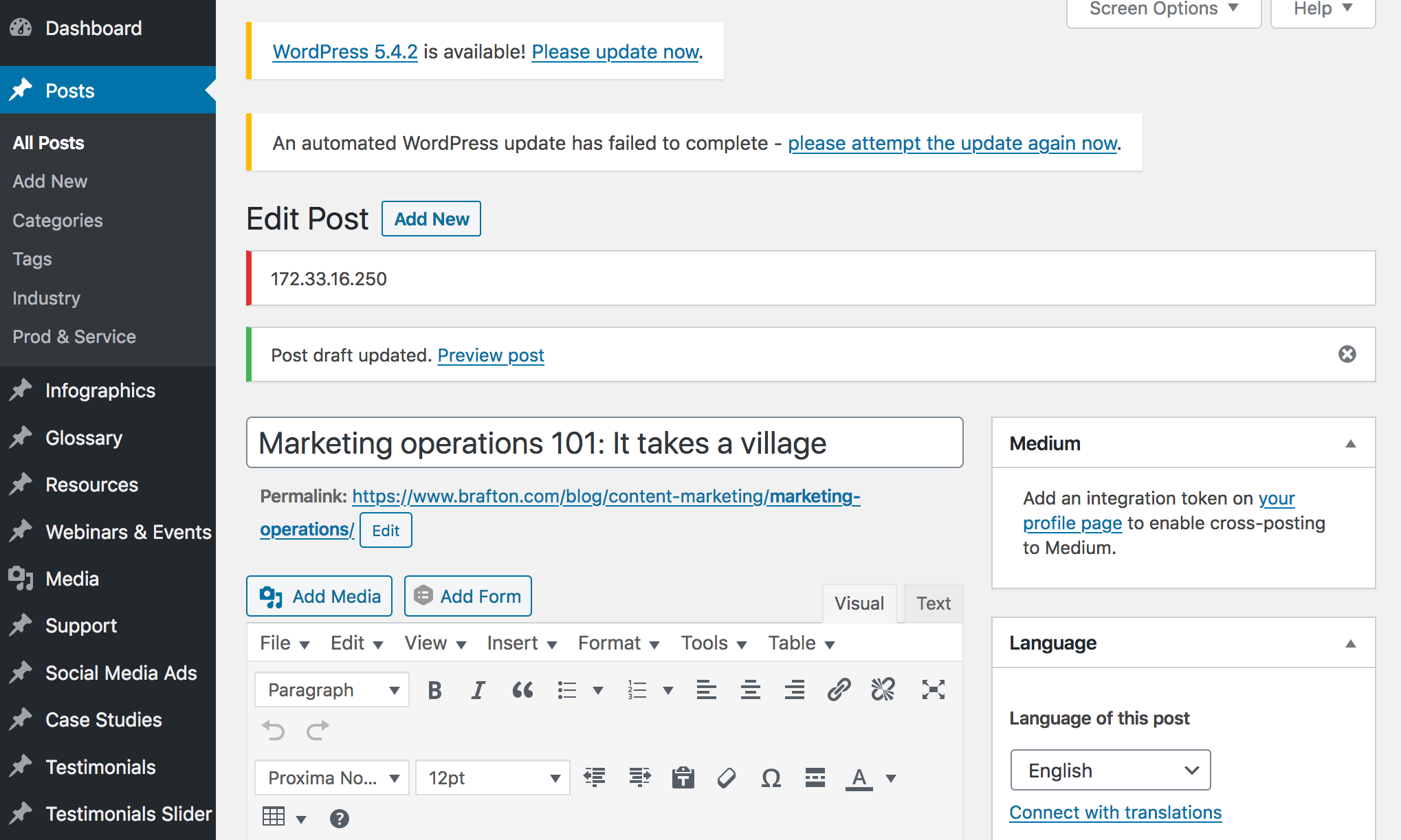
WordPress dashboard for content publishing.
- WordPress or other content management system.
- Yoast SEO plugin.
- Google Search Console.
Who uses them: The marketing specialists or project managers who post content to your site.
What they use them for: Posting content to your site, updating existing content on your site, making sure that newly posted content is indexed, deindexing content that you don’t want to appear in search and much more.
Content Creation Tools
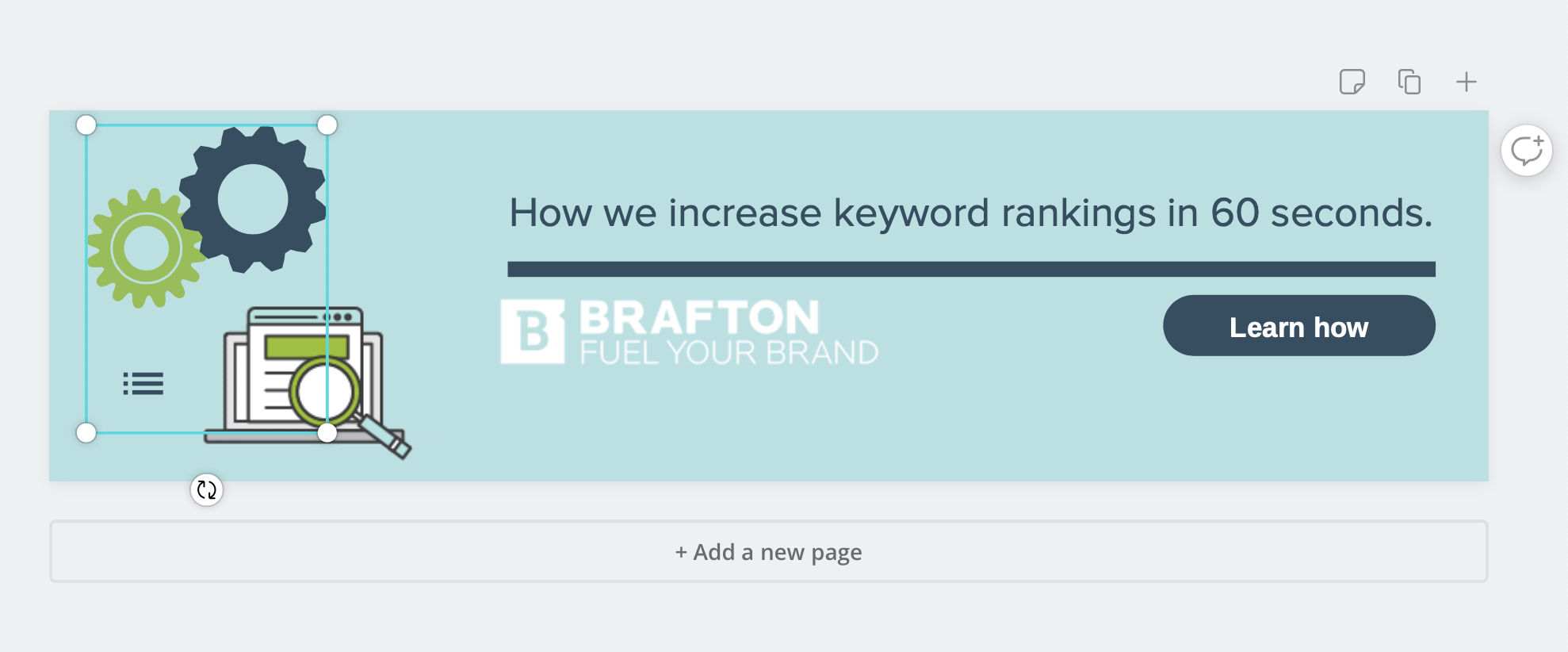
Editing a CTA banner in Canva.
- Google Suite.
- Grammarly Plugin.
- Adobe Creative Cloud Suite.
- Canva.
- Survey Monkey.
- Much, much more.
Who uses them: Writers, designers, editors, videographers, animators, social media managers, project managers and developers.
What they use them for: Content creation, research, data collection, collaboration and quality control.
Development/Tech
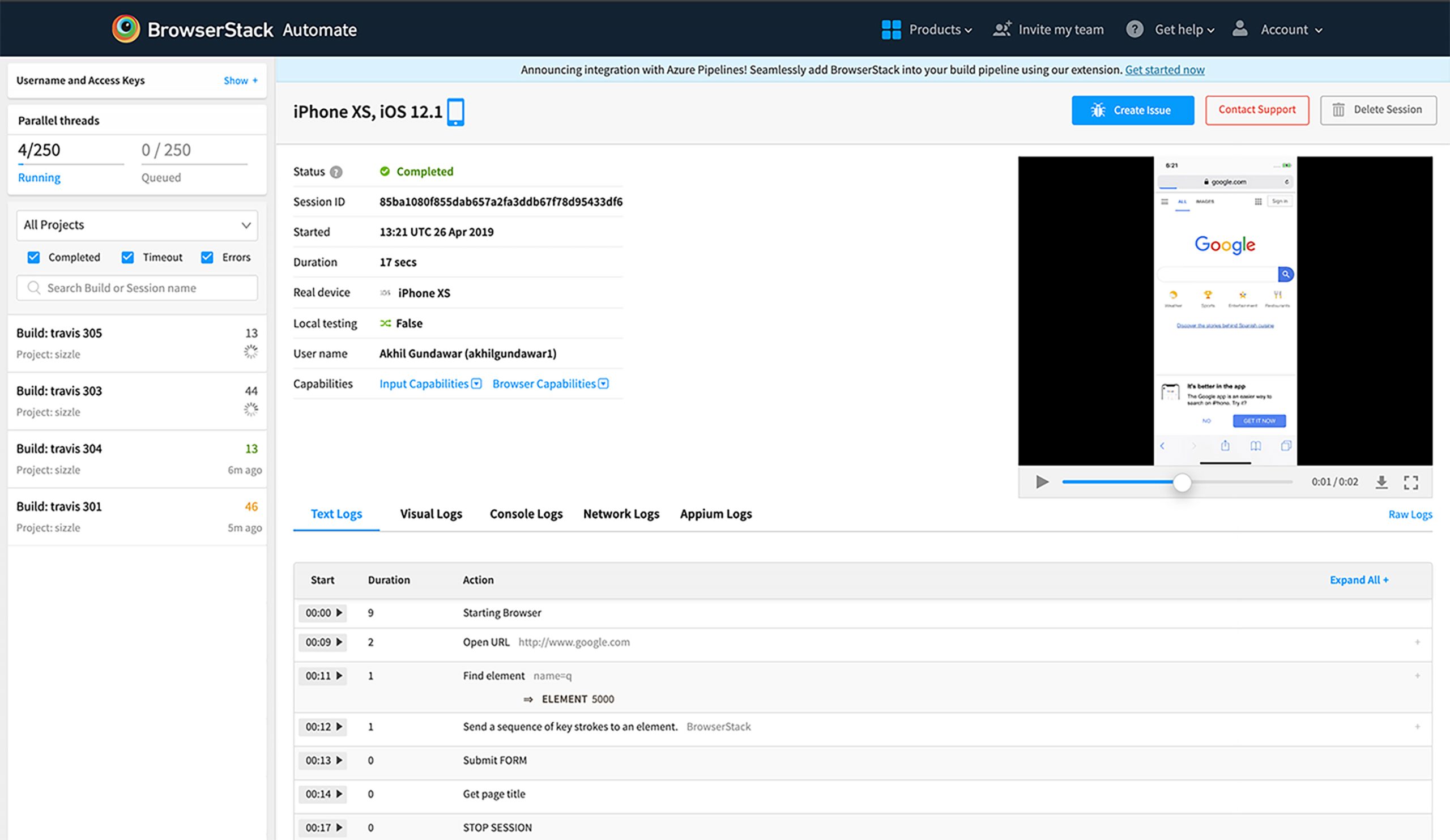
BrowserStack is used for cross-browser testing for WordPress.
- Docker.
- Visual Studio Code.
- Compass.
- Windows Subsystem for Linux.
- BrowserStack.
- Many more.
Who uses them: Developers and tech support.
What they use them for: Containerization, debugging, code refactoring, website and application testing.
In Conclusion, a Lot Goes Into Marketing
Like any other undertaking in modern business, great marketing takes talented people, careful selection (and execution of key processes) and the right tools to make it all happen. That’s the essence of operations management.
Naturally, there’s a lot to consider as you explore the who, the what and the how of marketing operations because the journey to improve is continuous and iterative.
Strive to have the right people, processes and technology on your side, so that the rest is easy. Your marketing operations teams will be well-positioned to drive measurable, scalable growth year in and year out.
Editor’s Note: Updated December 2025
www.brafton.com (Article Sourced Website)
#Marketing #operations #takes #village #Brafton