
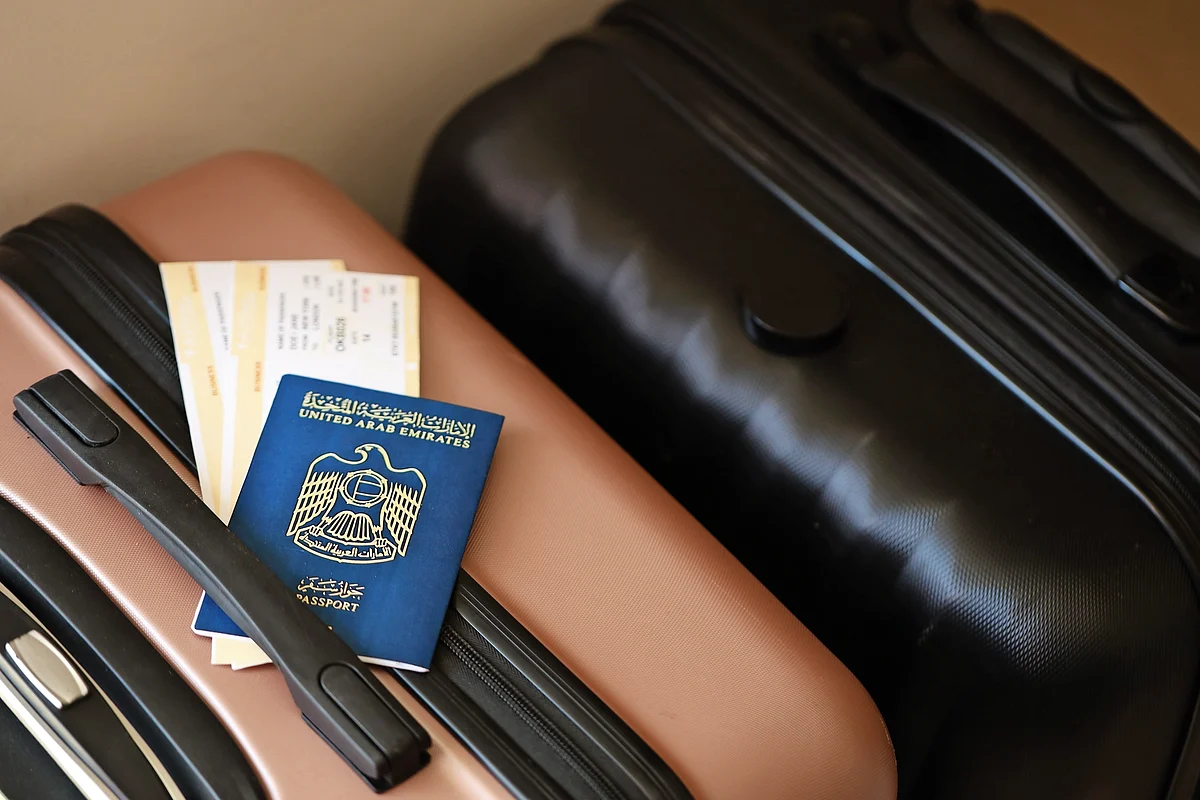
The UAE has maintained its position as the world’s strongest passport for the seventh consecutive year, according to The Passport Index 2025 released by Arton Capital on Wednesday.
This comes as 2025 saw most major passports losing ground, but the UAE remains firmly out in front.
“This year confirms what we’ve been tracking for some time: global mobility is tightening. The world is becoming more cautious, and the era of rapid post-Covid reopening is firmly behind us. But within this shift, we’re seeing the UAE remain dominant, and Asian nations emerge as major mobility players,” said Armand Arton, CEO of Arton Capital and co-founder of the Passport Index.
Stay up to date with the latest news. Follow KT on WhatsApp Channels.
“In an era of increasing travel restrictions, the value of a powerful passport only grows,” he said.
The study noted that billionaires are considering relocation as borders are tightening, and with unmatched global access and an international reputation as a hub for wealthy expatriates, the UAE continues to draw global citizens seeking stability and freedom of mobility.
The UAE’s strong passport, high per capita income and world-class quality of life have also made the Emirates’ 10-year Golden Visa very popular among professionals, investors and millionaires.
Armand Arton said the UAE continues to hold the No. 1 position because it has steadily expanded its global mobility at a time when the rest of the world is becoming less open.

“In 2025, the World Openness Score fell as many major passports — including those of the UK, US, and Canada — lost visa-free access amid tightening entry rules. The UAE is one of the few countries that has not only resisted this global contraction, but actively overturned the trend,” he said.
While others slipped, the Emirati passport retained its unmatched reach with visa-free access to 129 destinations, visa-on-arrival to 45, and ETA access to eight countries, giving it a Mobility Score of 179.
What made it the strongest?
Armand Arton elaborated that this strength is the result of long-term diplomatic outreach, a foreign policy centred on stable, trusted bilateral relationships, and the UAE’s success in positioning itself as a secure, economically influential hub for global citizens.
“As more countries seek deeper economic and strategic ties with the UAE, they are increasingly willing to grant easier entry to Emirati travellers. The UAE has also embraced digital modernisation, becoming one of the early beneficiaries of expanded ETA systems — such as Canada’s decision to offer ETA access to UAE citizens — which further strengthens its mobility footprint. In an era of tightening global movement, this combination of trust, economic weight, and forward-looking travel partnerships has kept the UAE firmly at the top,” he added.
Benefits of a stronger passport
A powerful passport delivers meaningful advantages to both individuals and the wider economy.
“For citizens, it means greater freedom of movement at a time when global mobility is tightening. Visa-free or visa-light access reduces friction for travel, education, cross-border business, and cultural exchange — all without the delays and uncertainty of traditional visa processes.
“For the economy, strong passport mobility enhances national competitiveness. It enables companies to operate more easily across borders, supports outward investment, and helps to attract global talent and capital into the country,” said CEO of Arton Capital and co-founder of the Passport Index.
“In a world where many passports — including those of the UK, US, and Canada — are losing ground, a strong passport signals that a nation is a trusted, stable, and internationally connected partner. For global citizens and investors, this strength translates into confidence: a belief that the country offers not only mobility, but also the stability and international reach needed to build a global life or global business,” he added.
Asians matching European power
Singapore made the biggest leap in 2025, jumping from 30th place to 2nd place in the Passport Index, achieving a mobility score of 175. Malaysia followed closely behind, climbing from 41st to 17th and entering the top tier for the first time with a score of 174.
Alongside Japan and South Korea, which remain strong despite small score drops, Asia’s top passports are now competing directly with Europe’s long-standing leaders. The region’s rising diplomatic weight is translating into real mobility power.
European passports still dominate the top of the rankings in 2025, filling most of the top 20. Spain, France, Germany, Belgium, Italy and several other EU heavyweights remain among the world’s strongest passports. But almost all of them are weaker than they were a year ago.
Most major European passports dropped from scores of 178–179 in 2024 to around 174 in 2025, losing roughly four visa-free destinations each as countries tighten their entry rules. Europe still leads the mobility landscape — but its grip is clearly loosening.
The UK dropped from 32nd to 39th, continuing its long decline from the top-tier status it once held before Brexit. The US and Canada each lost five points as well, sliding to 41st and 40th place, respectively.
Once seen as the world’s strongest passports, these countries are now being overtaken by faster-rising nations. As global citizens rethink where they base themselves, the appeal of Anglosphere passports is fading.
The World Openness Score — the Passport Index’s real-time measure of global accessibility — fell in 2025, putting a full stop on the post-pandemic rebound. Several top-tier passports shed multiple visa-free destinations as governments imposed new requirements, tightened security, or renegotiated visa agreements.
The result is a more fragmented mobility landscape — where travel freedom is both shrinking and becoming more valuable than ever for the world’s mobile elite, said Arton Capital.

www.khaleejtimes.com (Article Sourced Website)
#UAE #passport #ranks #strongest #7th #year #global #travel #restrictions #rise