
If you’re a woman living with polycystic ovary syndrome (PCOS), you know the long list of side effects can feel totally overwhelming. Many symptoms affect how your body feels—fatigue, pelvic pain, headaches, painful periods, joint pain, digestive issues… I could go on. However, there are other symptoms that impact the way your body looks, which can be just as challenging.
PCOS can change your appearance in ways that feel out of your control. Weight gain, acne, skin tags, dark patches, hair thinning, and excess facial or body hair can chip away at your confidence and make you feel disconnected from your own beauty and femininity. But here’s the good news: There’s a lot you can do to naturally address these issues!
In this post, I’m focusing specifically on excess facial and body hair growth with PCOS. If you’re looking for tips on the other cosmetic symptoms of PCOS, you’ll find those on the blog too. For now, let’s talk about how to reduce unwanted hair growth with PCOS.
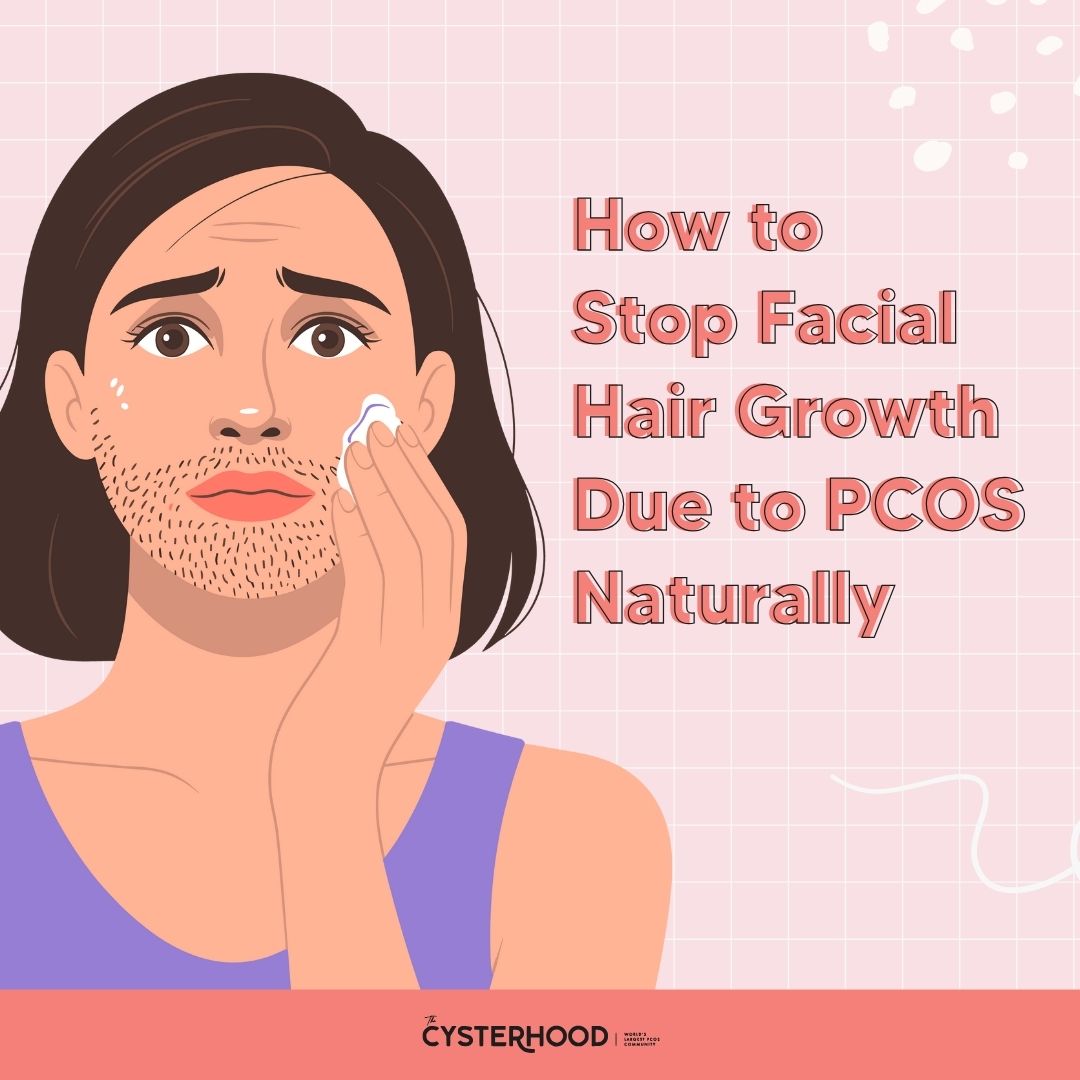
How to Stop Facial Hair Growth Due to PCOS Naturally
First of all, I know you’ve already tried shaving, waxing, and plucking with little success. This dark, coarse hair always comes back with a vengeance. I’ve dealt with it myself! That said, the next step isn’t laser hair removal or hormonal birth control pills.
Sure, both may give you temporary results. But if you don’t get to the root of the problem, the hair will continue to resurface. Luckily, there are ways you can naturally and permanently stop PCOS facial and body hair growth.
So before we jump into solutions, let’s talk about why PCOS causes unwanted hair in the first place. Once you understand what’s happening inside your body, you’ll be able to take steps that actually support healing. From this, my hope is that you feel more feminine, confident, and like you again!
How Does PCOS Cause Facial Hair Growth?
Facial hair growth in women with PCOS comes from high androgen levels. Androgens are male sex hormones that our ovaries are supposed to produce in small amounts. We actually need them for things like muscle building, reproductive health, cognitive function, and more! However, it’s not surprising to hear that excess male sex hormones in a female body can cause lots of problems.
When your ovaries produce too many androgens, it can stop ovulation or make it super irregular. And insulin resistance can make the imbalance even worse. About 80% of women with PCOS have this condition, and it’s when your body doesn’t respond properly to glucose. Because of this, you begin producing more insulin to deal with the extra sugar. However, that insulin also binds to receptors in the ovaries, telling them to produce even more androgens.
Okay, but why does that make you grow facial hair, right? Well, androgens stimulate hair follicles on your face, chest, upper lip, jawline, chin, stomach, and sometimes your back. It shifts these hairs into the “active growth” phase, leaving you with thick, dark hair (terminal hair) instead of the usual, basically invisible peach fuzz (vellus hair).
If all that wasn’t enough, inflammation can also contribute to higher androgen levels. The hormonal imbalances and high insulin levels can signal to your immune system that you’re in a state of emergency.
This triggers inflammatory activity all over. And if the root issues—high androgens and insulin resistance—aren’t addressed, you end up with chronic inflammation. And chronic inflammation can make your hair follicles more sensitive to androgens and disrupt the normal hair-growth cycle. These are all the ways PCOS can cause unwanted hair growth!

Can Facial Hair Growth From PCOS Be Reversed?
If you want to reverse PCOS facial hair, you have to get to the root issues behind it: inflammation, insulin resistance, and high androgen levels. These three problems all fuel your facial hair growth—and they all feed into each other in a vicious cycle. Here’s how it works:
- High insulin levels signal your ovaries to pump out more androgens.
- Those extra androgens throw your hormones off balance and stress your system.
- This hormonal stress confuses your cortisol rhythm and activates inflammation.
- Your body stays in a low-grade inflammatory mode even though there’s no real threat.
- That lingering inflammation makes your cells less responsive to insulin.
- As insulin resistance gets worse, your body pumps out even more insulin to compensate.
- The higher insulin levels then trigger excess androgen production, restarting the cycle.
See the problem? And insulin resistance, inflammation, and hormonal imbalances don’t just trigger PCOS facial hair. These are the issues behind pretty much all of your chronic symptoms. So when you get these three things under control, you can achieve all-around symptom relief and actually reverse your PCOS. Pretty amazing, right?
But… easier said than done. You’ve got to break that cycle to stop the domino effect. There’s no single pill or quick procedure that fixes it overnight. However, healing is totally possible! In fact, I have an essential guide to naturally managing your PCOS on the blog. But for now, I’m sharing steps that can specifically help with PCOS facial hair growth.

How to Stop PCOS Hair Growth Naturally
Adopt a gluten- and dairy-free anti-inflammatory diet.
A gluten- and dairy-free anti-inflammatory diet is one of the best ways to support your body and improve all three root issues of PCOS. First, as the name suggests, it cuts out inflammatory foods like refined carbs, processed foods, gluten, and dairy. This is extremely helpful for keeping inflammation low, which naturally improves hormone levels!
And without inflammation making insulin resistance worse, you can use the diet to target that, too. By managing your sugar and carb intake—and increasing your fiber and protein—you stabilize your blood sugar. Combine that with nutrient-dense, delicious meals, and you’re well on your way to reversing PCOS symptoms, including facial and body hair growth.
I know this diet might sound restrictive or difficult to stick to, but I promise it’s not. It’s less about what you stop eating and more about what you start eating. You can find all my PCOS-friendly recipes and a built-in meal planner inside The Cysterhood app. And don’t worry—there’s no boring, bland “health food” in sight. You’ll find hundreds of tasty, satisfying recipes that curb cravings and support healing—at the same time.
Here are just a few PCOS-friendly recipes you’ll find on the app:
- Chocolate Waffles
- Air Fryer Chicken Nuggets
- California Roll Bowl
- Chicken Alfredo
- Buffalo Chicken Pizza
- Beef Taco Soup
- Pumpkin Pie Fudge
- Funfetti Cupcakes
Take supplements to support proper functioning.
Even if you follow the suggested diet perfectly, it’s still hard to get all the daily vitamins and minerals your body needs. That’s where supplements come in! These natural remedies help fill in the gaps and give your body exactly what it needs to balance hormones, reduce inflammation, and lower androgen levels. You just need to take the right ones.
Talk to your doctor about starting this PCOS supplement routine. Also, don’t jump into everything at once—slowly work your way up. This way, your body gets well-rounded support from the essential vitamins and minerals it needs. Below are the supplements included in the routine, along with the ways they support facial-hair management and other PCOS symptoms:
- Multivitamin: Inflammation and Insulin Sensitivity
- Omega-3: Inflammation, Insulin Sensitivity, and Androgen Levels
- Curcumin: Inflammation, Insulin Sensitivity, and Androgen Levels
- CoQ10: Inflammation and Insulin Sensitivity
- Inositol: Androgen Levels and Insulin Sensitivity
- Berberine: Inflammation, Insulin Sensitivity, and Androgen Levels
- Probiotics: Inflammation, Insulin Sensitivity, and Androgen Levels
Reduce stress and cortisol levels.
Cortisol is your stress hormone. When your body experiences stress externally or internally, cortisol rises to trigger your emergency response system. We all know where external stressors come from: a big work project, relationship conflicts, financial struggles… The list is endless.
But internal stressors are just as damaging. Things like nutrient deficiencies, lack of sleep, hormonal imbalances, and more can all send cortisol through the roof. Basically, anything in your body that isn’t going “right” can activate your stress response.
When cortisol spikes, your body goes into survival mode. (Yes, our bodies can be a little dramatic.) To keep you “safe,” your system increases insulin resistance to store more fat and ramps up inflammation to fight off perceived threats. See the problem?
On top of that, high cortisol pushes reproductive processes to the back burner, delaying ovulation and creating more hormonal imbalance. This includes elevated androgens, which fuel facial and body hair growth along with other PCOS symptoms.
All that to say: keeping stress in check is essential if you want to break the cycle and stop excess hair growth. Internally, you can support your body by following the other tips on this list. Externally, you can help by reducing caffeine intake (AKA liquid stress), practicing meditation and deep breathing, getting outside, setting boundaries, and lightening your mental load.
I know it is easier said than done. But even small steps to cut back on stress can lead to big improvements in your symptoms!
Drink hormone-balancing herbal tea blends.
Like natural supplements, herbal tea can give your body nutritional support to improve metabolic, digestive, and hormonal function. These herbs have been used for thousands of years as medicine, and now research shows they actually work. Plus, sipping on a warm cup of tea in the morning or at night is super relaxing and stress-relieving.
To help with facial hair growth from PCOS, you want herbal teas that are anti-androgenic. Basically, you want teas that help lower testosterone levels. And, fortunately, there are several herbs that directly support hormone balance and reduce inflammation. These include spearmint, nettle, lemon balm, chamomile, lavender, orange peel, cinnamon, peppermint, and calendula.
Now, I am not suggesting you buy every one of these individually and rotate them on a schedule. Instead, choose a strategic tea blend like Ovafit’s Testosterone Relief Tea, which includes these hormone-balancing and anti-inflammatory herbs. With just one or two cups a day, you can start seeing real results.
Use slow-weighted and meditative workouts.
We all know exercise is great for building muscle, but did you know it also supports hormone balance and stabilizes insulin levels? It’s true. The right kinds of workouts make your cells more responsive to insulin. This lowers insulin resistance and signals your ovaries to produce less testosterone. The result is less facial hair growth and fewer androgen-related symptoms.
Exercise also increases your sex hormone-binding globulin (SHBG) levels. SHBG is a protein that grabs onto testosterone and prevents it from affecting other parts of your body. But that’s not all! Working out reduces inflammation and lowers stress levels, both of which are incredibly helpful for bringing androgen levels back into a healthy range.
However, not all workouts are created equal. At one point, I was kickboxing almost every day and actually gained weight and saw an increase in PCOS symptoms, including facial and body hair growth. Why? Because high-intensity workouts raise adrenaline and cortisol. When your stress hormones spike during intense exercise, they can counteract the benefits, worsening symptoms instead of improving them.
Avoid martial arts, HIIT, CrossFit, bootcamp-style classes, sprinting, intense cycling programs, plyometrics, and long-distance cardio. Instead, focus on low-impact, meditative movements like yoga, swimming, Pilates, walking, and my personal favorite: slow-weighted workouts. If you want a deeper explanation of why Sirak (my husband and a PCOS personal trainer) and I recommend slow-weighted exercise, listen to this episode of A Cyster and Her Mister.
And if you are ready to jump in now, download The Cysterhood app. Not only does it include all the delicious and nutritious recipes I mentioned earlier, but it is also full of PCOS-friendly workout routines. You will never have to guess whether your exercises are helping or hurting your healing. We designed these routines specifically for a Cyster’s unique body and needs.
Get better quality sleep every night.
Another super beneficial way to support your body is by improving your sleep. Better sleep habits, also known as sleep hygiene, can have a huge impact on how you feel. This is true for anyone, but especially for women with PCOS. While you sleep, your body carries out essential processes that regulate blood sugar levels, balance hormones, and manage inflammation. When your sleep quality is poor, it becomes much harder to keep these things in check.
Research shows that when sleep hygiene improves, you’re likely to see lower cortisol levels, increased insulin sensitivity, healthier SHBG levels, and reduced inflammation. As your circadian rhythm strengthens, hormones like melatonin, insulin, estrogen, and progesterone move into the correct ranges, too! All these shifts work together to lower testosterone levels and improve PCOS symptoms, including excess facial and body hair growth.
You can read our full post on how to sleep better with PCOS, but here are some of our top tips:
- Get sunlight right away in the morning
- Maintain a consistent sleep schedule
- Limit screen time at night
- Consider CBD or a melatonin supplement
- Keep your bedroom cool and dark—and just for sleeping
Combine these lifestyle changes with natural, trusted topical treatments.
I saved this one for last because so many of us are quick to reach for topical treatments to fix PCOS-related skin and hair issues. But without addressing the root problems? Things like excess hair growth, hair thinning, acne, skin tags, and darkened patches will keep coming back. I do not want you wasting money on expensive products with big promises.
That said, if you are already doing the work to balance hormones, reduce inflammation, and lower insulin resistance from the inside out, topical treatments can be a great secondary layer of support. Here are some options to discuss with your doctor:
Stop excess facial and body hair growth by healing your body from the inside out.
At the end of the day, stopping PCOS facial hair growth naturally isn’t just about changing what you see in the mirror. It’s about feeling more in control of your body again. Once you understand what’s driving the symptoms and start addressing the root causes, the changes become noticeable. Your skin calms down, regrowth slows, and your confidence builds right alongside the progress. It’s a steady shift, but it’s totally possible to reverse unwanted hair growth long-term!
For more ways to manage cosmetic symptoms of polycystic ovarian syndrome (PCOS), read these guides next:
pcosweightloss.org (Article Sourced Website)
#Stop #Facial #Hair #Growth #Due #PCOS #Naturally