
We bet there’s almost no one who doesn’t know Hilton.
When the conversation shifts to accommodation, hospitality, or travel experiences, Hilton naturally takes center stage.
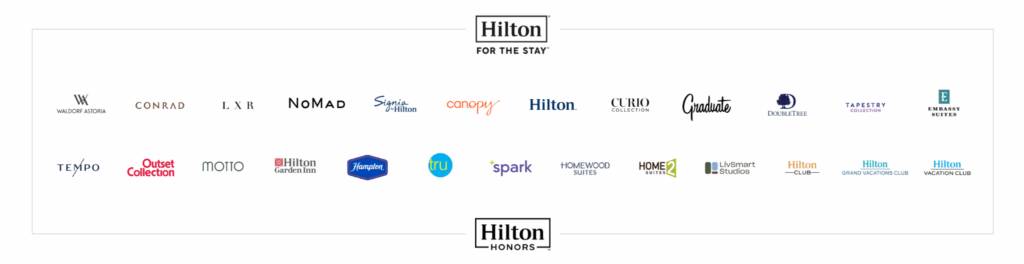
It is not surprising when considering Hilton has a “collection of 25 brands including Hilton Hotels and Resorts, Waldorf Astoria Hotels & Resorts, Hampton by Hilton, DoubleTree by Hilton, Embassy Suites by Hilton, and new brands like Spark by Hilton and LivSmart Studios by Hilton.”
And as marketers, we don’t just admire Hilton for its footprint but for how it shows up.
Hilton advertising doesn’t rely on luck or familiarity; it actually relies on a system & a rhythm. A well-built machine powering one of the strongest hospitality brands on the planet.
In other words, whenever we see a Hilton advertising campaign, we’re not just seeing creativity but the output of a long-standing Hilton hotel marketing strategy that runs underneath everything the brand puts into the world.
And today, we’re exploring that entire system.
What’s Inside
Why Hilton’s Marketing Works Better Than Most Brands Think
Before examining deeply, we can simply say that Hilton’s marketing works because it elevates something most brands overlook: the hotel stay itself.
While competitors often race to promote amenities, prices, or loyalty perks, Hilton leans into a deeper emotional truth: “It really does matter where you stay.”
That idea becomes the center of gravity in Hilton’s advertising strategy, and it’s the reason their messaging resonates that strongly.
When a company operates across 9,000 properties and over 1.3 million rooms in 141 countries and territories, the main challenge is consistency. Hilton has mastered that challenge by building campaigns to elevate the role of the stay in how travelers feel, remember, and talk about their trips.
The entire “Matters Where You Stay” narrative is Hilton’s way of positioning the stay as the emotional anchor of the travel experience.
What’s more?
Kellyn Smith Kenny, the global chief marketing officer at Hilton Worldwide, in an interview, described Hilton’s marketing strategy as follows:
At Hilton, we have an enterprise marketing strategy, as well as individual brand marketing strategies to reach our customers and potential guests. The enterprise marketing strategy speaks to the broad base of consumers who shop our portfolio of brands across 113 countries and our loyal customers who are members of Hilton Honors. Simultaneously, our brand campaigns speak to specific consumer targets about individual brands. These efforts work together and build on one another to create a virtuous cycle.
In the same interview, Kenny stated that their marketing team discovered that the emotional needs of guests are “surprisingly” universal, which means the brand needs to be positioned universally as well.
That said, there are definitely important local and cultural nuances that play a big role in how our brands meet the needs of our customers from one market to the next.
While what our company and our brands stand for at a higher level doesn’t change, the way we communicate our message and deliver on our promise to customers must be locally relevant.
And as marketers, we know how hard it is to take something functional and turn it into something meaningful. Yet Hilton manages to do it repeatedly. The brand perfectly shapes how people think about the experience itself.
That’s why Hilton advertising feels so much stronger than the category norm. It’s why campaigns land harder and convert better. And, yes, Hilton keeps the hotel stay front and center, elevating it from a commodity to a core part of the journey.
The Operational Backbone of Hilton Hotel Marketing Strategy
Before getting into the creative world of Hilton marketing campaigns, let’s talk about the performance engine supporting them.
Hilton’s internal material reveals a very disciplined system, especially on Hilton.com and local vanity sites. When we analyze it quickly, we can see that Hilton has an SEO strategy that includes defining keyword targets, competitive analysis, link audits, full metadata optimization, and even image-level tagging. As we marketers know, this is the kind of foundation most brands claim to have, but few actually maintain at this depth.
The Hilton hotel digital marketing strategy also extends to vanity sites, especially restaurants, spas, and soft-brand properties. Hilton supports their visibility with ongoing content creation, local search optimization, and recurring technical SEO reviews. This system keeps Hilton discoverable long before the paid ads show up.

Then comes the OTA layer, something every hotel brand battles. Hilton goes deep into Expedia and Booking.com optimization. They manually review visuals, ensure proper tagging, refine descriptions, and monitor reviews to maximize content scores.
This blend of infrastructure is what enables the creativity we’re about to talk through.
The Creative Heartbeat of Hilton Advertising
What makes Hilton’s hotel stay stand out isn’t just efficient SEO or sharp paid media. It’s the way Hilton treats creativity as an experience.
The creative heartbeat of Hilton advertising is always listening for human truths and lived experiences. In other words, they address the hotel stay as a meaningful part of travel.
Take, for example, Hilton’s recent “Stay Reel: Pet-Friendly Perfection” series. In that campaign, Hilton opens with a simple, emotional premise: maybe your next hotel stay shouldn’t just fit you; it should fit all of you, pets included.
In one story, a family and their cat enjoy a “purr-fect” weekend at a Hilton property, complete with a suite named after the cat and a welcome basket of kitty treats. In another, a TikTok-famous golden retriever and his human explore a Home2 Suites by Hilton.

There’s even a road-trip itinerary specially designed to help pet owners plan a getaway with their fur friends. That narrative, the “stay with all the members of your family” vibe, subtly transforms the hotel room from a stopover into part of the story of people’s lives.
This isn’t a one-off. It’s emblematic of how Hilton thinks about its brand.
Consistent design language, empathetic messaging, and experience-driven storytelling all work together. Even when the audience is unconventional (like pets, or travelers with pets), the creative tone stays consistent: warm and human-sounding all the time. And that’s a huge advantage.
We see this also in how the brand adapts to platforms. Not forcing old-school commercials onto new media, Hilton creates content that fits the medium. With that marketing approach, they leverage the familiarity and shareability of digital storytelling. In that way, they don’t just show a room but show a life.
Underneath it all, there’s a structure. Because, as we covered earlier, Hilton’s advertising strategy ensures every creative execution lands efficiently. And Hilton demonstrates that the best advertising strategy blends emotional resonance with distribution infrastructure.
The Campaigns That Defined Hilton’s Modern Advertising Strategy
The best part of Hilton’s marketing is that it refuses to rely on predictable tropes. While many travel brands still open their ads with overused destinations, cliché walks on the beach, or generic descriptions of travel, Hilton pushes the category forward. We all know those beach shoots.
They take a bold stance by putting the hotel front and center, treating it not as a footnote to the journey but as a crucial element of the entire experience. And in an era where advertising is a sea of sameness, this approach gives Hilton serious competitive separation.
Here are some Hilton advertising examples that show real human scenarios and elevate the hotel stay as an essential part of the journey.
⭐ Hilton. For the Stay.
Hilton amplified real travel frustrations in a way that felt modern and self-aware. They introduced characters dealing with typical trip mishaps, all resolved by one thing: choosing a Hilton.
The campaign is also enhanced with the platform with the same name. Regarding that campaign and platform, Hilton notes:
Hilton. For The Stay is Hilton’s first global brand platform that identifies what has been missing from hotel marketing – the hotel stay. Built on the insight that “the Stay,” and being cared for, is the crucial element that can make or break any trip, the platform proves to guests that it matters where you stay. Hilton. For the Stay, accompanied by the It Matters Where You Stay campaign, places the hotel front and center, elevating the role and importance of the stay at a time when lodging advertising is a sea of sameness, featuring overused destinations, cliché walks on the beach and generic descriptions of travel.
⭐ It Matters Where You Stay (ft. Paris Hilton)
This was a brilliant move, not because Paris Hilton is a celebrity, but because she is a cultural reference point who conveys the entire message. She highlights the idea of what a “Hilton stay” means in pop culture.
Instead of the traditional, polished hotel spokesmodel, Hilton embraced humor and self-awareness by also using social media channels.
The campaign feels relevant because Hilton is selling a stay that actually matters.
⭐ The 10-Minute TikTok Video
This one deserves its own place in marketing textbooks.
While the platform pushes everyone to create shorter and shorter content, Hilton went the opposite direction.
A ten-minute ad on TikTok (intentionally long, intentionally self-aware) that people actually watched and shared.
This worked because Hilton understood the culture of the platform. They didn’t try to squeeze an old TV spot into TikTok. They created entertainment that lived natively in that environment.
⭐ Pet-Friendly Perfection (“Stay Reel”)
As we stated in previous sections, Hilton’s creative evolution continued with its digital-first “Stay Reel” storytelling, including the Pet-Friendly Travel campaign.
Forget glorifying sunsets and beaches, Hilton celebrates moments that feel real, like traveling with your cat or taking your dog on a much-needed adventure.

This campaign fits perfectly into Hilton’s broader push to show hotel experiences through a more honest, inclusive lens.
⭐ Expect Better. Expect Hilton.
Featuring Anna Kendrick, this multi-year Hilton campaign shifted the conversation around booking channels.
Instead of quietly accepting OTA dominance, Hilton boldly told travelers the truth: booking direct has real advantages.
The creative was simple, but its honesty made it powerful.
What about Hilton’s social media presence?
It’s clear that Hilton doesn’t treat social media as a distribution channel. They treat it as a cultural environment, a place where the brand shows up with personality, timing, and relevance.
Unlike many hospitality brands (especially luxury ones) that rely on polished stock video and generic “travel inspiration” posts, Hilton uses TikTok, Instagram to behave like a participant in culture.
A great example is Hilton’s Formula 1-themed content featuring McLaren driver Oscar Piastri. That content does not push a typical hotel message; Hilton drops into a moment fans already care about: global travel, intense schedules, and jet lag.
Their TikTok featuring Oscar’s “Guide to Jet Lag with Hilton” gives fans something entertaining.
In addition to that, on social media, Hilton invests in wellness-focused, inspiring content. Their wellness-focused campaigns highlight real stay moments, from morning routines to sleep-optimization tips.
As you can see, Hilton understands TikTok’s tools the same way high-performing creators do. When they use the duet feature, they’re using the platform exactly how the audience uses it. This makes Hilton a brand fluent in TikTok’s culture.
Hilton’s agility also shows up in how quickly they adapt to platform changes. When TikTok introduced the ability to post photos in comments, Hilton pounced immediately and urged users to share photo replies. It’s a move of turning a simple feature update into a moment of brand engagement.
What about collaborations and influencers? Hilton continues to collaborate with one of the most culturally recognizable figures: Paris Hilton.
As you may know, Paris Hilton is the great-granddaughter of Conrad Hilton, the founder of Hilton Hotels. From a brand-strategy point of view, her last name happens to be the brand name. That creates a marketing advantage no other hotel chain has.
Paris Hilton X Hilton ongoing collaboration leans into nostalgia, fun, and the well-known name’s ability to own the conversation rather than chase it.
Across all these examples, Hilton’s social media strategy becomes crystal clear. They don’t show up as a hotel brand trying to advertise. This is why Hilton’s presence feels so alive on social.
SWOT Analysis of Hilton’s Modern Marketing
💪Strengths 💪
- Hilton’s nearly century-long reputation delivers credibility few hospitality chains can match. Every campaign (including humor-forward ones like the Paris Hilton activation or more emotional ones like “For the Stay”) uses this brand trust as a creative asset.
- Hilton maintains this trust through ethical commitments such as ensuring “all communications are truthful and not misleading,” reinforcing brand credibility across channels.
- Hilton’s advertising strength is deeply tied to its SEO, paid media, and OTA optimization frameworks. The company operates with unusually tight control over bidding strategies, keyword visibility, and content quality, giving its campaigns a performance advantage. Few global hospitality brands maintain this level of structural rigor.
- Hilton’s creative examples show careful adherence to brand standards, ensuring that every asset, from display ads to vanity-site content, feels unmistakably Hilton.
😑Weaknesses 😑
- OTA accuracy and optimization are critical because travelers rely heavily on third-party platforms. This dependence creates pressure to constantly manage content quality and reviews.
- Portfolio complexity across 25+ brands. While a diverse portfolio is a strength, it also complicates message cohesion. Ensuring creative alignment and channel consistency across luxury, midscale, and lifestyle brands requires constant orchestration.
💫Opportunities 💫
- Hilton’s success on TikTok demonstrates that hospitality brands benefit from platform-native, creator-driven formats. There is room for Hilton to expand:
- Hilton’s direct-booking advocacy positioning has more room to grow as consumers increasingly question OTA transparency.
🔫Threats 🔫
- Marriott, Hyatt, IHG, and boutique independents are aggressively increasing their ad spend, social presence, and loyalty ecosystem marketing.
- Any platform changes can suddenly impact visibility, even with Hilton’s sophisticated SEO and OTA strategies.
Hilton’s 4Ps (Explained for Today’s Marketer)
Hilton’s marketing mix isn’t just “Product, Price, Place, Promotion” in a textbook sense. It’s 4 very deliberate levers that keep a 9K property, a 1.3M+ room, and a 141-country hospitality machine feeling human.
Product
Hilton’s real product isn’t a bed, a lobby, or a breakfast buffet.
Actually, it’s the stay; the experience of being looked after. That’s not just our interpretation; it’s baked directly into their global brand platform, “Hilton. For the Stay.”
Operationally, that product is delivered through 25 brands spanning luxury, lifestyle, extended stay, midscale, and more, designed to cover different trip purposes, budgets, and guest expectations.
On top of the physical product, Hilton keeps layering digital features into the experience:
- The Hilton Honors app lets guests book, choose rooms, check in, unlock doors with Digital Key, and check out from their phone.
- Digital Key Share and automated complimentary upgrades.
Price
No need to say, Hilton’s price strategy isn’t about being the cheapest.
Across those 25 brands and 9,000+ hotels, Hilton uses classic revenue management and dynamic pricing, with rates shifting by demand, season, channel, and segment.
Where Hilton gets really strategic is how it uses pricing within its direct ecosystem:
- Campaigns like “Expect Better. Expect Hilton.” and the earlier “Stop Clicking Around” explicitly push the message that guests get the best deal by booking direct, not through OTAs.
- Direct booking benefits are clearly tied to Hilton Honors: member discounts, a price-match guarantee, plus 25% off if a lower price is found.

Hilton uses price to:
- Nudge behavior (book direct instead of through OTAs)
- Reward loyalty (status perks and member-only rates)
- Support brand laddering (luxury vs midscale vs extended stay)
Place
“Place” for Hilton isn’t just a physical footprint:
- Online platforms, Hilton.com and the Hilton Honors app, are the core of the ecosystem, designed to make booking direct as easy and rewarding as possible.
- Hilton’s OTA strategy has been to optimize them while still pulling guests toward direct channels via campaigns and loyalty messaging.
- With brands like Signia, Hilton actively positions itself for events, conferences, and hybrid business-leisure stays.
- From TikTok and Instagram content built around “For the Stay,” to high-reach reels and creator partnerships, Hilton is present where trip dreaming and inspiration begin.
Promotion
Promotion is where Hilton has been visibly rewriting the rules for hotel marketing campaigns, no doubt.
- Hero campaigns like “It Matters Where You Stay,” featuring Paris Hilton and Catherine O’Hara, blend humor, nostalgia, and travel mishaps to prove the hotel can make or break the trip.
- Direct-booking storytelling through “Expect Better. Expect Hilton,” and Anna Kendrick-led work that openly educates guests on why booking direct is better.
- Social-first and creator content, including long-form TikTok/Instagram work that behaves more like entertainment than a 30-second spot, helps “For the Stay” rack up billions of views globally.
- Always-on editorial and trend content via Hilton’s own “Stories” hub, from pet-friendly “Stay Reel” narratives to travel trend reports like the “Whycation” and 2026 trends pieces, which position Hilton as a voice in travel culture.
Hilton’s Market Segmentation
Hilton’s marketing strategy targets multiple audience segments across psychological, demographic, and behavioral lines.
👉Business Travelers
Needs: Reliability, fast booking, consistency.
Hilton offering: Accurate OTA listings, direct-booking messaging, and competitive loyalty rewards.
👉Leisure Travelers & Families
Needs: Comfort, ease, room suitability, and location.
Hilton Offering: Experience-driven stays (“For the Stay”) and an emotionally warm environment.
👉 Gen Z & Millennial Travelers
Needs: Cultural relevance, authenticity, fun.
Hilton Offering: Creator partnerships, nostalgic, humorous tone & entertainment-led experience.
👉Premium & Luxury Travelers
Needs: Exclusivity, personalized service, brand trust.
Hilton Offering: Luxury sub-brands like Waldorf Astoria, Conrad, and LXR. Elegance, design, and exclusive experiences.
👉Group, Event, and Corporate Planners
Needs: Reliability, clear information, venue credibility.
Hilton Offering: Giving planners confidence in property info and visuals.
FAQ about Hilton Advertising Strategy & Marketing Campaigns
What is Hilton’s overall marketing strategy?
Hilton’s core marketing strategy centers on elevating the stay itself. Their global brand platform, “Hilton. For the Stay.”, flips the traditional hospitality script by making the hotel experience the hero. Not selling idealized beaches or dreamlike getaways, Hilton focuses on real, relatable travel moments and shows how the stay shapes the trip.
How does Hilton use digital marketing to reach travelers?
Hilton uses digital marketing by meeting travelers at every stage of the decision journey. They dominate search visibility through structured SEO and local optimization, and they use Hilton.com and the Hilton Honors app as direct-booking ecosystems that offer member rates, digital check-in, and personalized benefits. On social platforms, Hilton behaves like a creator, producing entertainment-style content, using duets, and reacting to new features. They combine this with performance media, retargeting, metasearch, dynamic inventory ads, and always-on social content. All of these create a digital presence that is both emotionally engaging and commercially efficient.
What makes Hilton’s advertising campaigns successful?
Hilton’s advertising campaigns succeed because they break away from the clichés that dominate the travel industry. The hotel chain focuses on the real, relatable experiences travelers recognize instantly. Hilton’s advertising campaigns work because they blend creativity with data: the brand uses insight-driven narratives (like the 10-minute TikTok ad or Paris Hilton collaborations) while tying everything back to direct booking, loyalty perks, and digital performance.
How does Hilton differentiate its marketing from other hotel brands?
Hilton differentiates its marketing by refusing to be part of the sameness that hotel advertising often falls into. Like overused beach shots, stock imagery, and vague travel inspiration. Instead, Hilton positions the hotel stay as the hero of the story, and their work leans on humor, authenticity, and platform-native content, whether that’s a 10-minute TikTok film or family-friendly, pet-friendly storytelling. By centering campaigns around real human truths rather than idealized travel fantasies, Hilton creates marketing that feels “real.”
What role does the Hilton Honors program play in Hilton’s marketing strategy?
The Hilton Honors program acts as the engine behind Hilton’s entire commercial strategy. It drives direct bookings, loyalty, and higher lifetime value. The program is deeply integrated into Hilton’s messaging, digital experience, and value proposition. It incentivizes travelers to book direct with member pricing, seamless app functionality, room selection, digital keys, upgrades, and personalized offers. In other words, Honors provides the data and behavioral insight needed to tailor marketing, retain guests across its 25+ brands, and reduce reliance on OTAs.
How does Hilton develop and execute new advertising campaigns?
Hilton develops advertising campaigns by starting with a human insight and building creative work that reflects real travel. Hilton’s marketing team looks for cultural hooks (Paris Hilton nostalgia, Formula 1 travel routines, the rise of pet-friendly content, or TikTok storytelling) and creates platform-native content. Campaigns are then layered onto Hilton’s performance, connecting brand moments to direct booking incentives, loyalty messaging, and measurable digital outcomes. Hilton also moves quickly, responding to cultural moments and new social features in real time, ensuring their advertising feels alive.
digitalagencynetwork.com (Article Sourced Website)
#Hilton #Advertising #Strategy #Key #Campaigns #Marketing #Insights