
The year 2025 will be remembered as one of the most impactful years for natural disasters in recent memory, with earthquakes, floods, heatwaves, volcanic eruptions and powerful storms exacting a heavy toll on lives, livelihoods and global economies. Natural disasters this year inflicted well over $200 billion in total economic losses worldwide, according to Swiss Re — a leading reinsurance company from Switzerland.
Globally, extreme weather and geological hazards continue to demonstrate the fragility of infrastructure and the vulnerability of communities — from deadly monsoon floods uprooting millions in Asia to one of the strongest cyclones to hit the Indian Ocean basin, and powerful earthquakes shaking both Southeast Asia and the Himalayas. Heatwaves in India raised alarm over human health impacts and chronic exposure risks across more than half of India’s districts.
Here are the worst natural disasters of 2025:
Tibet Earthquake, January 2025
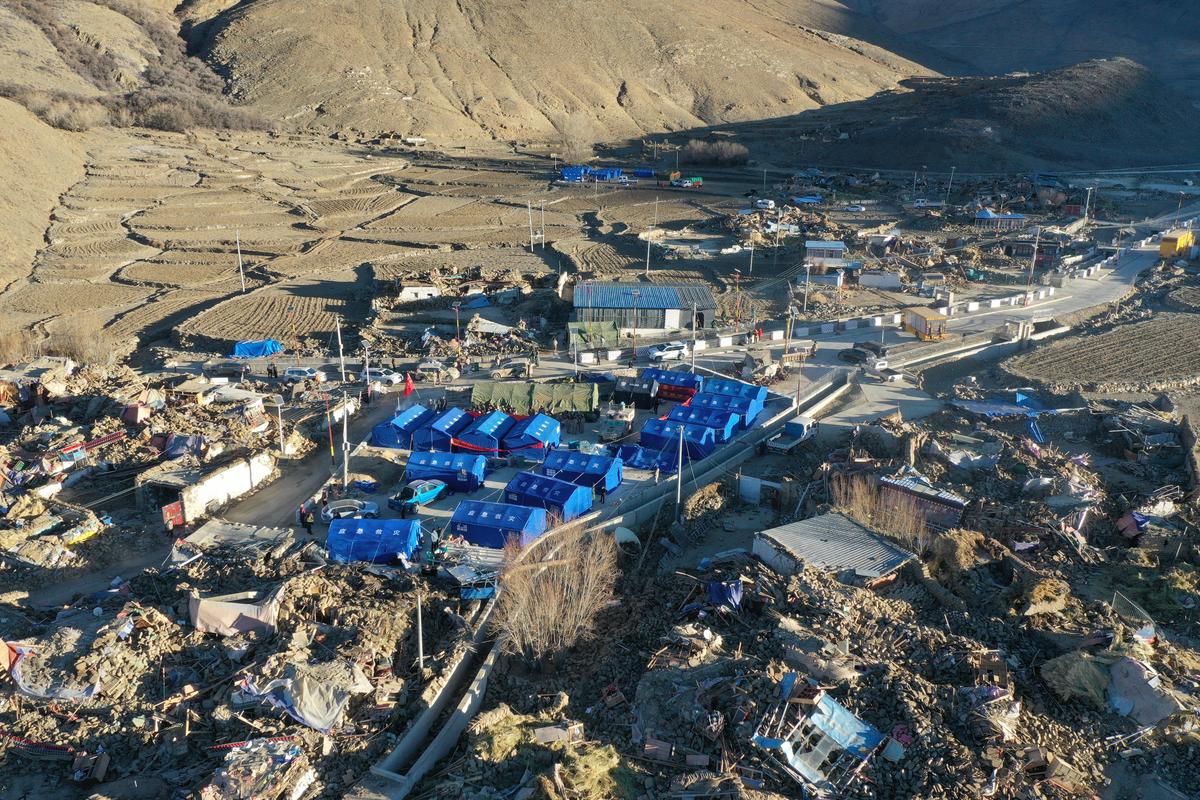
A drone view shows makeshift tents for quake-affected residents following the earthquake that struck Tingri county, in Shigatse, Tibet Autonomous Region, China on January 8, 2025.
| Photo Credit:
Reuters
On the morning of January 7, 2025, a powerful magnitude 7.1 earthquake struck Tingri County in the Shigatse region of Tibet, killing at least 126 people and injuring nearly 200 as entire villages and thousands of homes crumbled under intense shaking. The quake — the deadliest in the region in years — also damaged over 3,000 buildings and displaced tens of thousands of residents amid freezing winter conditions, with rescue teams working against sub-zero temperatures to reach survivors. Tremors were felt far beyond the epicentre, shaking cities in Nepal, Bhutan and northern India, prompting evacuations and underscoring the seismic vulnerability of the Himalayas, where the Indian and Eurasian tectonic plates collide.
India heatwave, February-April 2025
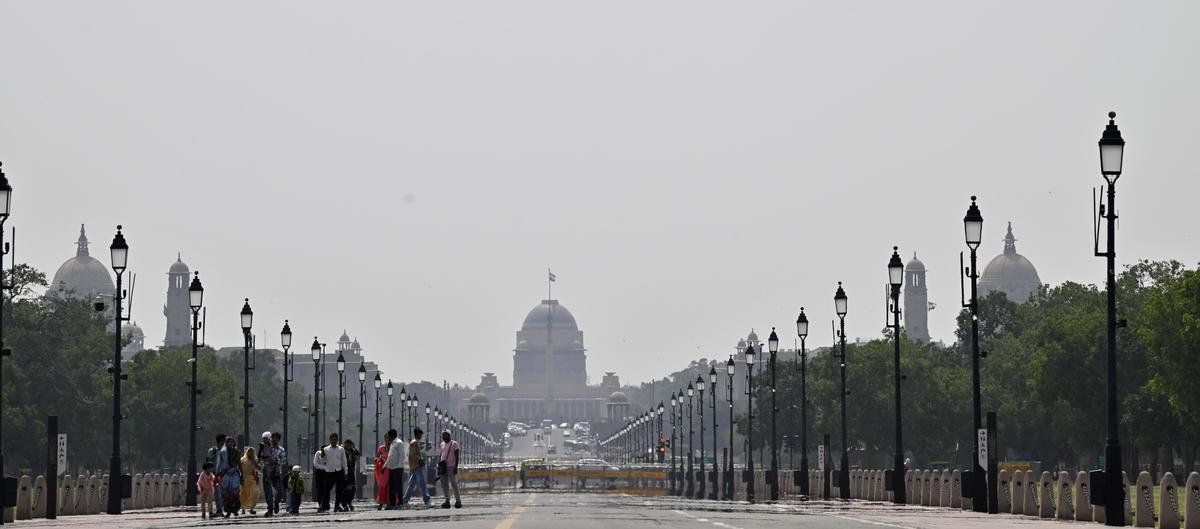
A mirage appears on Kartavya Path, as a heatwave swept across New Delhi on May 23, 2025.
| Photo Credit:
Shiv Kumar Pushpakar
In early 2025, India was gripped by an intense heatwave, with extreme temperatures setting in as early as late February and persisting through the pre-monsoon months into June. Official data recorded 7,192 suspected heatstroke cases and 14 confirmed deaths between March and late June, but independent analyses suggested significant undercounting, with media-based reviews documenting at least 84 heatstroke deaths between February and July and warning that the true toll was likely higher. Maharashtra, Uttar Pradesh, and Telangana accounted for the highest number of reported fatalities, with outdoor workers, daily wage labourers, the elderly and children among the most affected. Meteorological records showed 27 weather stations crossing 43°C, with several regions in Rajasthan, Gujarat, Maharashtra, Madhya Pradesh. and Delhi experiencing heatwave or severe heatwave conditions, and peak temperatures rising 7°C to 9°C above normal in some areas. Studies also found that 57% of Indian districts — home to 76% of the population — face high to very high heat risk, underscoring how extreme heat has become one of the country’s most widespread and under-recognised disasters.
Myanmar Earthquake, March 2025

A rescue operation is continued in front of the collapsed Sky Villa condominium in Mandalay, Myanmar on Monday, March 31, 2025.
| Photo Credit:
AP
On March 28, 2025, a powerful 7.7-magnitude earthquake struck central Myanmar near Mandalay, causing widespread devastation and triggering strong aftershocks in the days that followed. The quake killed over 3,600 people and injured more than 5,000 as homes, bridges, public buildings and heritage structures collapsed across Mandalay, Sagaing and surrounding regions. Satellite imagery revealed extensive urban destruction and severe damage to transport networks, complicating rescue and relief operations already strained by difficult terrain and ongoing conflict. Entire neighbourhoods were reduced to rubble, leaving large numbers displaced, while tremors were felt across neighbouring countries, highlighting the region’s high seismic vulnerability.
North India flash floods, August 2025
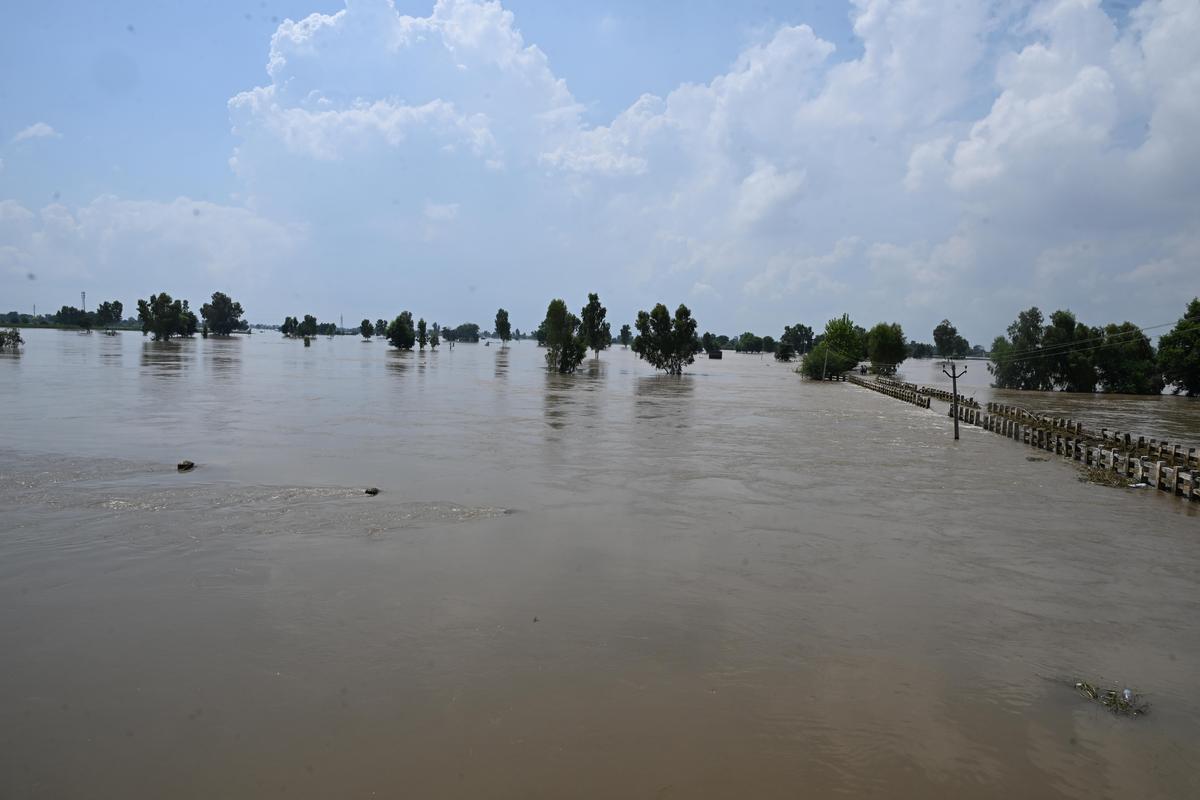
Flood at Kanwan Wali Village, in Fazilka, in Punjab.
| Photo Credit:
Sushil Kumar Verma
Punjab: In August 2025, large parts of north India, particularly Punjab, were hit by one of the worst flood episodes seen in decades as exceptionally heavy monsoon rainfall swelled the Sutlej, Beas and Ravi rivers and inundated thousands of villages across the plains. Punjab alone recorded 253.7 mm of rain in August — 74% above normal and the highest in 25 years — triggering floods that killed at least 57 people, affected over 20 lakh residents, displaced nearly seven lakh, and caused widespread destruction to homes, crops, livestock and infrastructure. Preliminary estimates put losses at over ₹13,800 crore, with nearly 4.8 lakh acres of farmland destroyed, thousands of houses damaged, and extensive damage to roads and bridges.
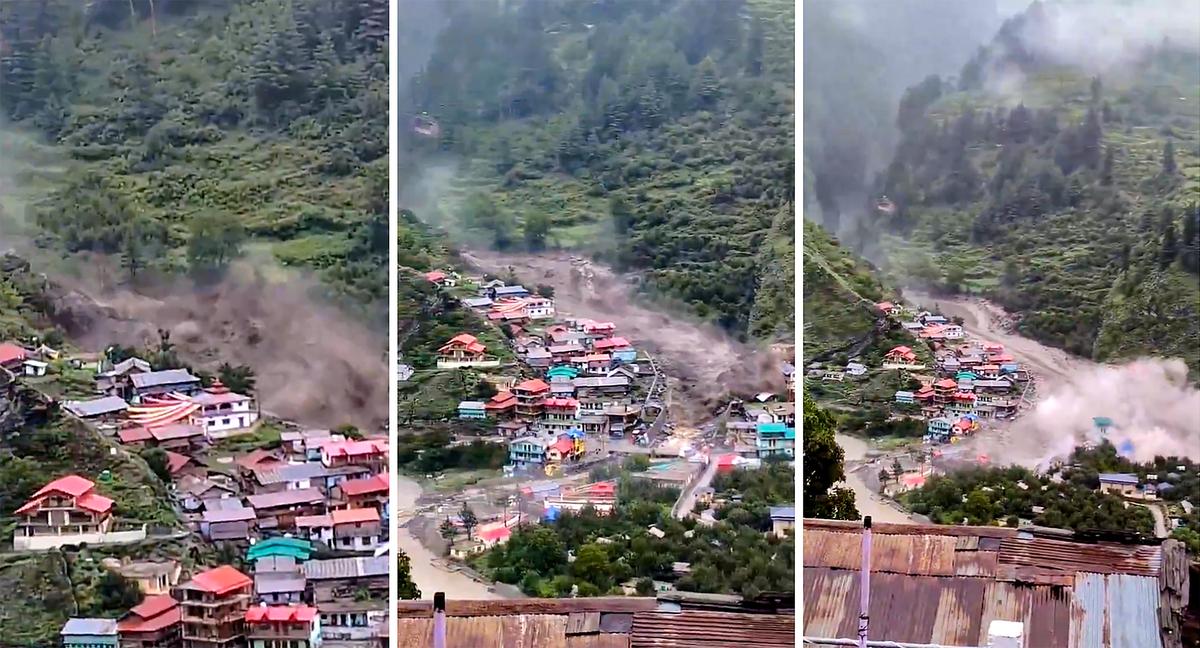
In this combo of three screenshots, houses being swept away in a flash flood triggered by a cloudburst at Dharali, in Uttarkashi district, Uttarakhand on August 5, 2025.
| Photo Credit:
PTI
Uttarakhand: In early August 2025, a devastating flash flood and debris flow struck Dharali village in Uttarkashi district, Uttarakhand, after days of extremely heavy monsoon rainfall destabilised the fragile Himalayan terrain. Torrents of water mixed with mud, rocks and silt surged through the Kheer Gad stream, sweeping away homes, hotels and the entire market area of the high-altitude town within minutes and burying a settlement under sludge. At least four people were killed, while dozens — including Army personnel and Nepali labourers — were reported missing, as rescue operations airlifted more than 1,300 people, mostly pilgrims and tourists on the Char Dham route.
Himachal Pradesh: From late June to early September 2025, Himachal Pradesh endured one of its most destructive monsoon seasons in decades, as cloudbursts, flash floods and landslides battered the hill State, causing losses estimated at over ₹4,000 crore and claiming more than 360 lives through rain-related incidents and accidents. Extreme rainfall triggered a cascade of disasters, including over 135 major landslides, nearly 100 flash floods and dozens of cloudbursts, damaging thousands of homes and shops, cutting off large parts of the State as hundreds of roads and key national highways were blocked, and disrupting power and water supply systems.
Other parts of North India: The 2025 monsoon season unleashed severe floods and waterlogging across large swathes of North India, as relentless heavy rains caused rivers to swell, plains to inundate, and daily life to grind to a halt. In Delhi-NCR, the Yamuna breached danger levels, prompting evacuations of thousands from low-lying areas and forcing relief camps to open for displaced residents as floodwaters surged in Noida and Gurugram. Haryana and Rajasthan also saw widespread waterlogging and hazard alerts as monsoon systems continued to dump rain, while Jammu & Kashmir experienced flooding and elevated river levels that displaced communities and threatened orchards and infrastructure. Although Uttar Pradesh experienced varying rainfall patterns, the broader northwest monsoon circulation brought significant flooding stress to the region and neighbouring flood-affected states in early September.
Hurricane Melissa, October 2025
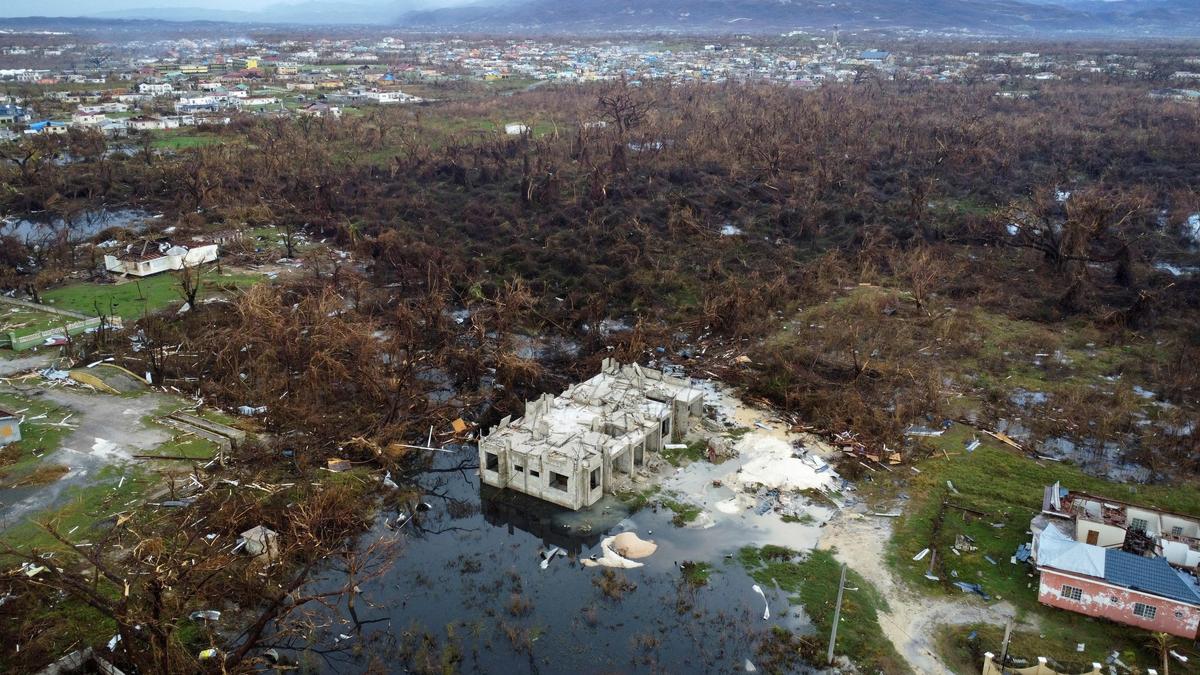
A drone view of affected areas, in the aftermath of Hurricane Melissa, in Black River, Jamaica on November 5, 2025.
| Photo Credit:
Reuters
Hurricane Melissa tore through the Caribbean in late October 2025 as one of the most powerful storms ever recorded in the Atlantic, striking Jamaica on October 28 with winds approaching 300 kmph after undergoing rare extreme rapid intensification that stunned scientists. The Category 5 hurricane flattened communities with torrential rain and landslides, leaving at least 45 people dead in Jamaica, dozens more missing, and displacing around 30,000 households. The storm went on to batter Haiti, Cuba, the Bahamas and Bermuda, killing dozens more, triggering mass evacuations — including over 7 lakh people in Cuba — and causing extensive damage to homes, infrastructure and power networks. In Jamaica alone, losses were estimated at about $10 billion, with nearly 2 lakh buildings damaged, while stagnant floodwaters in the aftermath led to a leptospirosis outbreak.
Ethiopia volcano eruption, November 2025
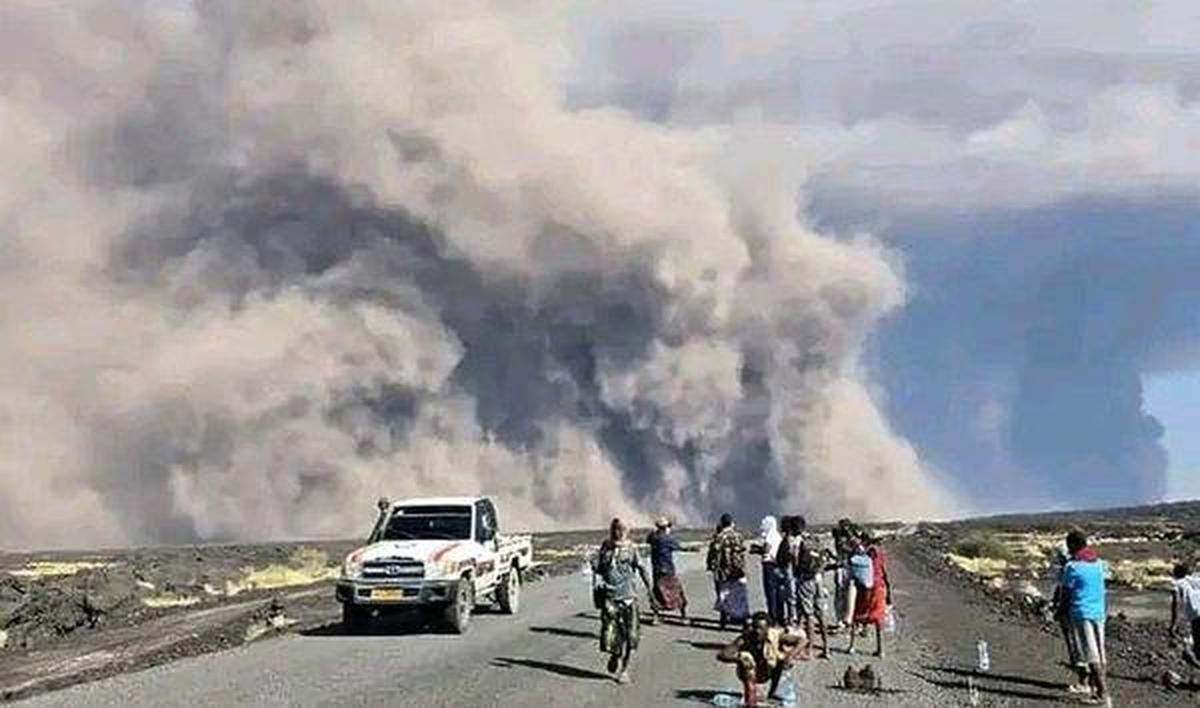
In this photo released by the Afar Government Communication Bureau, people watch ash billow from an eruption of the long-dormant Hayli Gubbi Volcano in Ethiopia’s Afar region on November 23, 2025.
| Photo Credit:
AP
In late November 2025, the long-dormant Hayli Gubbi volcano in northeastern Ethiopia erupted for the first time in nearly 12,000 years, sending ash plumes rising up to 14 km into the atmosphere and triggering far-reaching disruption beyond Africa. The eruption blanketed nearby villages in Ethiopia’s Afar region with ash, affecting residents’ health and livestock, while high-altitude ash clouds drifted across the Red Sea, West Asia and into South Asia, directly impacting India’s airspace. Volcanic ash reached India on November 24, passing over Rajasthan, Gujarat, Delhi-NCR, Punjab, Haryana, and Uttar Pradesh before moving eastwards, prompting aviation warnings from the India Meteorological Department and precautionary flight cancellations across major airports. Indian carriers cancelled and delayed multiple domestic and international flights, including services from Delhi, Hyderabad and Kochi, as aircraft underwent safety inspections in line with aviation protocols.
Indonesia’s Sumatra floods and landslides, November 2025

A drone view shows an area devastated by deadly flash flood in Batang Toru, South Tapanuli, North Sumatra Province, Indonesia on December 6, 2025.
| Photo Credit:
Reuters
In late November and early December 2025, catastrophic floods and landslides swept across Indonesia’s Sumatra island, killing over 1,000 people, injuring more than 5,400, and leaving hundreds missing as days of torrential monsoon rain triggered rivers to burst their banks and mountainsides to collapse. The disaster engulfed large parts of North Sumatra, West Sumatra and Aceh, submerging thousands of homes, destroying farms and infrastructure, and cutting off entire districts as roads and communication lines failed. With more than 1.2 million people displaced, survivors were forced into overcrowded temporary shelters amid growing frustration over the slow pace of relief, while some residents resorted to looting for food, water and fuel as supplies ran short. Rescue operations were severely hampered by damaged terrain, poor weather and a lack of heavy equipment, leaving authorities struggling to reach isolated communities even as the death toll continued to rise.
Cyclone Ditwah, November-December 2025
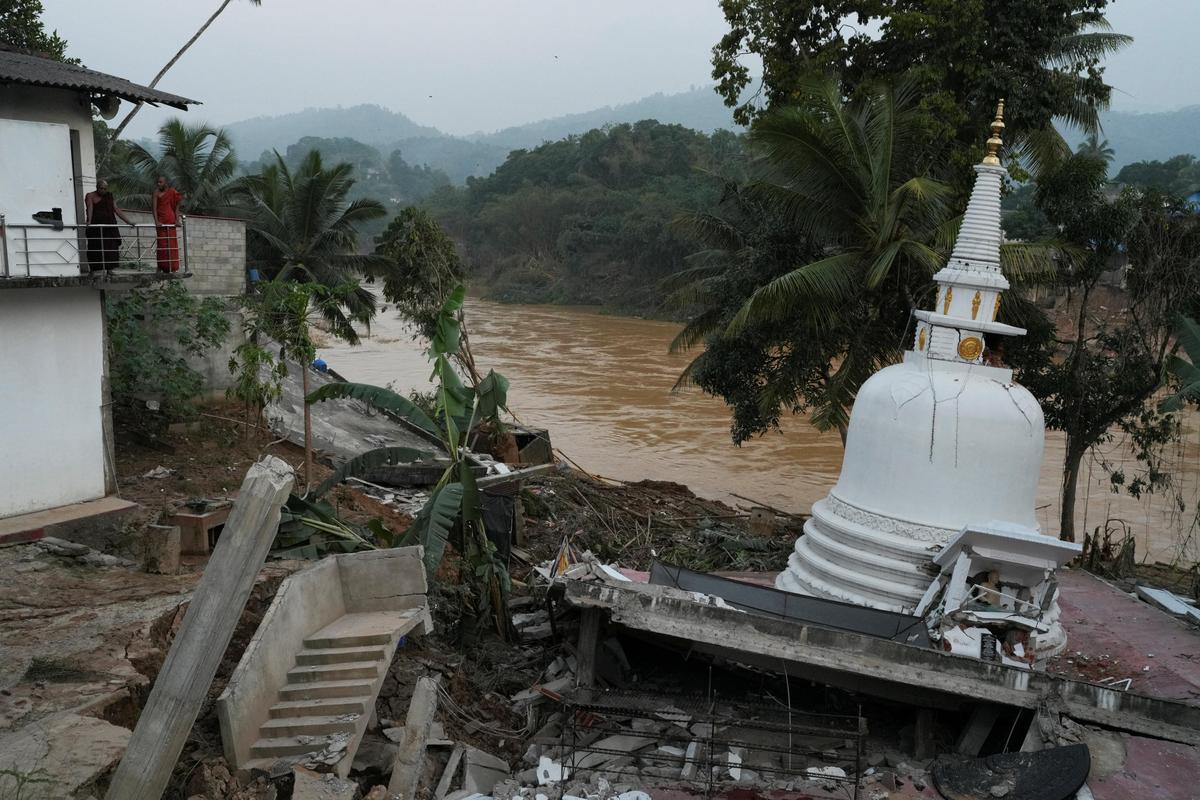
Monks look at a damaged structure of a Buddhist temple after landslides caused by heavy rainfall following Cyclone Ditwah in Kandy, Sri Lanka on December 2, 2025.
| Photo Credit:
Reuters
In late November and December 2025, Cyclone Ditwah emerged as one of Sri Lanka’s most destructive natural disasters in recent history, killing at least 643 people, leaving dozens missing, and displacing millions as torrential rain triggered widespread flooding and landslides across the island. The central highlands were among the worst affected, with Kandy recording the highest death toll, while assessments found that the cyclone set off around 1,200 landslides in Sri Lanka’s hilly interior. Floodwaters inundated over 1.1 million hectares — nearly one-fifth of the country’s land area — and affected close to 2.3 million people, damaging tens of thousands of homes, roads, bridges and power infrastructure. The economic toll was severe, with losses running into tens of billions of rupees, prompting emergency assistance from international agencies, including the IMF and major reconstruction support from India.
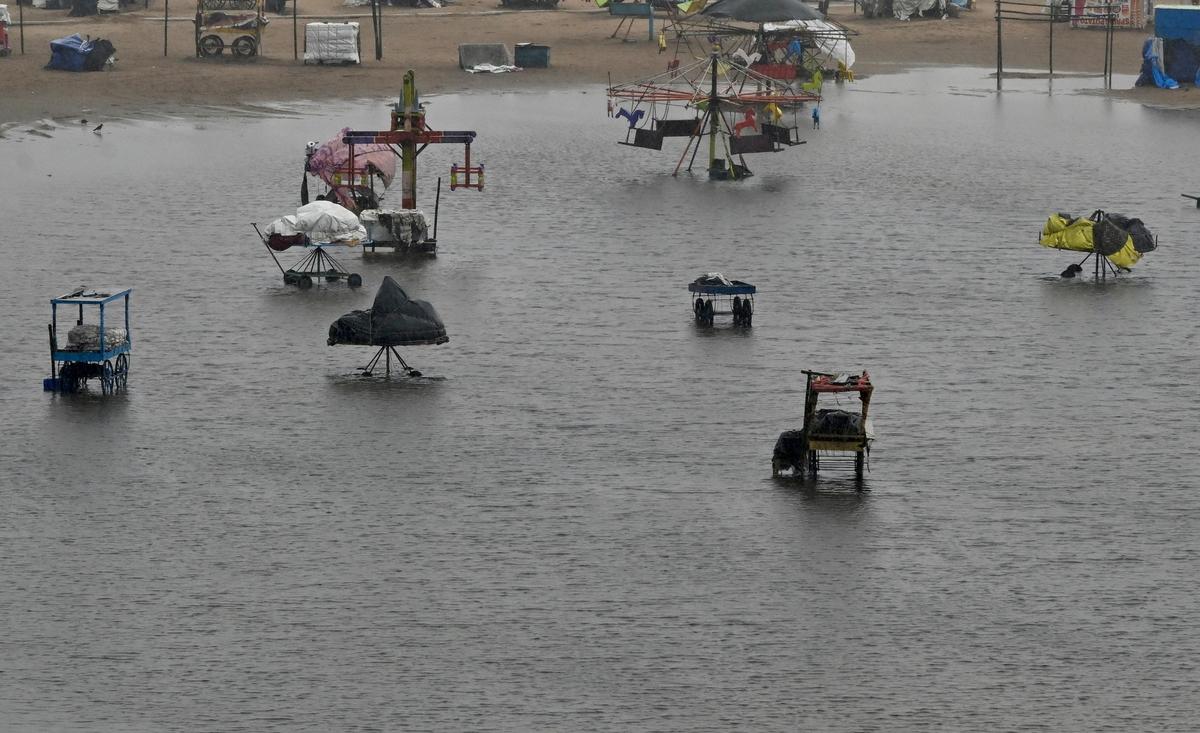
A weakened Cyclone Ditwah lashed the Tamil Nadu coast and caused intense rainfall, leading to widespread waterlogging at Marina Beach. The sea was rough with massive waves hitting the shore, prompting authorities to ban public access for safety. The heavy rains and flooding caused shops near Marina Beach to be surrounded by water, rendering them inaccessible and effectively marooned.
| Photo Credit:
S.R. Raghunathan
While Ditwah weakened as it moved over the Bay of Bengal, its leftover system brought heavy to very heavy rainfall and squally winds to southern Indian States, triggering flooding and waterlogging across parts of Tamil Nadu, Andhra Pradesh and Puducherry and disrupting daily life with inundated roads, flight cancellations and local alerts from the India Meteorological Department. The storm’s impact on India was felt not only in rainfall and flooding but also through extensive agricultural losses, with reports of over 50,000 hectares of paddy fields damaged in Tamil Nadu’s Cauvery delta alone, significantly affecting crop yields and farmer livelihoods.
The impact of Cyclone Ditwah was so huge, a report by World Bank put the damages at an estimated $4.1 billion. The damage — buildings, agriculture, lives, and critical infrastructure — detailed in the World Bank’s Global Rapid Post-Disaster Damage Estimation (GRADE) report released on December 23, 2025, is equivalent to 4% of Sri Lanka’s Gross Domestic Product. While infrastructure accounted for the largest share of damage, — $1.735 billion or 42% of the total —the agriculture sector incurred an estimated $814 million in damage.
www.thehindu.com (Article Sourced Website)
#disasters #earthquakes #cyclones #floods #redefined #year